



As the calendar turns, the natural world changes in a beautiful way. From spring’s vibrant renewal to winter’s quiet stillness, nature’s rhythms change. These changes capture our senses and inspire awe. We’ll look at the beauty and strength of seasonal wildlife changes. We’ll see how nature adapts and changes every year.
Every season has its own special life. Plants and animals adjust to the new conditions. This shows how strong the natural world is. As seasons change, we see a mix of colors, sounds, and behaviors. This shows nature’s constant dance. From spring’s awakening to winter’s quiet, seasonal changes show nature’s harmony with all living things.
Awakening of Spring: Nature’s Vibrant Renewal
As winter’s chill fades, nature comes alive with energy. Colorful flowers, trees, and shrubs bloom, signaling spring’s arrival. This change shows nature’s strength and the constant cycle of life.
Blooming Landscapes and Returning Migrants
Spring brings back migratory birds with their songs. Their return shows the seasons’ cycle and wildlife’s connection. These birds settle in, adding to the spring’s vibrant wildlife changes.
The Symphony of Birdsong and Buzzing Pollinators
Bees and butterflies start to appear, crucial for pollinating spring flowers. The mix of birdsong and insect buzz creates a beautiful sound. It highlights the important roles each creature has in nature’s changes.
Summer’s Vibrant Abundance: A Thriving Ecosystem
Summer brings warmth and life to the land. The landscape turns green, creating a perfect home for many species. From dense forests to open meadows, summer is full of life. Different animals and plants work together, making the ecosystem strong.
Lush Greenery and Flourishing Biodiversity
Summer changes the natural world in amazing ways. Trees grow tall, offering shade and homes for many creatures. The ground is covered with a variety of plants. Wildflowers bloom, drawing in bees and butterflies.
This makes a perfect place for many animals, from tiny rodents to big birds. The summer brings big changes in nature. As it gets warmer, more life bursts forth. This shows how nature can adapt and thrive.
Summer isn’t just about what you see. It’s also filled with sounds. Birds chirp, insects buzz, and leaves rustle. These sounds show how diverse and alive the ecosystem is.
Autumn’s Kaleidoscope: A Colorful Spectacle
Autumn brings a stunning change, showing off a world full of colors. Leaves change to red, orange, and yellow, making a beautiful sight. This fall foliage shows the beauty of autumn’s changes in nature.
Migrating Birds and Changing Foliage
As days get shorter and it gets colder, birds start their move to warmer places. The sky fills with birds moving gracefully, showing nature’s cycle. The changing leaves and birds’ colors make a beautiful scene.

Preparing for Winter’s Slumber
Autumn leads to winter, and nature gets ready. Animals collect food, change their fur, or sleep through the winter. This shows how nature changes and adapts in autumn.
The beauty of autumn is amazing, with its colors, birds, and changes. It shows how nature can change and still thrive.
Winter Wonderland: Nature’s Quiet Retreat
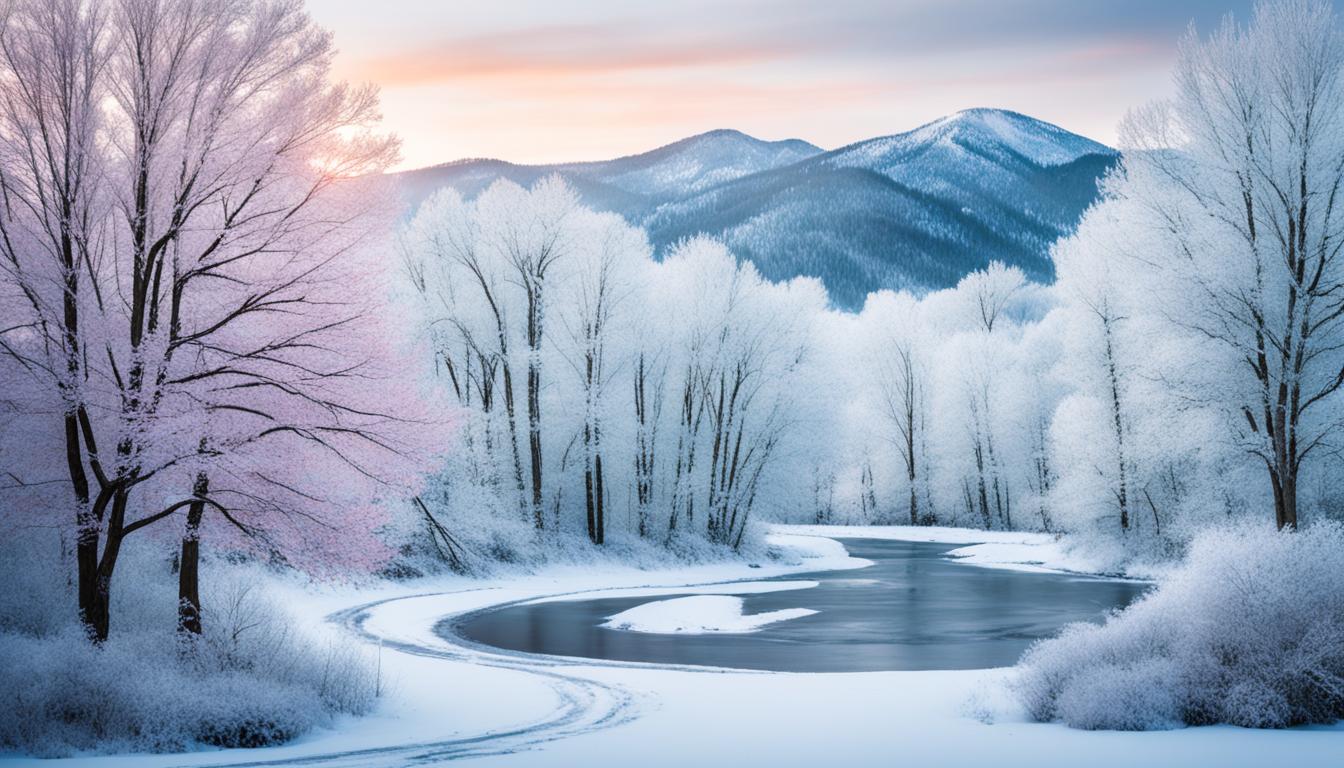
Winter brings quiet and thoughtfulness to nature. Many animals hide away, saving energy for the cold months. The snow-covered landscape is peaceful, with soft wind sounds and wildlife tracks in the snow.
The nature in winter shows how different animals change and adapt. Birds like chickadees and woodpeckers stay out, looking for food and shelter in bare trees. Small mammals like squirrels and rabbits move through the snow, leaving tracks behind.
The seasonal adaptations for winter are amazing. Animals like bears and groundhogs sleep a lot, saving energy for spring. Birds migrate to places with more food and homes.
Walking in the winter wildlife changes, we find a peaceful world. Nature seems to rest and refresh. This quiet time lets us see how animals survive and thrive in winter.
Adapting to Seasonal Changes: Resilience in Action
The natural world shows us how resilient plants and animals can be. They adapt to seasonal changes in amazing ways. From bears hibernating to birds migrating, their survival strategies are incredible.
Hibernation, Migration, and Survival Strategies
When winter comes, some animals like black bears hibernate. They slow down their metabolism to save energy until spring. Others, like monarch butterflies, migrate to warmer places. This lets them avoid winter’s harshness and find food.
Not all animals hibernate or migrate. Many adapt to the seasons where they live. Snowshoe hares change color to match the snow, and Arctic foxes eat different foods in winter.
These changes show how nature is resilient and resourceful. Plants and animals adapt to survive seasonal changes. They prove life’s ability to adapt and keep going, no matter what.
Nature & Wildlife: A Perpetual Dance of Change
The natural world is always changing, with each season bringing new life and rest. From spring’s vibrant start to winter’s quiet sleep, nature’s rhythms show how life adapts and thrives. These cycles prove the strength and flexibility of our planet’s living systems.
Embracing the Cycles of Life and Renewal
Understanding nature’s cycles helps us value the beauty and balance in our world. The constant changes in nature remind us of how everything is connected. Spring’s new life and autumn’s colorful leaves inspire us with their beauty and wonder.

Seeing nature’s life and renewal teaches us about its resilience and adaptability. Animals like bears and birds show how they survive through the year’s changes. By learning from these cycles, we can respect the balance that keeps our planet healthy.
Witnessing Nature’s Transformations: A Captivating Journey
Exploring the natural world and observing seasonal changes in nature is an amazing experience. Each season, from spring’s vibrant start to winter’s quiet end, shows us nature’s beauty. These changes help us appreciate the world’s cycles more deeply.
As seasons change, the world around us changes too. Spring brings out the first flowers, while autumn paints the trees in color. These changes show how nature is strong and adaptable. By experiencing these shifts, we learn to value the world’s rhythms.
Spring’s awakening, summer’s full life, autumn’s colors, and winter’s quietness fill us with wonder. Each season tells its own story, asking us to slow down and connect with nature. By experiencing nature’s transformations, we learn to respect and understand the balance in our ecosystems.
Seeing seasonal changes in nature helps us bond with the earth. It teaches us to value nature’s cycles and life’s resilience. This understanding encourages us to protect our planet and its natural rhythms.
Conservation and Preservation: Protecting Nature’s Rhythms
Nature changes in amazing ways every year. We must protect these changes and the ecosystems they depend on. By working together, we can keep the seasonal cycles that are key to our planet’s health.
Living sustainably helps us live in harmony with nature. By choosing eco-friendly options, we lessen our impact on the earth. This supports the growth of diverse habitats and wildlife.
Sustainable Practices for Harmonious Coexistence
Reducing our carbon footprint and supporting biodiversity are important steps towards a better future. Using renewable energy, farming in eco-friendly ways, and saving water helps protect nature’s cycles. These actions are crucial for nature and all living things.
Keeping natural habitats and paths safe is also vital. By setting aside protected areas, we make sure that wildlife and plants can keep their natural lives. This way, humans and nature can live together in balance.
Preserving nature’s beauty and rhythms is crucial for the future. Our choices today affect the world tomorrow. By living sustainably, we protect the natural cycles that support life. This way, the beauty and wonder of nature will continue to amaze and inspire us.
The Beauty in the Details: Appreciating Nature’s Intricacies
The natural world is full of small, intricate details worth our attention. From a butterfly’s delicate wings to a spider’s web, there’s beauty in the smallest wonders. These details show us the artistry in our ecosystems.
By being mindful and observant, we can see more beauty in nature. We can notice the intricate flower structures or the hummingbird’s movements. The more we pay attention, the more we marvel at nature’s beauty.
Appreciating nature’s details deepens our connection to the world. It also inspires us to care for our environment. By noticing nature’s small wonders, we understand how fragile and important our ecosystems are. This encourages us to protect them for the future.