
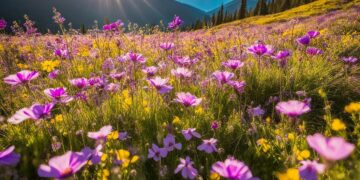
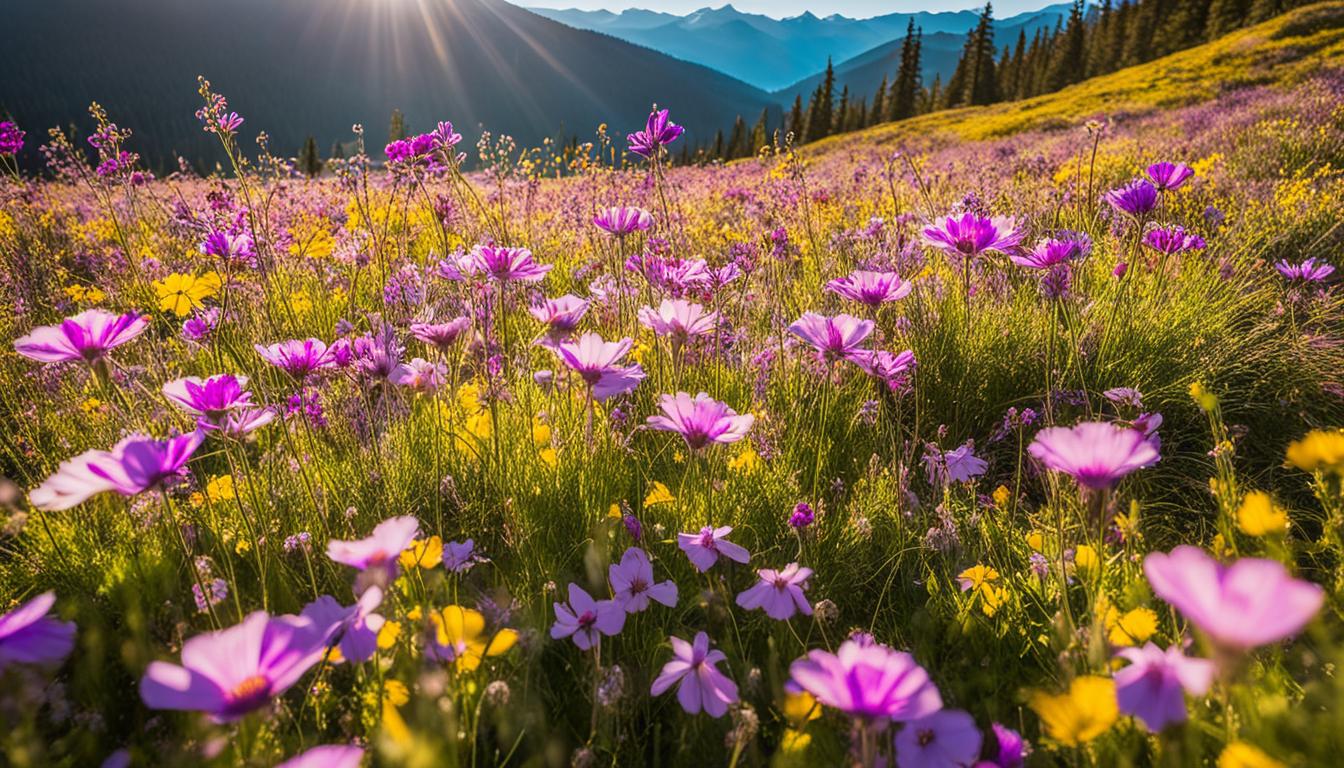
In the vast, green landscapes of nature, wildflowers stand out with their bright colors and unique shapes. They’re not just pretty; they’re crucial for our planet’s ecosystem. From sunny meadows to quiet forest spots, wildflowers invite us to stop and see the beauty around us.
Wildflowers show how nature can be strong and flexible. They come in many colors and styles, touching our senses and connecting us to the earth. These plants prove the delicate balance that keeps life going on Earth. They encourage us to learn how they help our planet stay healthy and full of life.
Nature & Wildlife: Wildflowers’ Role in Earth’s Delicate Ecosystem
Wildflowers are more than just pretty in our landscapes. They are key to keeping Earth’s ecosystems balanced. These plants feed and shelter many pollinators and wildlife, keeping biodiversity high and the environment healthy.
Pollinator Powerhouses
Wildflowers are a main food source for bees, butterflies, and hummingbirds. These creatures need the nectar and pollen from wildflowers to live and grow. By helping pollination, wildflowers keep plant life balanced, which helps many other species grow and reproduce.
Habitat Havens
Wildflowers do more than just feed pollinators. They also provide homes and shelter for many animals. From tiny insects to big animals, these plants offer nesting sites and places to hide. Protecting wildflower habitats helps many species survive and keeps our natural world healthy.
Wildflowers show how all living things are connected. They are key to keeping nature in balance. By understanding their value, we can work to save these important parts of our natural world.
Wildflowers Through the Seasons: A Kaleidoscope of Color
The natural world is always changing, and wildflowers are key to this beauty. They bring color and life to the landscape all year round. From spring’s delicate blooms to summer’s bright colors and autumn’s striking displays, wildflowers are nature’s rhythm.
Seasons change, and so do the wildflowers that cover the countryside. In spring, look for the trillium and dandelions as they emerge. As it gets warmer, meadows and woods fill with wildflowers like the purple coneflower and Queen Anne’s lace.
Wildflowers show how resilient and adaptable nature is. In autumn, they turn the landscape into a world of scarlet, gold, and amber. This dance of the seasons, led by wildflowers, is a sight that touches our hearts and souls.
Walking through forests or meadows, you’ll see the beauty of seasonal wildflowers. They go from delicate spring blooms to bold autumn colors. These natural wonders show the beauty and variety of our planet. By enjoying wildflowers through the seasons, we connect more with nature and see the beauty in our changing world.
The Art of Wildflower Photography
Capturing wildflowers with a camera is an art. It takes a sharp eye, patience, and love for nature. Whether you’re experienced or new, learning to photograph these beautiful plants is fulfilling.
Capturing Nature’s Fleeting Moments
Wildflowers don’t last long, blooming briefly before they disappear. As a photographer, your job is to capture their beauty. You aim to show their bright colors, detailed shapes, and gentle forms. Each photo should tell a story and capture the essence of nature.

To master wildflower photography, know about lighting, composition, and timing. Pay attention to how the sun moves and the wind blows. With time and patience, you’ll know when a wildflower looks best. This way, you can capture its beauty perfectly.
Wildflower photography offers endless rewards. It improves your photography skills and deepens your love for nature. So, take your camera, explore the outdoors, and let wildflowers spark your creativity.
Wildflower Hikes: Immersing Yourself in Nature’s Splendor
Step into a world of natural wonder by going on wildflower hikes. These hikes let you see the beauty of different flowers, from tiny petals to bright blooms. In the United States, hikers can find a mix of wildflowers on scenic trails. Each one shows the balance in our ecosystems.
Wildflower hikes are great for nature lovers or those looking for peace. These trails take you to stunning views. There, you can see the colors and smells of nature. By taking your time and looking at the wildflowers, you’ll appreciate nature more.
Guided hikes are a great way to learn about wildflowers and their roles in nature. Experts can show you special flowers and explain how they help pollinators. These hikes feed your soul and make you wonder at nature’s beauty.
There’s a wildflower hike for everyone, no matter your hiking level or style. You can choose from tough hikes in the Rocky Mountains or easy walks in the Pacific Northwest. So, put on your hiking boots, bring your camera, and start an adventure of nature and discovery.
Wildflower Gardening: Bringing the Beauty Home
Creating a wildflower garden is a fulfilling task. It brings the outdoors into your backyard or outdoor area. By using native wildflowers, you get a beautiful, easy-care garden. This garden also helps the local ecosystem.
Native Wildflowers for Your Region
Choosing wildflowers that are native to your area is key. These plants fit the local climate and soil well. They are more durable and need less care than plants from other places.
For the best wildflowers for your area, talk to local nurseries, gardens, or plant groups. They know which plants will do well and can give advice on how to care for them. With some research and planning, you can make your garden a beautiful, sustainable place with native wildflowers.
Adding native wildflowers to your garden makes it more interesting and helps nature. These plants feed and house pollinators and wildlife. By doing this, you help keep nature balanced in your backyard. Enjoy the beauty and benefits of wildflower gardening and watch your garden come alive with color and texture.
Wildflower Folklore and Symbolism
Wildflowers have always been important in our culture. Their bright colors and gentle petals tell stories and symbolize things that have been passed down for years. From old times to now, these plants have caught our attention. They carry our deepest wishes, dreams, and beliefs.
Wildflowers mean different things all over the world. They show how we try to connect with nature. Their beauty is linked to purity, innocence, and fleeting nature. Yet, they also stand strong against hard times, symbolizing strength and resilience.
In many places, wildflowers are key in religious and spiritual life. They are seen as offerings, charms, and signs of our spot in life’s cycle. The stories and myths about these plants highlight our deep connection with nature. This connection still moves and amazes us today.
Looking into wildflower folklore and symbolism helps us value these plants more. They’ve shaped our traditions and how we see the world. From their bright colors to the tales they tell, wildflowers keep captivating and enchanting us. They remind us of the beauty and magic in nature.
Conservation Efforts: Protecting Nature’s Treasures
Wildflowers are not just beautiful; they are crucial for our planet. Many wildflowers are in danger due to habitat loss, invasive species, and climate change. Luckily, people and groups are working hard to save these natural wonders.
Endangered Wildflower Species
Endangered wildflowers are very vulnerable. They often live in small areas, making them easy targets for environmental changes and human actions. The U.S. Fish and Wildlife Service lists endangered wildflowers, showing the need for action.
The Furbish’s lousewort is a rare wildflower found in Maine. It’s threatened by habitat loss from dams and recreation. Conservation groups are fighting to save it by promoting sustainable land use and spreading the word about its danger.
Many other wildflowers are also on the endangered list, like the Kincaid’s lupine and the running buffalo clover. These plants are key to their ecosystems, feeding pollinators and providing homes for wildlife. Saving them is crucial for our planet’s health.
Government agencies, conservation groups, and citizens are working together to protect endangered wildflowers. By spreading awareness, fighting for their habitats, and supporting sustainable practices, we can keep these treasures around for the future.
Wildflower Poetry: Nature’s Muse
The beauty of wildflowers has always inspired poets and writers. They see the world in these flowers, with their bright colors and delicate petals. These flowers connect us to nature in a special way.
Wildflower poetry shows how these flowers touch our hearts and make us think deeply. From old to new poets, wildflowers inspire them to write about nature’s beauty. They turn these flowers into beautiful words.
Wildflowers like the daisy, Indian paintbrush, and forget-me-not capture our attention. Poets use them to connect with nature. They write about growth, strength, and the short life of beauty.
By using wildflowers in their poems, writers ask us to pause and see the world closely. They help us find peace in life’s cycles. From old romantic poems to today’s nature-focused ones, wildflower poetry still moves us. It shows the lasting impact of nature on our words.
Wildflower Festivals: Celebrating Nature’s Splendor
Across the United States, communities gather to celebrate wildflowers. They hold festivals that let nature lovers enjoy these beautiful plants. These events also help us appreciate how important wildflowers are to our ecosystems.
Local Festivals and Events
In California and New England, wildflower festivals are a big deal. Each one has its own special touch. For example, the Dolly Sods Wilderness Wildflower Festival in West Virginia is a hit. It offers hikes, workshops, and art, all focused on the area’s wildflowers.
Then there’s the Skagit Valley Tulip Festival in Washington state. It turns the area into a colorful wonderland. Visitors come from everywhere to see the tulips.
These festivals are not just for fun. They teach us about the importance of wildflowers. We learn how they help bees and butterflies, and why we need to protect their homes. You can even buy native plants to take home and plant.
Wildflower festivals are perfect for anyone who loves nature or is looking for a new adventure. They let you see the beauty of the outdoors and meet people who care about nature too. These events show us the beauty and strength of wildflowers.

Mindfulness in Nature: Wildflowers and Wellbeing
In today’s fast-paced world, finding calm and connection is key for our well-being. Wildflowers offer a special way to do just that. They help us find mindfulness and improve our mental, emotional, and spiritual health.
Looking at wildflowers can make us more mindful. By slowing down and really seeing their beauty, we escape daily stress. This helps us feel less anxious and depressed, and more grateful for nature.
Wildflowers also feed our emotional and spiritual sides. Their colors and shapes make us feel amazed and connected to life’s beauty. This bond with nature gives us a sense of purpose and peace, showing us how everything is connected.
Activities like gardening, hiking, or just enjoying a single flower can be very rewarding. Being close to wildflowers improves our mental health and stress levels. It also makes us more mindful, enriching our lives in many ways.
Wildflower Cuisine: Edible Delights from the Wild
Explore the world of wildflower cuisine, where nature’s beauty meets delicious flavors. Wildflowers bring a unique taste to your plate, from their colorful petals to their earthy leaves and stems. This way of cooking is not only tasty but also good for the planet.
More people are now foraging for wildflowers to connect with nature and taste its flavors. Chefs and cooks love using these plants in salads, sauces, teas, and even desserts. Wildflowers add a special touch to any meal, making it fresh and elegant.
Try the amazing tastes of edible wildflowers and discover the variety of natural flavors they offer. If you love foraging or just want to try new foods, botanical cuisine is a great adventure. It’s a journey that’s both tasty and sustainable.