






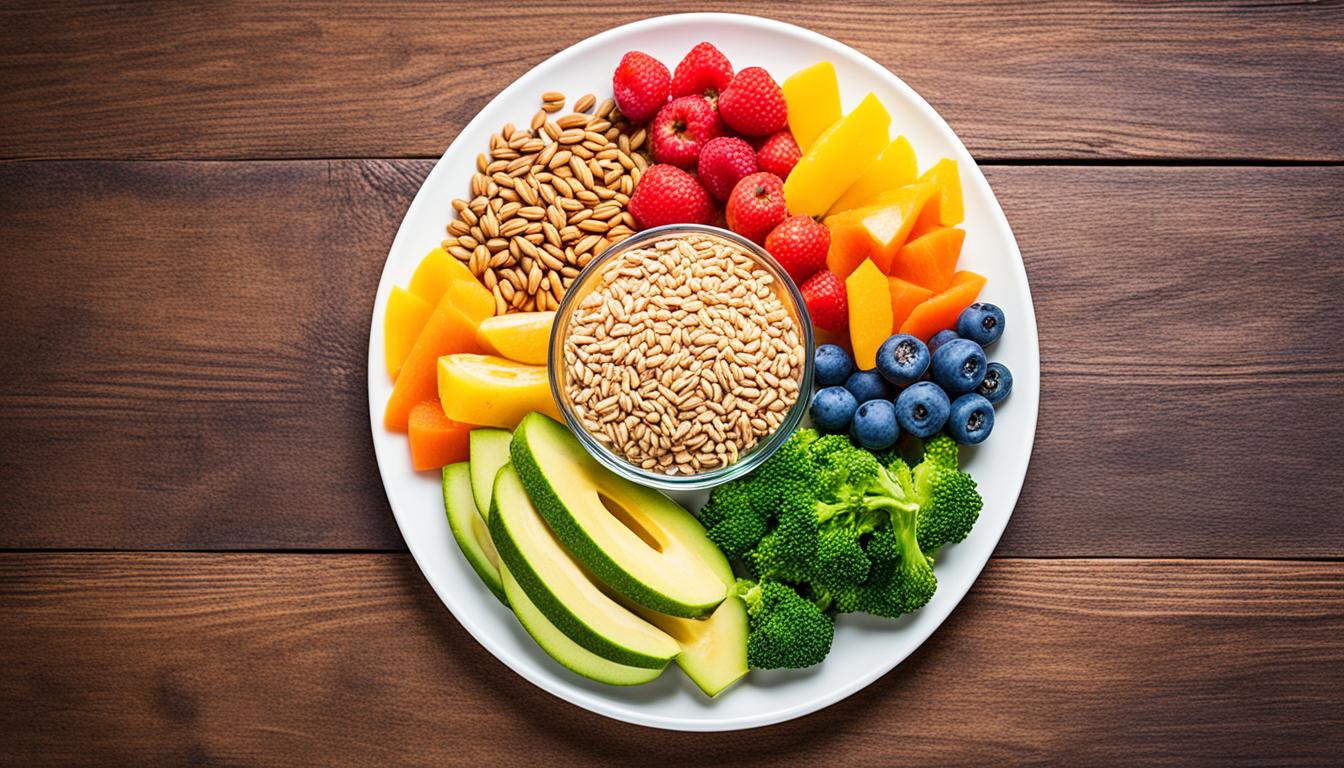
Keeping a balanced diet is key for your health and well-being. This guide offers expert advice and strategies for making smart food choices. It helps you get all the nutrients you need and boosts your wellness through healthy eating. If you want to boost your energy, support your immune system, or just feel great, this article has what you need.
A balanced diet is more than just about losing weight or looking good. It’s a way to take care of your body and mind. By learning about nutrition and eating a variety of healthy foods, you can fully benefit from a balanced diet. This approach can greatly improve your health and quality of life.
We’ll go deeper into what makes a diet balanced, including the role of macronutrients and micronutrients, managing portions, and planning meals for your needs. We’ll also talk about healthy snacks, staying hydrated, and building lasting eating habits. These tips can help you reach your wellness goals.
Understanding the Basics of Nutrition
Proper nutrition is key to a healthy life. It’s all about knowing the important parts of a balanced diet. These include macronutrients and micronutrients. Learning about these can help you make better choices for your health.
Macronutrients and Micronutrients Explained
Macronutrients are the big parts of our diet, like carbs, proteins, and fats. They give us energy and help fix tissues. Micronutrients are vitamins and minerals we need in small amounts but are just as important.
Knowing about both is crucial for good nutrition.
The Importance of Portion Control
Controlling how much you eat is very important. Eating the right amounts helps you stay at a healthy weight and keeps your blood sugar stable. It also makes sure you get what your body needs.
Learning to eat mindfully can greatly improve your health.
Understanding nutrition basics, including macronutrients, micronutrients, and portion control, is key. It helps you make a diet that supports your health for the long term.
Creating a Balanced Meal Plan
Creating a balanced meal plan is key for a healthy diet. It makes sure your body gets the vitamins, minerals, and nutrients it needs. This plan helps you meet your health goals, like staying at a healthy weight, boosting energy, or improving overall well-being.
Incorporating All Food Groups
A good meal plan should have fruits, vegetables, whole grains, lean proteins, and healthy fats. Each group offers special nutrients. Mixing them makes meals balanced and meets your body’s needs. Remember to watch portion sizes and eat a variety of foods for a full nutrient profile.
Fruits and vegetables give you vitamins, minerals, and fiber, which are good for health. Whole grains like brown rice and quinoa give you energy. Lean proteins from chicken and legumes help muscles. Healthy fats from avocado and nuts are good for your heart and brain.
With a meal plan that covers all food groups, your body gets the right nutrients. This way of eating keeps your diet balanced, boosts energy, and supports your health and wellness.
Healthy Snacking Options
Keeping a balanced diet doesn’t mean you have to skip snacking. Healthy snacks can support your wellness goals and keep your energy up between meals. Crunchy veggies and protein-packed treats are great options to try.
Nuts like almonds, walnuts, or cashews are a good snack choice. They’re full of healthy fats, fiber, and important vitamins and minerals. Enjoying nuts can make you feel full longer. Fresh fruit, such as apples, bananas, or berries, also offer a natural sweetness and antioxidants.
For something savory, try dipping sliced bell peppers, cucumber, or carrot sticks in hummus or guacamole. These snacks are full of nutrients and keep you hydrated. Yogurt with fresh berries or granola is another tasty and healthy choice that fits a balanced diet.

Healthy snacking means choosing snacks with protein, fiber, and healthy fats. Adding these snacks to your daily routine helps keep your energy up and supports your wellness. It also makes eating more enjoyable and mindful.
The Role of Hydration in a Balanced Diet
Staying hydrated is key to a healthy diet. Hydration supports overall wellness and is crucial for many bodily functions. It helps regulate body temperature, aids digestion, and keeps organs and the brain working well.
Choosing Healthy Beverages
Water is the best choice for hydration. But, other healthy beverages can also help. Options like unsweetened herbal teas, low-fat milk, and 100% fruit juices offer nutrients and hydration without the sugar and calories in commercial drinks.
It’s important to avoid sugary sodas, energy drinks, and high-calorie fruit juices. These can lead to weight gain and health problems. Choosing wisely about the beverages we drink helps our wellness and keeps our diet balanced.
Adding different healthy beverages to your daily routine, along with a diet full of nutrients, keeps you hydrated. This supports your health and wellness goals. Remember, hydration is a key part of a balanced diet.
Health & Wellness Tips for Sustainable Eating Habits
Creating sustainable eating habits is key for a healthy life. By adding simple wellness tips to your daily life, you can meet your diet and nutrition goals. Here are some easy tips to help you keep up with sustainable eating habits and boost your wellness.
Begin by eating whole, nutrient-rich foods. Choose a mix of fruits, veggies, whole grains, lean proteins, and healthy fats. These foods will feed your body well and give you the energy you need. Stay away from foods that are highly processed, sugary, or high in fat. They can harm your healthy lifestyle.
Planning your meals ahead is also good for sustainable eating. Set aside time each week to plan what you’ll eat and snack on. Make sure to include a mix of nutrients. This helps you stay on track and makes healthy choices easier.
Pay attention to how hungry or full you feel. Eat mindfully, enjoying your food and knowing when you’re full. This stops overeating and keeps your diet balanced over time.
Lastly, remember how important staying hydrated is for your health. Drink lots of water all day. Also, try adding nutrient-rich drinks like herbal teas or infused waters to your routine. They support your sustainable eating habits.
Meal Prep and Planning Ahead
Keeping a balanced diet can be tough, especially if you’re busy. But, meal prep and meal planning can help. By preparing meals early, you save time and always have healthy food ready.
Time-Saving Strategies for Busy Schedules
Meal prep makes your week easier. Spend a few hours on the weekend chopping veggies, cooking proteins, and making meals. This way, you spend less time cooking during the week. It helps you stick to a balanced diet and healthy eating habits, even when you’re super busy.
Planning your meals is also key. Take some time to figure out what you’ll eat each day. This way, you avoid making unhealthy choices on the fly. Plus, you can buy ingredients in bulk and prep meals ahead, making your meal prep even easier.

Success in meal prep and meal planning comes from finding what works for you. Try different methods like batch cooking or meals that freeze well. With some planning and prep, you can enjoy a balanced diet and healthy eating without giving up your time or convenience.
Mindful Eating: Tuning into Your Body’s Signals
In today’s fast world, it’s easy to ignore our body’s signals about eating. But, mindful eating can change that. It helps us slow down, enjoy each bite, and listen to our body’s hunger and fullness signals.
Mindful eating means eating without strict rules. It lets us choose food based on what we really need and like. By paying attention to our hunger and fullness, we can eat healthier and feel better about food.
Practicing mindful eating can greatly improve our wellness. When we eat slowly and enjoy our food, we get to fully experience it. This makes us feel more satisfied and less likely to eat too much. It also helps us pick foods that are good for us, leading to better health.
Listening to our body and eating more intuitively starts a journey of self-discovery. It’s not about being perfect. It’s about being kind to ourselves as we learn to feed our body and mind well.
Overcoming Challenges and Setbacks
Keeping a balanced diet can be tough, with many obstacles that might slow you down. But, with the right approach and a strong will, you can beat these challenges. We’ll look at ways to handle the usual diet challenges and eating setbacks.
Strategies for Staying Motivated
Staying motivated is crucial for a balanced diet. When you face temptations or slow progress, it’s easy to lose your drive. To stay on track, set goals that you can reach. Celebrate your wins, no matter how small, and don’t be too tough on yourself when you hit a bump.
Having a supportive circle around you helps a lot. Get friends, family, or a health coach to keep you on track and lift your spirits. Sharing your journey with others who get it can make you more motivated and connected.
Also, make healthy eating fun. Try new recipes, find tasty foods that are good for you, and enjoy planning meals. When eating well becomes enjoyable, you’re more likely to keep it up.
The journey to a balanced diet isn’t always smooth. You’ll face setbacks, but with the right mindset and strategies, you can get past them. Keep motivated and keep going, and you’ll reach your diet goals.
The Benefits of a Balanced Diet
Choosing a balanced diet brings many rewards, not just for your body but also for your mind and spirit. It gives you more energy, makes you think clearer, and boosts your overall well-being.
Good nutrition is key to a strong immune system. It lowers the risk of serious diseases like heart disease, type 2 diabetes, and some cancers. Eating a mix of fruits, veggies, whole grains, lean meats, and healthy fats keeps you at a healthy weight. It also strengthens your bones, muscles, and can make you feel happier and more focused.
Also, eating well helps with weight control. It teaches you to make smart food choices and pay attention to how hungry or full you feel. This way, you can enjoy food without harming your health in the long run.