






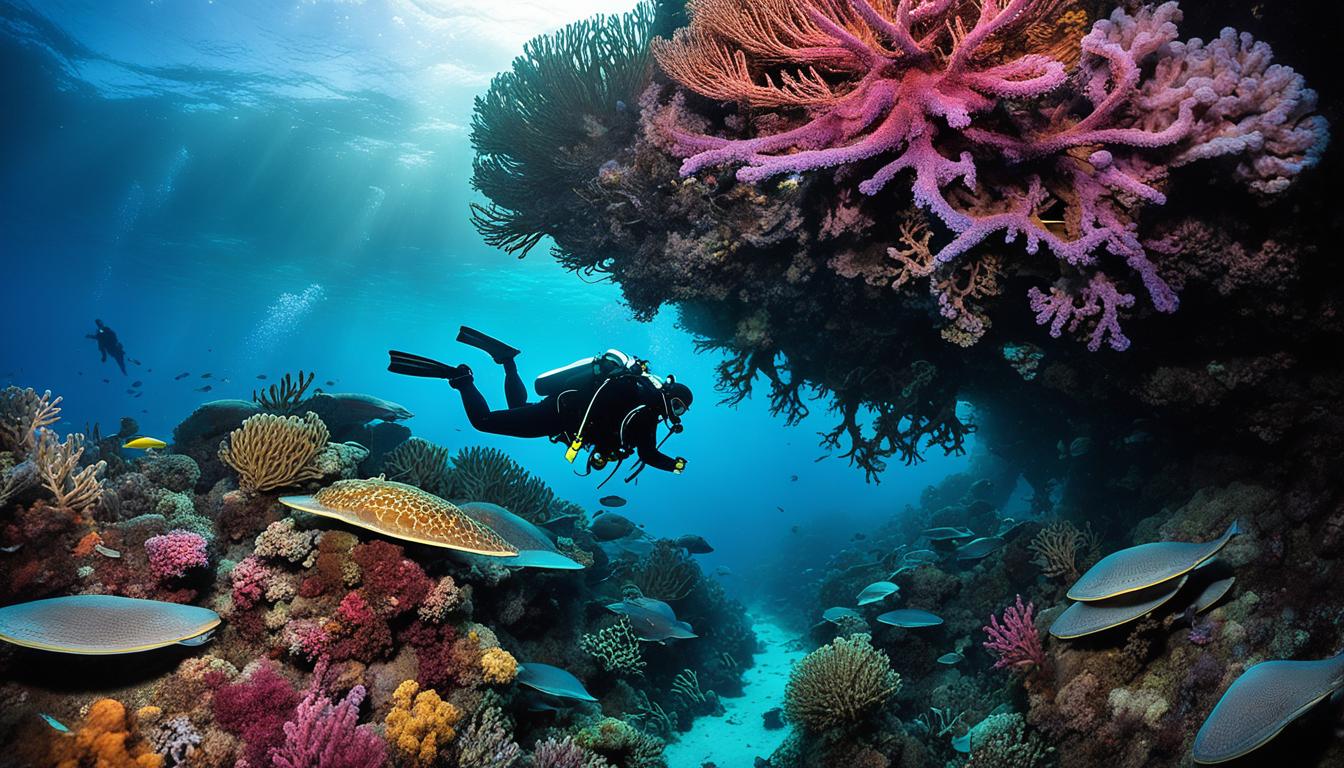
Step into the deep sea’s captivating world, full of mysteries and marvels. Below the sunlit surface, a world of incredible marine life and stunning landscapes is waiting. You’ll find bioluminescent creatures lighting up the dark and unique ecosystems around hydrothermal vents.
Join us on this journey to explore the ocean’s hidden treasures. We’ll dive into the amazing diversity of marine life and the complex ecosystems they live in. You’ll learn about the latest technologies that help us understand this vast, unexplored world. Get ready to be amazed by the beauty and mysteries beneath the waves.
Nature & Wildlife: Exploring the Depths of Marine Biodiversity
The deep sea is full of amazing life, with creatures that live in its dark depths. These creatures light up the darkness with their glow. They live in extreme places, showing us how diverse life on Earth is.
Bioluminescent Creatures: Lighting Up the Abyss
Bioluminescent creatures are a big part of the deep sea’s magic. They include anglerfish, lanternfish, and jellyfish. These creatures make their own light to catch food, talk to each other, and keep away from predators.
The deep sea is always dark, but these glowing creatures make it look like another world. It’s a sight that’s both beautiful and strange.
Deep-Sea Ecosystems: Thriving in Extreme Conditions
Deep-sea ecosystems are unique and adapted to the harsh life under the sea. Near hydrothermal vents, where hot water comes out, some creatures even make their own food. In the deep, high-pressure places, life finds a way to survive.
Extremophiles are some of these tough creatures. They live in places that would be deadly for most other life forms. These deep-sea ecosystems show us the amazing variety and strength of life on Earth.
The Unexplored Frontier: Mysteries of the Deep Ocean
The deep ocean is still a mystery, covering most of our planet. It’s full of secrets and wonders waiting to be found. Researchers keep discovering new species and solving deep sea mysteries.
More than 60% of the Earth’s surface is covered by the deep ocean. It goes down over 6,000 meters, filled with life from glowing creatures to strange species. But, most of this world is still a mystery, with only a small part mapped.

The deep ocean has more than just unknown creatures. Scientists are still learning about its currents, seafloor, and natural processes. Places like hydrothermal vents and deep-sea trenches give clues about this strange world.
Thanks to new technology, scientists can now explore the deep ocean better. Tools like AUVs and deep-sea submersibles help us learn about the unknown. They reveal new species, ecosystems, and processes in the deep.
The deep ocean is a big mystery that captures our imagination. With every new discovery, we learn more about our planet. It offers endless chances for exploration and research.
Hydrothermal Vents: Oases of Life in the Deep
Hydrothermal vents are like islands of life in the deep ocean. They are special places where life thrives in harsh conditions. These vents support unique ecosystems with organisms called extremophiles. They live off the chemical energy from the vents.
The life around hydrothermal vents is very different from the life in the sunny surface waters. Yet, it is full of a wide variety of marine life. This shows how diverse life can be in the deep sea.
Chemosynthetic Ecosystems: Harnessing Chemical Energy
Life in these vents doesn’t need sunlight to survive. Instead, it uses chemical energy through chemosynthesis. Organisms like tubeworms, shrimp, and microbial mats use the hot fluids from the vents for energy.
This unique way of living lets them survive in the deep sea’s tough conditions. It’s a great example of how life can adapt and thrive in extreme places.
The variety of life around hydrothermal vents shows how resilient deep-sea creatures are. These communities are key to the ocean’s health. They help with biodiversity and nutrient cycling in the deep sea.
Learning about hydrothermal vents helps us understand how life can survive in extreme places. It shows us the amazing resilience and potential of life on our planet.
Deep-Sea Creatures: Bizarre and Fascinating Forms
The deep sea is full of incredible life, with creatures that have adapted to the tough conditions. These include bioluminescent predators and the odd deep-sea anglerfish. They show the amazing variety of life in the ocean.
Anglerfish: Masters of Deception
The anglerfish is a standout in the deep sea. It’s known for its special way of catching prey. It has a glowing lure on its head to draw in fish and other sea creatures. Then, it opens its big mouth with sharp teeth to catch its prey in the dark sea.

There are many other fascinating creatures in the deep sea, each with its own way to survive. From glowing sea dwellers to strange-looking creatures, the deep sea is full of mysteries. It shows us the amazing things that live in the ocean.
Underwater Landscapes: Trenches, Ridges, and Seamounts
Under the ocean’s surface, a world full of life and beauty awaits. This world is shaped by the deep-sea topography. It’s not just an empty space but a place of mountains, deep trenches, and ridges. Each feature creates its own unique home for different marine creatures.
The deep-sea habitats are amazing. The Mariana Trench, for example, is the deepest part of the ocean. It goes down miles into the dark, high-pressure depths. Here, creatures like the ghostly anglerfish and giant squid live.
On the other hand, mid-ocean ridges are like underwater mountains. They form where hot rock comes up from the Earth. These areas are full of life, thanks to hot springs and special ecosystems. Seamounts, or underwater volcanoes, also have life around them, creating islands in the deep sea.
Studying the deep-sea topography helps us understand marine life better. These landscapes affect the food chains and ecosystems of the deep ocean. As we learn more about these places, we’re amazed by their beauty and importance.
Ocean Currents: The Unseen Forces Shaping Marine Life
Under the vast oceans, a complex network of currents shapes marine life. These currents are driven by temperature and salinity differences. They are key to the deep-sea ecosystem.
The Thermohaline Circulation: Driving Global Ocean Currents
The thermohaline circulation is at the heart of this system. It’s a global conveyor belt that moves heat, nutrients, and life forms across oceans. It’s powered by water density differences, based on temperature and salinity.
Cold, salty water sinks in the North Atlantic, starting a flow that drives the circulation. This flow affects ocean currents and the life they support.
This circulation is key to the global ocean system. It helps exchange heat, nutrients, and carbon dioxide between the atmosphere and deep-sea. It’s crucial for the planet’s climate and supports diverse marine life in the deep-sea.
Studying ocean currents and the thermohaline circulation helps us understand deep-sea interactions. This knowledge is crucial for protecting these ecosystems. It helps keep the ocean’s diverse life healthy and resilient.
The Impact of Human Activities on the Deep Sea
As we learn more about the deep sea, we see the threats it faces from us. The deep sea’s ecosystems are under pressure from pollution, deep-sea mining, and climate change.
One big threat is plastic waste and other pollutants. These can travel long distances in the ocean, ending up on the ocean floor. This harms deep-sea creatures, breaks food chains, and damages habitats.
Deep-sea mining is another big threat. People want to take minerals like rare earth elements from the ocean floor. But, this can destroy homes, release harmful substances, and harm the balance of life in the deep sea.
Climate change is also a big problem for the deep sea. It changes ocean temperatures, makes the water more acidic, and shifts currents. These changes can hurt deep-sea life, mess with food chains, and reduce ocean diversity.
We need to protect the deep sea from these threats. We must work to reduce pollution, control deep-sea mining, and fight climate change. This will help keep the deep sea safe for the future.
Deep-Sea Exploration: Unveiling the Secrets of the Abyss
Exploring the deep sea needs advanced tech and new ways to explore. Scientists use remotely operated vehicles (ROVs) and autonomous underwater vehicles (AUVs) to go deeper. These tools help find new species and unlock deep sea secrets.
New tech has changed how we explore the deep sea. ROVs have cameras and sensors that work in the deep ocean’s pressure and darkness. They capture unique footage and gather important data. AUVs can go on their own, mapping the ocean floor and finding places of interest.
Modern Technologies: Advancing Undersea Exploration
These new tools, along with advanced data analysis, let scientists discover the deep sea’s secrets. They’ve found new glowing creatures and explored unknown hydrothermal vents. These tech advances are starting a new era in ocean research and discovery.