

Are you ready to make your backyard a home for frogs? Creating a frog-friendly garden is a great way to help nature and wildlife. It also lets you enjoy the magical presence of these amazing creatures. By adding certain plants, water spots, and shelter, you can make a perfect place for frogs to live.
This guide will show you why frog-friendly gardens are important. We’ll talk about the good things frogs do for your outdoor space. Plus, we’ll give you easy steps to make a great frog habitat. Whether you love nature or want a greener backyard, these tips will show you how to welcome frogs into your space.
Importance of Frog-Friendly Gardens
Frogs are more than just cute visitors in our gardens. They are key to keeping our ecosystems in balance. They act as environmental indicators, showing us how healthy our habitats are. They alert us to changes in water quality, pollution, and biodiversity.
Frogs as Indicators of Environmental Health
Frogs are very sensitive to changes in their environment. This makes them great indicators of how healthy our surroundings are. Their skin absorbs chemicals and they live in both water and on land. So, watching their numbers in your garden tells you about your local ecosystem’s health.
Benefits of Having Frogs in Your Garden
Having frogs in your garden has many benefits. They help control pests by eating insects and small creatures that harm plants. Plus, their sounds add a peaceful touch to your garden, making it feel more connected to nature.
Creating a frog-friendly garden helps these important animals and keeps your ecosystem balanced. Frogs are natural guardians of your garden’s health and biodiversity. They make your backyard a better place for all living things.
Designing a Frog-Friendly Habitat
Creating a garden that welcomes frogs is key to a healthy backyard ecosystem. By adding specific elements, you can draw in various frog species. This helps your garden’s ecosystem stay balanced and healthy.
When making a frog-friendly garden, focus on a few main things. First, make sure there’s a steady water source. Second, include plenty of places for frogs to hide and rest. And third, use native plants that frogs like.
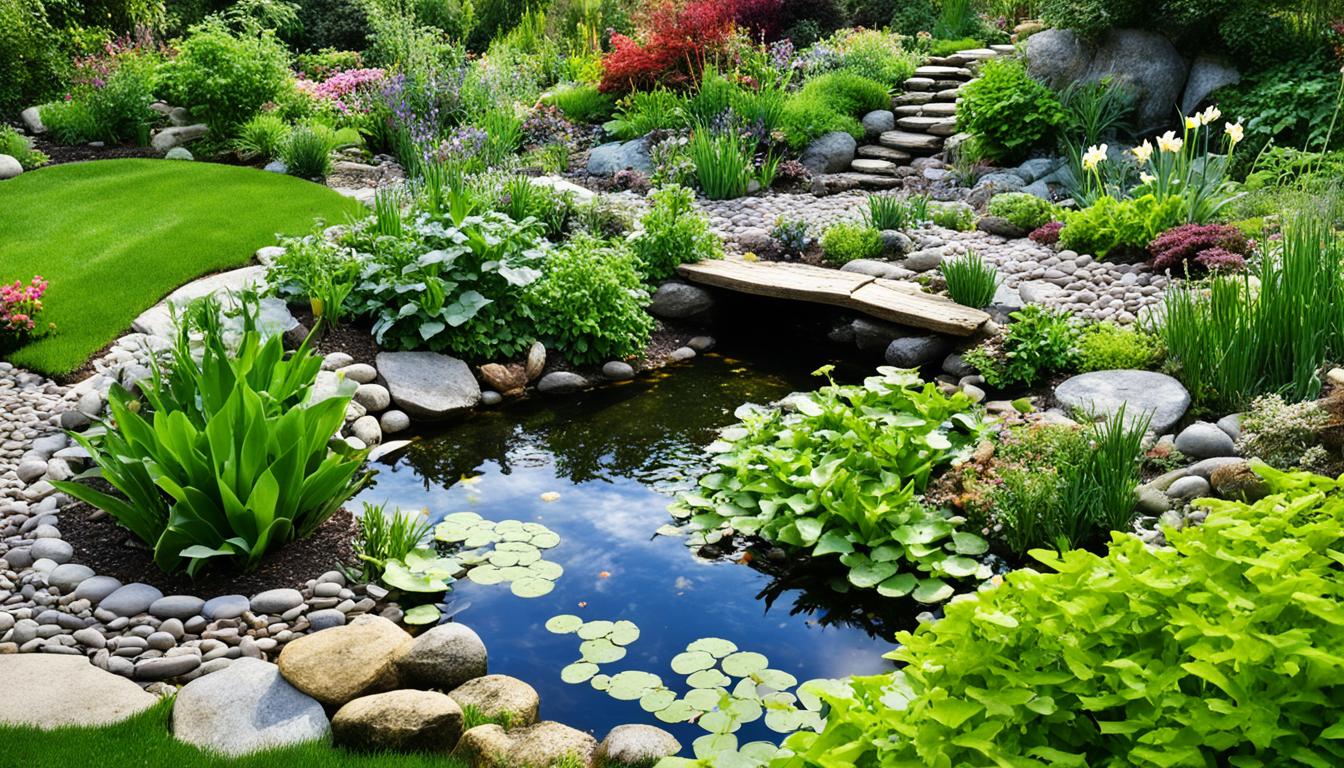
A water feature is crucial for a frog-friendly garden. It can be a small pond, a birdbath, or even a container with water. Frogs need water for breeding, eating, and keeping their skin moist.
Adding places for frogs to hide is also important. Think about using rock piles, log piles, or thick plants. These spots protect frogs from predators and make your garden more interesting for all wildlife.
By designing your garden with frogs in mind, you help your local ecosystem. You also get to enjoy these amazing creatures in your own yard.
Creating a Water Source
A reliable water source is key for a frog-friendly garden. You can use small birdbaths or big backyard ponds to attract frogs. It’s important to think about what frogs need to make sure they can live and thrive.
Types of Water Features Suitable for Frogs
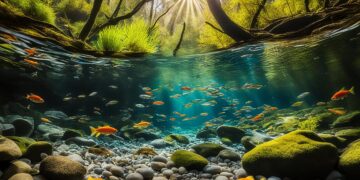
Frogs like different water features, such as small gardens, ponds, and fountains. These should have gentle sides for easy access. They also need deep and shallow areas for various species and life stages. Adding rocks, logs, and plants helps frogs hide and bask.
Maintenance Tips for Frog Ponds
Keeping a frog pond healthy means looking after the water and plants. Make sure the water is clean and free from harmful stuff. Clean and change the water often, and use filters and aerators to keep it balanced. Adding native plants helps the pond stay healthy and supports the frogs.

Providing Shelter and Hiding Spots
Frogs need safe places to hide in your garden, besides water. Use natural things like log piles, thick plants, and rock crevices. These create many hiding spots for frogs to rest, hide from predators, and stay safe in bad weather.
Natural Hiding Places for Frogs
Creating natural hiding spots is a great way to help frogs in your garden. Fallen logs or branches and leaves piles are perfect for frogs to hide in. Also, plants like native grasses, ferns, and ground covers are great for hiding.
Rock gardens and stone crevices are great for frogs too. They look like their natural homes. Adding rocks or boulders to your garden gives frogs places to hide and warm up during the day and night.
The more natural your garden is, the better it will support frogs. By offering different hiding spots, you make your backyard a welcoming place for them.
Choosing Frog-Friendly Plants
To attract and support frogs, start by picking the right plants for your garden. Native plants are key because they offer food, shelter, and places for frogs to breed. By choosing plants that fit your local climate, you help frogs and increase your garden’s biodiversity.
Native Plants for Frog Habitats
For a frog-friendly garden, pick native plants that frogs like. Native grasses, sedges, and rushes give frogs places to hide and lay eggs. Flowers like coneflowers, milkweed, and asters draw insects, which frogs eat. Trees and shrubs provide shade, shelter, and breeding spots.
Using native plants makes your garden a great home for frogs and other wildlife. This approach boosts your garden’s biodiversity and helps your local ecosystem.
Nature & Wildlife
Creating a frog-friendly garden helps these fascinating amphibians and boosts your local ecosystem’s health. It’s a way to support nature and wildlife in your yard. This can lead to more biodiversity and help with environmental conservation.
By making your yard a frog-friendly place, you’re helping protect your local ecosystem. Frogs are important for checking how healthy the environment is. They show if nature is in balance and diverse around your home. So, by creating a space for frogs, you’re crucial in keeping nature and wildlife balanced in your area.
A garden for frogs also draws in other wildlife like birds, butterflies, and small mammals. These animals add to the variety of life in your yard, making it a lively place. By offering food, water, and shelter, you’re helping your backyard be a strong and diverse ecosystem.
Enjoying nature and wildlife in your garden is fulfilling and helps the environment. By supporting frogs, you’re key to keeping your ecosystem healthy. This is important for a planet that’s full of life.
Avoiding Pesticides and Chemicals
Creating a frog-friendly garden is more than just about the right homes and food. It’s also about using eco-friendly pest control. Frogs are very sensitive to pesticides and chemicals. To keep them safe, we must use organic gardening and avoid harmful chemicals.
Organic Pest Control Methods
For a garden safe for frogs, organic pest control is best. Instead of chemicals, we use natural ways to fight pests. This includes bringing in helpful bugs like ladybugs and lacewings, and using plant-based insecticides.
Organic gardening and eco-friendly pest control help make a garden beautiful and safe for frogs. These practices make your garden a home for many creatures. This is good for frogs and helps your local ecosystem stay healthy.
A frog-friendly garden has no harmful chemicals. It uses safe, natural ways to keep nature in balance. By choosing organic gardening and eco-friendly pest control, you make a safe place for frogs and other wildlife to live.
Attracting Frog Species to Your Garden
Creating a backyard that draws in different frog species can be a fun hobby. By learning what each frog needs, you can make your garden a welcoming place for them. This boosts the area’s biodiversity and lets you enjoy the world of frogs up close.
First, find out which frogs live in your area. Knowing their likes helps you design your garden. You’ll need to include the right water sources, plants, and shelters for them.
For tree frogs, add plants that offer good hiding spots and places to perch. Ground-dwelling frogs prefer moist spots with logs, rocks, and leaves. By meeting these needs, you’ll draw a variety of frogs to your garden. This makes nature watching exciting right in your yard.
Monitoring and Maintaining Your Frog Habitat
Keeping an eye on your frog-friendly garden is key for its success. Watch for frogs and check the health of your water and plants. This helps spot problems early and keep your frogs happy.
Seeing many frog types means your garden is doing well. Hearing their calls at night is also a good sign. It shows your garden is lively and full of life.
Healthy frog habitats have lots of water plants, insects, and other small animals. These are crucial for the frogs’ food and homes. A healthy pond means your frogs have a great place to live.
Checking your water and plants often is important. Look for clear water, healthy plants, and no algae. Fixing problems quickly keeps your frogs happy and healthy.

Regular checks and care make your garden a great place for frogs. Watch for signs of a healthy frog life and adjust as needed. This helps protect these amazing creatures for the future.
Involving Children in Frog Conservation
Getting kids involved in making a frog-friendly garden is great for the whole family. Activities like pond dipping, frog spotting, and taking care of the habitat teach them about nature and wildlife. It helps them care for the environment and creates memories that last a lifetime.
Teaching kids about amphibians can make them excited about nature. Show them how to spot different frogs, their role in nature, and why we need to protect them. This hands-on learning makes kids want to help protect frogs.
Letting kids help with the garden teaches them responsibility and ownership. Give them jobs like weeding, planting new plants, or watching for frog changes. It’s a great way to teach them important life skills and show them how they can help the environment.