






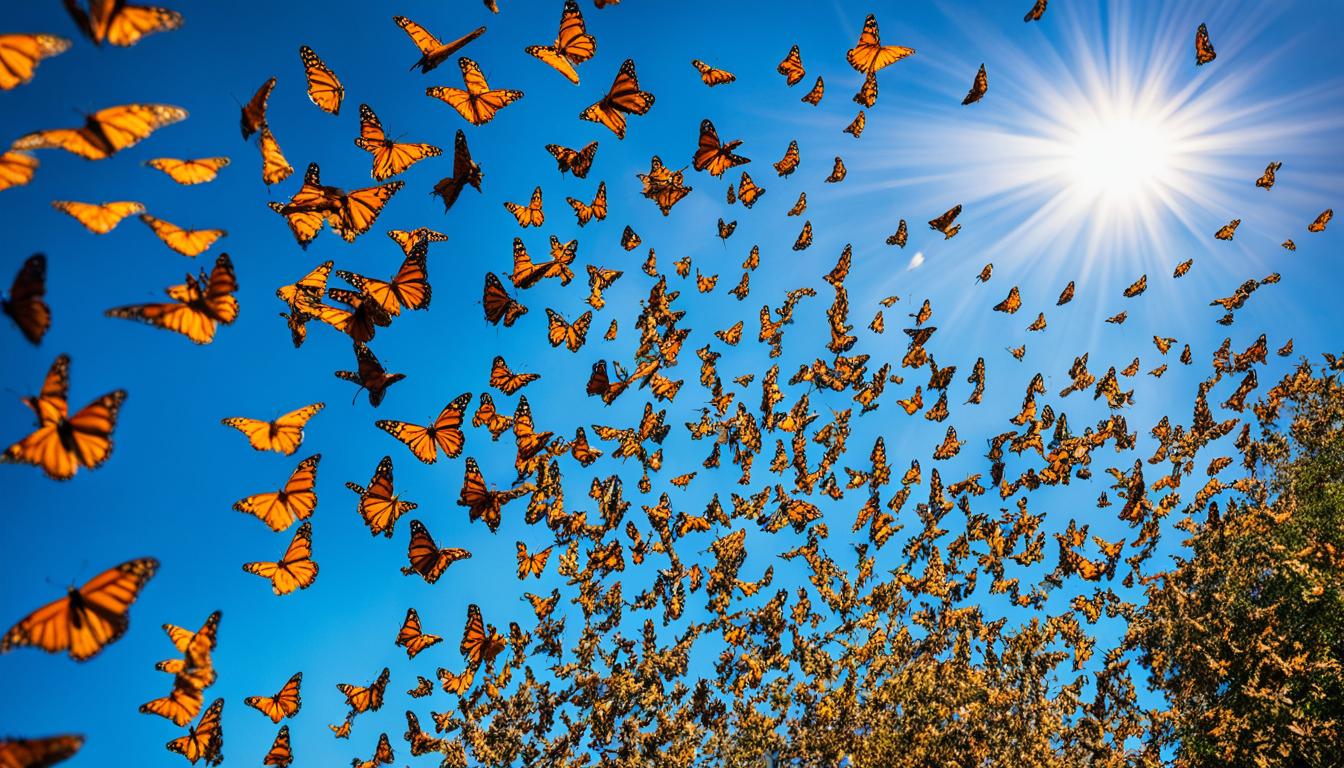
Every year, millions of monarch butterflies start an incredible journey across North America. This journey is a sight that amazes nature lovers and wildlife fans. The monarchs travel thousands of miles, showing how tough and adaptable they are.
Along the way, they face many challenges. They must survive harsh weather and avoid predators. But they keep going, driven by their goal to reach their destination.
The monarch butterfly migration is a true marvel of nature. It shows how our ecosystem works and why it’s so important to protect it. By learning about this journey, we understand the value of the habitats that monarchs need to survive.
Unveiling the Monarch Butterfly’s Remarkable Journey
Monarch butterflies are known for their amazing migration. This journey shows the beauty of nature. As the seasons change and days get shorter, they start a long trip. This trip is thousands of miles long and amazes everyone who sees it.
What Triggers the Monarch Migration?
The monarchs migrate because of the seasons and shorter days. In late summer and early fall, they know it’s time to head south. This shows how connected they are to their environment and their life cycle.
The Incredible Distances Covered
The monarch migration is a wonder of nature. These small butterflies travel up to 3,000 miles from their homes in the U.S. and Canada to Mexico. They use the sun and the Earth’s magnetic field to guide them. They stop and rest along the way to make sure they have enough energy.
The monarchs’ migration shows how resilient and adaptable they are. They face many challenges, like bad weather and predators. Yet, they always return to the same places, continuing their life cycle. This inspires wonder in all who see their journey.
Navigating Nature’s Compass: How Monarchs Find Their Way
The monarch butterfly is famous for its long migration, covering thousands of miles each year. But how do these small creatures find their way? They use many cues to guide their journey.
One key tool monarchs use is the sun. They can track the sun’s position all day, keeping their direction right as the sun moves. They also sense the earth’s magnetic field, using it like a compass.
Monarchs follow the same migration paths every year, even if it’s their first time. They use the sun, magnetic fields, and landmarks to navigate. This mix helps them find their way.
During their migration, monarchs face many challenges like changing weather and predators. But their navigation skills, passed down through generations, help them reach their destination every year. This amazing journey of the monarch butterfly never fails to amaze us.
Overcoming Obstacles: Challenges Faced During Migration
The monarch butterfly migration is amazing but faces many challenges. These delicate creatures travel a long way. They meet threats that can disrupt their journey and risk their survival.
Threats to Monarch Migration
One big challenge is the loss of habitat. Deforestation, urban growth, and new farming methods have destroyed their homes. This makes it hard for monarchs to find food and shelter.
Severe weather is another big threat. Droughts, storms, and freezes can mess up their migration. They might arrive too early or too late at their winter spots, which is dangerous.
Humans also harm monarchs with pesticides and herbicides. These chemicals hurt the butterflies and destroy their food plants. Milkweed is crucial for their survival, but it’s disappearing.
Saving the monarch migration is hard and needs many solutions. We must protect their habitats, fight climate change, and use fewer harmful chemicals. This will help these amazing insects survive.

Nature & Wildlife: Witnessing the Monarch’s Arrival
The monarch butterfly migration is a sight to see. Imagine being among towering oyamel fir trees, watching millions of monarchs gather. They form a stunning natural scene together.
The monarch butterfly overwintering sites are in the mountains of Michoacán and Estado de México. These places are special for those who love nature and wildlife. Sites like the Monarch Butterfly Biosphere Reserve let visitors see the monarchs in their full beauty.
When monarchs arrive, they start to “roost.” Millions gather together, making huge groups that can weigh up to 60 pounds per tree. Seeing this is truly amazing, with trees looking alive in orange and black.
Visitors can join guided tours or hike through the forests. They can see the monarchs take flight, filling the sky with beauty. This shows the monarch butterfly’s amazing journey and the beauty of nature.
The Lifecycle of the Monarch Butterfly
The monarch butterfly has an amazing life cycle with three main stages: egg, caterpillar, and butterfly. This cycle shows the beauty of nature and the monarch’s incredible journey each year.
From Egg to Caterpillar to Butterfly
The female monarch starts by laying her eggs on milkweed leaves. These are the only food source for the caterpillars. Soon, the eggs hatch, and the caterpillar stage begins.
The caterpillar eats a lot of milkweed leaves right away. It sheds its skin several times as it grows. Finally, it reaches about two inches long before it stops growing.
Then, the caterpillar changes into a chrysalis, or pupa. Inside, it breaks down and rebuilds itself into the beautiful monarch butterfly. This is the most dramatic change in its life.
After about two weeks, the chrysalis opens, and the monarch butterfly comes out. Its bright orange and black wings spread wide. This journey from egg to butterfly shows how adaptable and strong monarchs are as they face different habitats and challenges.
The Cultural Significance of the Monarch Migration
Monarch butterflies are more than just amazing migrants. They have deep cultural meanings around the world. These insects have been celebrated in art, myths, and traditions for a long time.
In many indigenous cultures, the monarch is a sacred symbol. It links the physical and spiritual worlds. The Aztecs in Mexico saw their return as a sign of ancestors coming back. This tradition is still celebrated during the Día de los Muertos (Day of the Dead).
In Japan, monarchs symbolize “mono no aware.” This is a deep love for life’s fleeting moments. They are often seen in art, poetry, and origami, showing the beauty of life’s shortness.

The monarch’s migration is seen as a human journey in many cultures. It shows the ups and downs of life. In the U.S., it’s seen as a symbol of resilience and the balance of nature. This inspires people to protect it and admire its yearly migration.
From ancient times to today, monarchs have fascinated people. They remind us of our connection to nature. Their cultural importance keeps growing, showing how much we value these amazing butterflies.
Conserving the Monarch: Efforts to Protect This Natural Wonder
The monarch butterfly is a symbol of nature’s beauty and strength. It faces many threats, but conservationists worldwide are fighting to save it. They work hard to protect this species and its amazing migration.
These efforts aim to tackle the challenges monarch butterflies face. They want to make sure future generations can still be amazed by them.
How You Can Help Monarch Butterflies
Helping monarch butterflies might seem hard, but we can all make a difference. Planting native milkweed is a key way to support them. Milkweed is the only food for monarch caterpillars, so it’s vital for their survival.
By growing milkweed in our gardens or even on balconies, we help provide a safe home for them. This lets monarchs have the food they need to live.
It’s also important to avoid using pesticides and herbicides. These can harm monarchs at every stage of their life cycle. By choosing eco-friendly gardening, we help create safe spaces for monarchs and other pollinators.
Supporting groups that protect monarchs and joining in citizen science projects also helps. These actions can make a big difference. From tracking their migration to planting milkweed in community gardens, there are many ways to help.
By doing these simple but powerful things, we can all help protect the monarch butterfly. Together, we can ensure this incredible species continues to amaze us for years to come.
Exploring Monarch Butterfly Sanctuaries and Reserves
Visiting a monarch butterfly sanctuary or reserve is a must for those wanting to see the monarch migration up close. These places are key in protecting the monarchs’ homes and migration paths. They are essential for the survival of these amazing insects.
In central Mexico, the monarch butterfly reserves are famous. Millions of monarchs gather there each winter after traveling from North America. These sanctuaries, in the mountains, let visitors see the monarchs’ wintering grounds. The sight of butterflies covering the trees is truly stunning.
Other great places to see monarchs are in North America. In the U.S., the Monarch Butterfly Biosphere Reserve in California’s Pacific Grove is a top spot. Here, you can see the butterflies arrive and learn about their coastal habitat.
Canada’s Point Pelee National Park is another famous spot for monarchs. It attracts visitors worldwide to see the vibrant orange and black wings in the park’s varied landscapes.
These sanctuaries and reserves are safe havens for the monarchs and let visitors connect with nature. They help us understand why we must protect this amazing species and its migration. By visiting these places, we learn more about conservation and the importance of preserving nature.
Capturing the Monarch Migration through Photography
The monarch butterfly migration is a stunning event that draws photographers from all over. It’s a chance for nature lovers and photographers to capture something truly special. This journey is not just about the beauty of the butterflies but also about the incredible journey they undertake.
Tips for Photographing Monarch Butterflies
Here are some tips to improve your monarch butterfly photography. First, pick the right spots – look for places with lots of milkweed and where monarchs are known to visit. Be patient and watch how the butterflies move. This will help you get ready to snap them in flight.
Also, try different angles and views to show off the monarchs’ bright colors and how they fly. With the right camera and an eye for details, you can capture the beauty of the monarch migration. You’ll get to see the intricate patterns on their wings and the amazing sight of many monarchs together.