




Step into the heart of Africa to discover the amazing world of its big cats. These include the regal lions and the stealthy leopards. They are the kings and queens of the wild, fascinating everyone who loves nature and wildlife.
Learn about the special traits that help these big cats survive in different places. Find out how they hunt and live together. Also, learn about the efforts to save these amazing animals from harm.
If you love safaris or taking photos of nature, this journey will change how you see Africa’s big cats. You’ll be amazed by their beauty and strength. Get ready to be moved by the wild beauty of these incredible animals.
Exploring the Magnificent Feline Predators
Africa’s wild places are home to some of the world’s most amazing big cats. These include lions, leopards, and cheetahs, each a top hunter in its own world. They have special traits that help them rule their habitats. Let’s dive into how they become the top hunters in nature.
Unveiling Nature’s Regal Hunters
The big cats of Africa are known for their strength, speed, and smart hunting ways. Lions work together in prides, while leopards sneak up on their prey. Cheetahs use their speed to catch their food. These skills have made them the top animals in the African wild.
Uncovering the Secrets of Survival
Living in Africa’s tough outdoors is hard for these big cats. They can live in many places, from open fields to thick forests. Their social lives and hunting styles help them survive against other animals and tough conditions. By learning about their lives, we see how they stay on top in the wild.
Nature & Wildlife: Africa’s Iconic Big Cats
Africa’s big cats have always fascinated people around the world. Their beauty and strength leave a lasting impression. They live in vast savannas and dense rainforests, playing a key role in Africa’s natural world.
For those who love wildlife, seeing Africa’s big cats up close is an exciting adventure. Lions, leopards, and cheetahs show us the beauty of nature. They also remind us why conservation and eco-tourism are so important.
Photographers can capture the beauty of these animals, like a lion’s regal look or a cheetah’s speed. These photos are not just memories of a trip. They also highlight the need to protect Africa’s wildlife.
Exploring Africa’s big cats reveals how they are connected to their environment. They help keep the ecosystem balanced. By learning about them, we see why it’s crucial to protect these amazing animals for the future.
Lions: The Kings of the Savanna
Lions are majestic and powerful, ruling as the top predators in the African savanna. They stand out with their size, strength, and social ways. Lions are the kings of their territory, showing interesting behaviors and hunting methods that fascinate scientists and nature lovers.
Pride Dynamics and Hunting Strategies
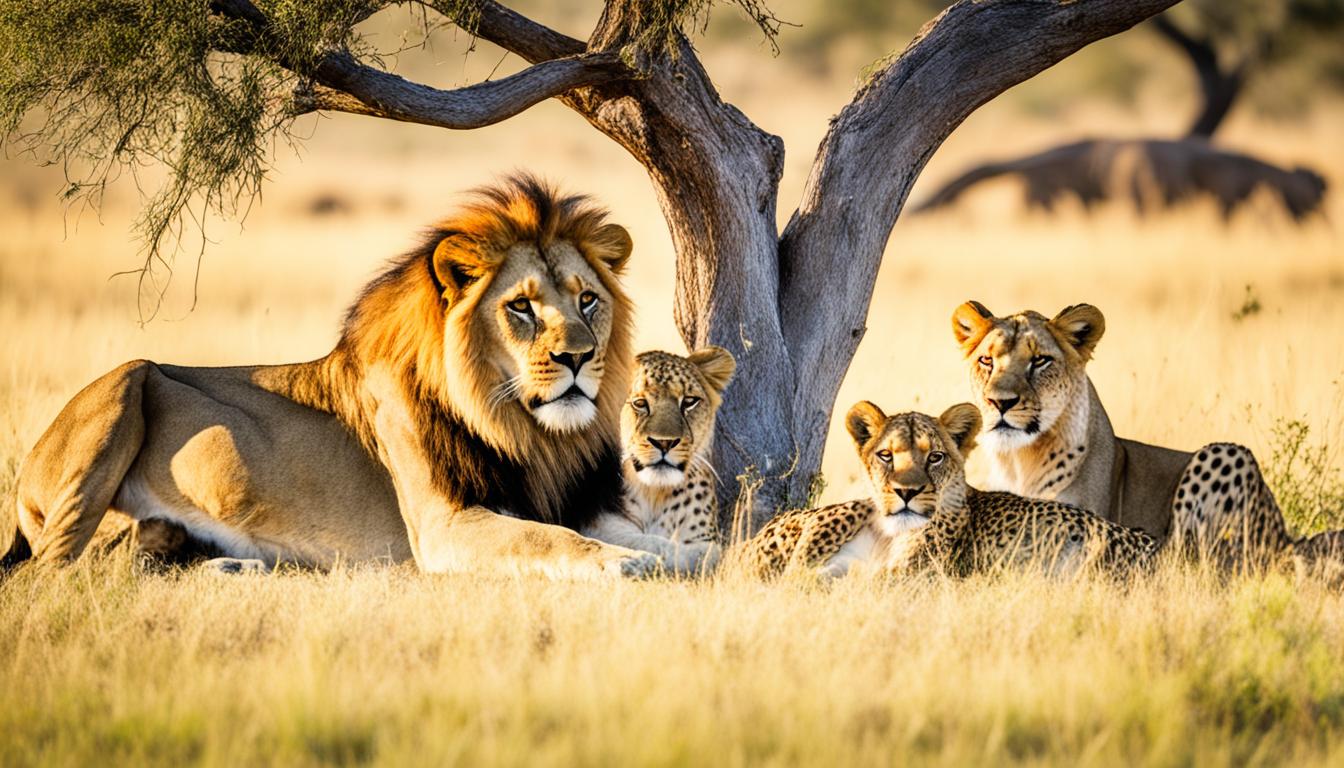
Lions live in close groups called prides, often led by a dominant male. These prides also include several females who work together to protect their land and feed the pride. Each lion has a key role in the pride’s success, creating a balanced power structure.
In hunting, lions show great teamwork. They use smart tactics to catch their prey, from small herbivores to big animals like elephants. The lionesses lead the hunt, while the males help defend the territory and protect the young.
Lions rule the savanna thanks to their adaptations and evolution as top predators. Their strong jaws, retractable claws, and size make them powerful hunters. Their social nature and complex behaviors have made them known as the “kings of the savanna”.

Leopards: Masters of Stealth and Agility
In the African wilderness, the leopard is a standout feline predator. They are known for their amazing stealth and agility. These solitary hunters have learned to live in many different places. From dense forests to open savannas, leopards show off their incredible skills.
Leopard behavior is really interesting. These animals have special traits that help them survive alone. They can sneak up on prey without being heard and climb trees to eat their catch. This stops other predators from getting to it.
The leopard’s coat is amazing at hiding, blending into the shadows and leaves. This helps them stay hidden and wait for the right time to attack. Being active at night, they use the darkness to their advantage in hunting.
Seeing a leopard in action is incredible. These solitary predators are experts in their territory. They show a perfect mix of strength, beauty, and flexibility. This shows the wild side of the African continent.
Cheetahs: The Fastest Land Mammals
In Africa’s vast wildlife, the cheetah shines with its speed and agility. It’s the fastest land mammal, reaching up to 75 miles per hour during hunts. These sleek predators are nature’s marvels, built for speed and power.
Adaptations for Speed and Hunting Tactics
The cheetah’s body is made for speed. It has a lightweight, aerodynamic shape, strong muscles, and a flexible spine. Its big nostrils help it breathe better, and its retractable claws give it grip during chases.
When hunting, cheetahs use their sharp eyes and quick reflexes. They stalk their prey, then chase it at incredible speeds. They bite the prey’s throat or suffocate it with a strong grip.
Despite their amazing skills, cheetahs are in danger. They’re vulnerable because of habitat loss, human conflicts, and illegal trade. We need to protect these endangered cats and their homes to save them.
Tigers in Africa: Myth or Reality?
Many people have wondered if tigers live in the wild in Africa. These big cats are famous in Asia, but living in Africa seems unlikely to some. Yet, looking into old records and scientific findings shows a complex story.
There have been reports of tigers in Africa over time. These stories have made people talk among wildlife fans, conservationists, and scientists. They wonder if tigers might live there, either on their own or because people brought them there.
Some say tigers can’t live in Africa because we don’t have proof like photos or DNA tests. Africa’s big and varied places make it hard to say for sure if tigers are there. Also, lions and leopards already live there, so it’s hard to imagine tigers too.
But, some believe we should look into the idea of tigers in Africa. They point out that old stories, some sightings, and the way we watch wildlife might hide the truth about tigers.
The question of tigers in Africa is still a mystery, with strong points on both sides. As we learn more about protecting wildlife and managing it, finding out about these cats could change how we see Africa’s nature and its variety.

Conservation Challenges and Efforts
Africa’s big cats, like lions, leopards, and cheetahs, face many challenges that threaten their survival. Habitat loss due to human activities is a big problem. These include things like cities growing, farms spreading, and new roads being built.
This loss of space forces these amazing animals to live in smaller areas. This leads to more conflicts with humans. Poaching is another big threat. Poachers hunt them for their fur, bones, and other parts.
This has greatly reduced the number of big cats, especially the cheetah and the Amur leopard.
Protecting Africa’s Big Cat Population
To tackle these challenges, new strategies and programs have been started. Anti-poaching efforts are now more effective. They use rangers, drones, and camera traps to catch poachers.
Ecotourism and community programs also help protect big cats. They give local people jobs and reasons to protect wildlife. This makes people care more about saving these animals.
International groups and conservation organizations are also helping. They work on projects like fixing habitats and working together across borders. These efforts aim to keep these amazing animals safe for the future.
We need to work together to protect Africa’s big cats. We must fix their living spaces, stop poaching, and help local communities. With these steps, we can ensure these incredible animals stay in their natural habitats.
Ethical Wildlife Tourism and Safaris
Responsible tourism is key to saving Africa’s big cats. By choosing conservation-oriented travel, visitors help protect these predators. They get to enjoy wildlife photography and safari experiences while supporting conservation.
Respect for nature is central to responsible tourism. Eco-lodges and other green places work with local communities. They aim to lessen their environmental impact. Guides who love the big cats share their knowledge, inspiring visitors to help protect these animals.
By picking responsible tourism, travelers support important projects. These projects include research, anti-poaching efforts, and restoring habitats. This helps protect Africa’s big cats for the future. Travelers become part of the solution, making a big difference.
Extraordinary Encounters with Big Cats
Step into the world of Africa’s big cats for unforgettable moments. Here, you can see these amazing animals in their natural setting. From open savannas to thick forests, these experiences change lives and leave a mark on anyone who loves nature or photography.
On African safaris, you get close to lions, leopards, and cheetahs in their world. You might be just a few feet from a lion pride, watching their social life and hunting skills. Seeing a leopard move through trees or a cheetah run fast is amazing.
These places are perfect for those who want to see nature up close. You can take photos or just enjoy the beauty of these animals. Whether you’re tracking a big cat or admiring their strength and beauty, these moments are unforgettable.