






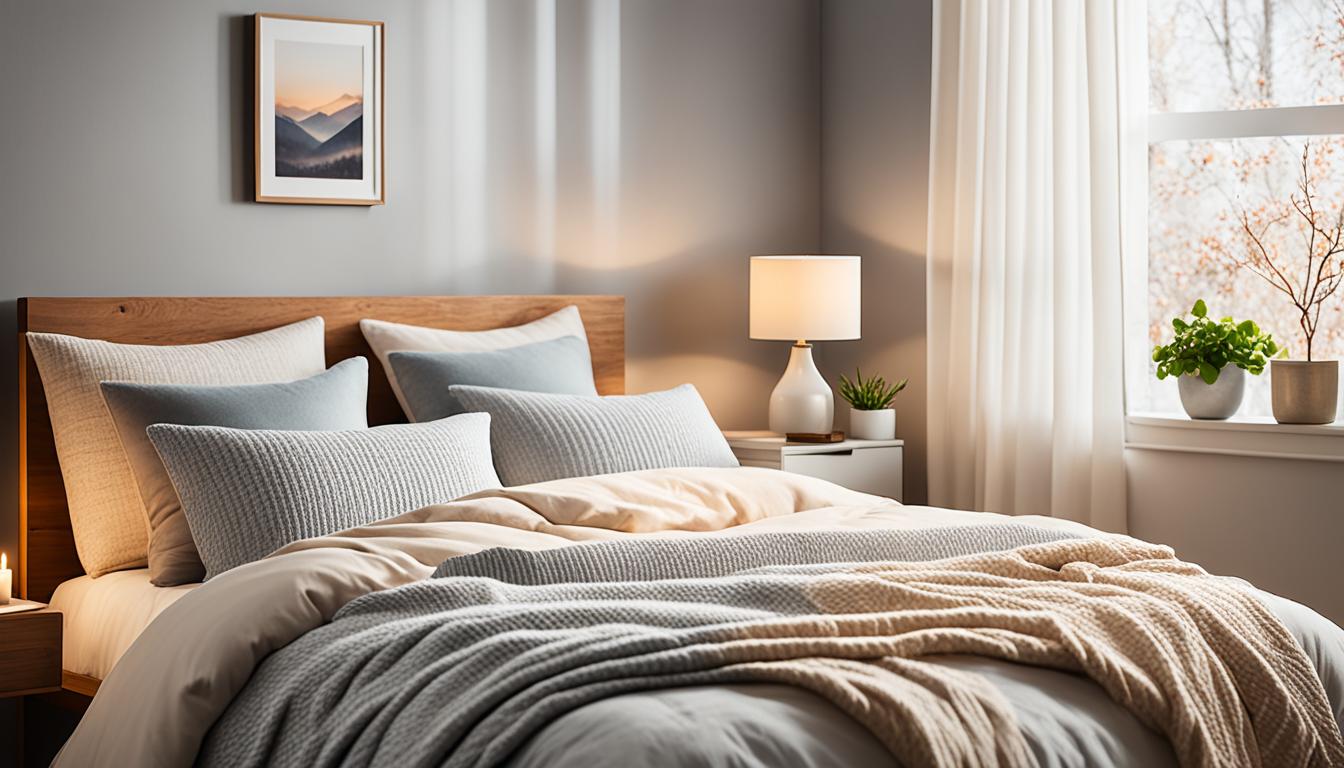
Getting enough sleep is key for your health and happiness. A regular bedtime routine helps your body and mind wind down. This leads to better sleep and a fresh start each day. We’ll share tips and strategies for a calming bedtime routine. This includes relaxation techniques and sleep hygiene tips.
A relaxing bedtime routine boosts your sleep quality and well-being. It involves calming activities and a sleep-friendly environment. This helps your body and mind feel calm at bedtime. It makes sleeping better and forming good sleep habits easier.
Importance of a Consistent Bedtime Routine
Having a regular bedtime routine is key for good sleep and well-being. Doing the same activities before bed tells your body it’s time to sleep. This makes falling asleep and staying asleep easier. It also improves the quality of your sleep and your overall health.
Benefits of Establishing a Routine
Regular bedtime routines offer many advantages. They help set your body’s internal clock, leading to better sleep quality and length. This means you’ll feel more energetic, think clearer, and be more productive during the day.
They also help lower stress and anxiety, making it easier to relax and sleep well. This routine can greatly improve your daily life.
Impact on Sleep Quality and Well-being
A consistent bedtime routine does more than just help you sleep better. It also reduces stress and anxiety, making you feel happier and more mentally healthy. By sticking to a regular sleep schedule and practicing good sleep habits, you can fully enjoy the benefits of sleep.
This includes better thinking skills, a lower risk of health problems, and a greater feeling of well-being.
Setting the Stage for a Relaxing Environment
Creating a sleep-friendly space in your bedroom is key for a good bedtime routine. It helps set the stage for peaceful and restful sleep. Start by focusing on temperature, lighting, and noise levels.
Keeping your bedroom cool is vital for good sleep. Try for a cooler temperature since your body cools down when you sleep. Find the perfect thermostat setting that makes you feel calm and helps you fall asleep faster.
Lighting is also crucial for a relaxing bedroom. Choose soft, warm lights that get dimmer like the day does. Avoid harsh, bright lights that can mess with your sleep cycle.
Noise can affect your sleep quality too. Use earplugs, a white noise machine, or fans for a constant sound. Add things like plush bedding and cozy colors to make your bedroom sleep-friendly. With these changes, you’ll be on your way to better sleep.
Winding Down: Activities to Promote Relaxation
As the day ends, it’s key to do things that help you relax and get ready for sleep. Adding relaxation techniques to your bedtime routine can make your sleep better and boost your health.
Gentle Stretching and Yoga Poses
Gentle stretches and simple yoga poses are great for unwinding before bed. They ease muscle tension, boost blood flow, and soothe your mind. Try poses like child’s pose, seated forward fold, and supine spinal twist in your bedroom to relax.

Meditation and Breathing Exercises
Mindfulness meditation or deep breathing can greatly reduce anxiety and bring peace. Spend 10-15 minutes before bed on techniques like box breathing or body scan meditation. These methods help clear your mind of daily worries, making it easier to fall asleep.
Adding these relaxing activities to your bedtime routine can lead to better sleep. Try different techniques to see what suits you best for your sleep needs.
Creating a Sleep-Friendly Bedroom
Your bedroom’s environment is key to good sleep. Making it sleep-friendly by adjusting the temperature, lighting, and bedding can help you sleep better. This means you’ll fall asleep faster and stay asleep all night.
Optimizing Temperature and Lighting
Keeping your bedroom cool is vital for sleep. The ideal temperature is between 65°F and 70°F (18°C and 21°C). This coolness helps your body drop its temperature, which is a key signal for sleep.
Lighting is also crucial. Use soft, dim lights before bed. Bright lights from devices like phones can mess with your sleep cycle. Use blackout curtains or an eye mask to keep out outside light.
Choosing Comfortable Bedding
Your bedding’s quality and comfort affect your sleep. Get a mattress that suits your body and how you sleep. Add soft sheets and a warm, temperature-regulating blanket. Pillows that support your neck can also help you sleep better.
By making your bedroom right for sleep, you create a place that helps you relax and follow your natural sleep cycle. These easy changes can greatly improve how well you sleep and how you feel.
Limiting Screen Time and Digital Distractions
Using electronic devices like smartphones and computers before bed can disrupt your sleep. These devices emit blue light, which can lower melatonin levels. This hormone helps control when you feel tired or awake. To get better sleep, it’s key to cut down on screen time before bed and reduce digital distractions.
The blue light exposure from screens can make your brain think it’s still day. This makes it tough to relax and sleep well. To fix this, stop using digital devices a few hours before bedtime. This lets your body get ready for sleep naturally.
Try a digital detox in the evening by putting your devices in another room or turning them off. This makes your space calm and free from distractions. It helps you focus on relaxing activities like reading or yoga. These activities improve sleep by making you less mentally active.
Having a bedtime routine that limits screen time before bed greatly improves your sleep. Healthy sleep habits help your body’s natural sleep cycle. This way, you wake up feeling refreshed and ready for the day.
Incorporating Relaxing Scents and Aromatherapy
Using relaxing scents and aromatherapy can change your bedtime routine for the better. Essential oils like lavender, chamomile, and bergamot help you relax and sleep better. They are great natural ways to ease into sleep.
Adding sleep-promoting fragrances to your evening can make your space calming. You can use a diffuser, apply oils on your skin, or add them to your bath. This can really help your mind and body relax.

Lavender is a top pick for those looking for aromatherapy for sleep. It calms the nervous system, reducing stress and anxiety. Chamomile is another good choice for essential oils for bedtime. It helps you sleep deeper and more soundly.
It’s easy to add these natural sleep aids to your routine. Try different sleep-promoting fragrances to see what works best for you. Let aromatherapy lead you to a more peaceful bedtime.
Health & Wellness Tips for Better Sleep
Getting good sleep is key to our health and wellness. By making a few simple changes, you can help your body sleep better. This leads to restful and restorative sleep.
Keeping a regular sleep schedule is crucial. Going to bed and waking up at the same time every day helps your body’s clock. It also makes your sleep better. Plus, regular exercise is great for sleep. Working out during the day helps you relax at night.
Watch how much caffeine and alcohol you have before bed. Too much coffee or energy drinks can mess up your sleep. Drinking alcohol might make you sleepy at first, but it can hurt your deep sleep later.
Focus on these habits for better sleep and wellness. A consistent routine and smart choices can improve your sleep quality. This way, you can enjoy the benefits of a good night’s rest.
Establishing a Calming Pre-Bedtime Routine
Creating a consistent pre-bedtime routine helps you relax and get ready for sleep. It tells your brain it’s time to calm down. By doing calming activities, you signal to your brain that it’s night.
Relaxing Rituals and Habits
Try different activities to find what works for you. You might like taking a warm bath, reading, or doing gentle stretches. These activities help prepare you for better sleep.
Adding calming rituals like drinking warm tea or using essential oils can also help. Doing these things every night trains your body for sleep. It makes it easier to relax and fall asleep.
It’s important to find what works for you. Keep trying different things until you find the right mix of activities. This way, you’ll feel calm and ready for sleep.
Managing Stress and Anxiety Before Bedtime
Stress and anxiety can make it hard to sleep well. But, using mindfulness before bed can help. It’s a great way to relax and get ready for sleep. By managing stress before bed, you can sleep better and wake up refreshed.
Mindfulness Techniques for Relaxation
Deep breathing is a top way to reduce stress and anxiety at night. It activates your body’s relaxation system. Another good method is progressive muscle relaxation, where you tense and then relax each muscle group. Guided imagery, imagining a peaceful place, also helps calm you down and prepare for sleep.
These mindfulness practices are great for handling stress and anxiety. They help you stay in the moment, which is key for those who worry a lot at night. Adding these relaxation techniques to your bedtime routine can calm your mind and help you sleep better.
Adjusting Your Routine for Optimal Results
Creating a bedtime routine is a process that needs flexibility. What helps one person might not help another. It’s key to try different activities and see what works for you.
Watch how your body and mind react to different elements of your routine. Be ready to change things to get the best sleep possible. With time and a readiness to change your sleep habits, you can make a personalized bedtime routine that helps you sleep better and feel good.
Finding the right bedtime routine is a process of trying and adjusting. Don’t hesitate to try new things and tweak your routine until you find the perfect mix. This will help you improve your sleep quality and wake up feeling refreshed and new every day.