


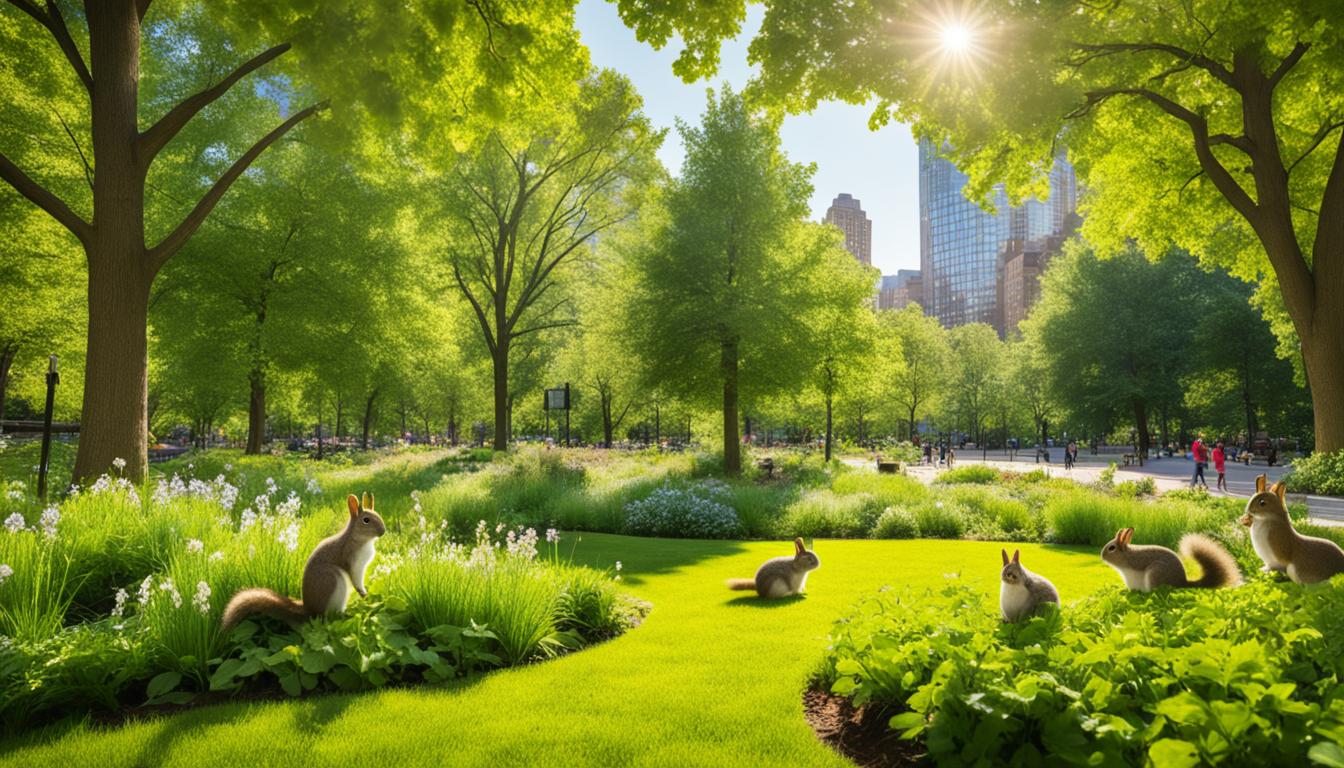
Our world is getting more urban, making it crucial to protect urban wildlife. Cities grow, and we must balance growth with nature. By understanding urban biodiversity and making our cities friendly for wildlife, we can help urban animals and plants do well.
Urban wildlife is key to our ecosystem’s health. They help with pollination and keep pests in check. By supporting urban biodiversity, we help nature and ourselves feel better.
This article will show how we can help urban wildlife flourish. We’ll look at making habitats friendly for wildlife, reducing disturbances, and getting the public involved. Together, we can make our cities better for urban animals and plants.
Importance of Preserving Urban Biodiversity
Urban areas might seem full of concrete and buildings, but they’re home to a lot of urban biodiversity. These ecosystems are key for keeping ecosystem services balanced. They help with pollination and pest control. Plus, being close to nature and urban wildlife can make people feel less stressed and more connected to the earth.
Role of Urban Wildlife in Ecosystem Balance
The urban ecology of cities is more complex than it seems. Urban animals, like birds, small mammals, insects, and pollinators, are vital for biodiversity conservation. They keep ecosystems healthy by controlling pests, spreading seeds, and cycling nutrients. This helps keep the balance in urban ecosystems.
Benefits of Urban Wildlife for Mental Health
Having urban wildlife in cities is good for people’s mental health. Studies show that being around nature and wildlife lowers stress, boosts mood, and increases well-being. It helps people feel more connected to the natural world. This can make life better and improve overall health and happiness.
Creating Wildlife-Friendly Habitats
Creating urban wildlife habitats is key to supporting local biodiversity and helping urban animals. By using native plants, providing shelter, and making wildlife corridors, we can change our cities into safe havens for many species.
One great way to make a habitat friendly is through biodiversity-friendly landscaping. This means swapping non-native plants with ones that are native and fit the local climate. Native plants offer food and shelter for wildlife and save water. They also cut down on the need for harmful chemicals.
Adding things like brush piles, rock gardens, and water sources helps urban wildlife find places to live and nest. By planning our outdoor areas with wildlife in mind, we can create paths for them to move safely between green spots.
Creating a wildlife-friendly city is good for both humans and animals. It keeps our cities in balance and lets people enjoy nature right outside their homes. By choosing plants and designs that help wildlife, we make our cities better for everyone.
Providing Food and Water Sources
It’s key to make sure urban wildlife has food and water. By using native plants in your yard, you can draw in many animals. These include butterflies and birds that need these plants for food.
Native Plants for Urban Wildlife
Native plants are vital for a wildlife-friendly area. They offer food and shelter for local animals. Adding plants that give nectar, seeds, and other nutrients helps many urban animals.
Think about adding native flowers, berry bushes, and seed grasses. This makes your backyard a great place for wildlife.
Setting Up Bird Feeders and Baths
Besides native plants, bird feeders and baths are great for wildlife. They help during tough times or when resources are scarce. Putting these near your native plants makes it easy for birds to find everything they need.

Using native plants and extra food and water makes your yard a welcoming place for wildlife. It helps them do well even in the city.
Minimizing Disturbances and Threats
Urban wildlife faces many challenges, like human disturbance, car traffic, and pollution. It’s crucial to lessen these threats for a safe home for local animals. Light and noise pollution are big problems that disrupt their natural lives.
Reducing Light and Noise Pollution
Light pollution can mess with urban animals’ sleep and hunting. Using special LED bulbs and motion-sensor lights can help. This helps animals and makes neighborhoods quieter, which is good for everyone.
Noise pollution, from cars and building work, also bothers urban wildlife. Quiet neighborhoods can be made with things like slower traffic and sound-absorbing walls. This makes a better place for animals to live.
By tackling light and noise pollution, we can make life better for urban animals. Adding things like green spaces and food sources also helps. Together, these efforts can make cities healthier and more diverse.
Nature & Wildlife: Coexisting with Urban Animals
As cities grow, we must learn to live with the animals that call them home. It’s important to understand their behaviors and needs. We also need strategies to prevent conflicts and keep everyone safe.
Living with urban wildlife is key to a healthy city. By making our spaces friendly for wildlife and reducing disturbances, we help many species thrive. This improves life for both animals and people living in the city.
Good urban biodiversity management helps balance human and wildlife needs. We can do this by offering food and water, reducing pollution, and teaching people about wildlife. This way, we create a place where humans and animals can live together well.
Appreciating the wildlife in our cities helps us value their role in our ecosystem. This approach to living with wildlife benefits animals and people alike. It leads to a more peaceful and sustainable future for our cities.
Educating and Involving the Community
Getting the local community involved is key to the success of urban wildlife conservation. By teaching people about the value of city wildlife, we can make them care more. This way, they can help protect their local nature.
Community projects are great for this. They make people aware, collect important data, and build a sense of shared responsibility. This helps everyone feel connected to the well-being of urban wildlife.
Citizen Science Projects for Urban Wildlife
Citizen science projects are perfect for getting the community involved in wildlife conservation. They let people help with data collection and research. This gives us important insights into city ecosystems.
By joining these projects, people learn about the wildlife around them. They also help scientists understand urban ecology better. This is good for everyone.
 The Great Backyard Bird Count is one example. It asks people to count the birds in their yards or parks. This info helps scientists study bird populations and migration patterns. It also helps with conservation efforts.
Other projects like the City Nature Challenge ask people to record the plants and animals in their cities. This gives us a full picture of local biodiversity.
These projects spread urban wildlife education far and wide. They make people appreciate nature more and encourage them to help protect it. Working with local groups and schools, we can make conservation efforts stronger. This ensures the long-term health of urban ecosystems.
Urban Gardening for Wildlife
Urban gardens and green spaces are great for supporting local wildlife and increasing city biodiversity. By making these areas into homes for many species, city folks help keep nature alive. They also help make cities more sustainable.
Creating Pollinator-Friendly Gardens
Designing gardens that attract pollinators is a big step towards helping urban wildlife. By planting native flowers and trees, we give bees, butterflies, and other pollinators a place to find food and shelter. Adding water sources and cutting down on pesticides makes these gardens even better for wildlife.
Urban gardening also means creating gardens with native plants that help birds, mammals, and other animals. Using plants from the local area means these animals have what they need to survive. It also means using less water and avoiding harmful plants.
By turning their gardens into safe spaces for wildlife, city people can really help protect local nature. They make cities healthier and more sustainable for all living things.
Responsible Pet Ownership in Urban Areas
If you live in the city, you might have a pet at home. Pets bring joy but also a big responsibility. It’s important to make sure they don’t harm the local wildlife. Finding a balance between your pet and the city’s ecosystem is key.
Managing your pets well is crucial. Outdoor cats can hurt birds and small mammals. Keeping your cat inside or in a safe area helps protect these animals. Training your dog not to chase wildlife also helps protect them.
But pets can also help the environment. They can make people care more about nature. By adding native plants and water sources, you can make your area a safe place for wildlife.
By managing your pets and making your area friendly for wildlife, you help protect local animals. Making smart choices lets pets and wildlife live together well. This way, both can thrive in the city.
Supporting Local Conservation Efforts
Supporting local conservation efforts is key to protecting urban wildlife and ecosystems for the long term. This means volunteering with groups, donating to non-profits, or helping government agencies. They work to fix habitats, count wildlife, and push for policies that help wildlife.
Volunteering and Donating to Wildlife Organizations
Donating to local conservation groups gives them the funds they need. By working with others, we can make a bigger difference. Every little bit helps, whether it’s helping at a garden, counting wildlife, or giving money to protect nature in our cities.