






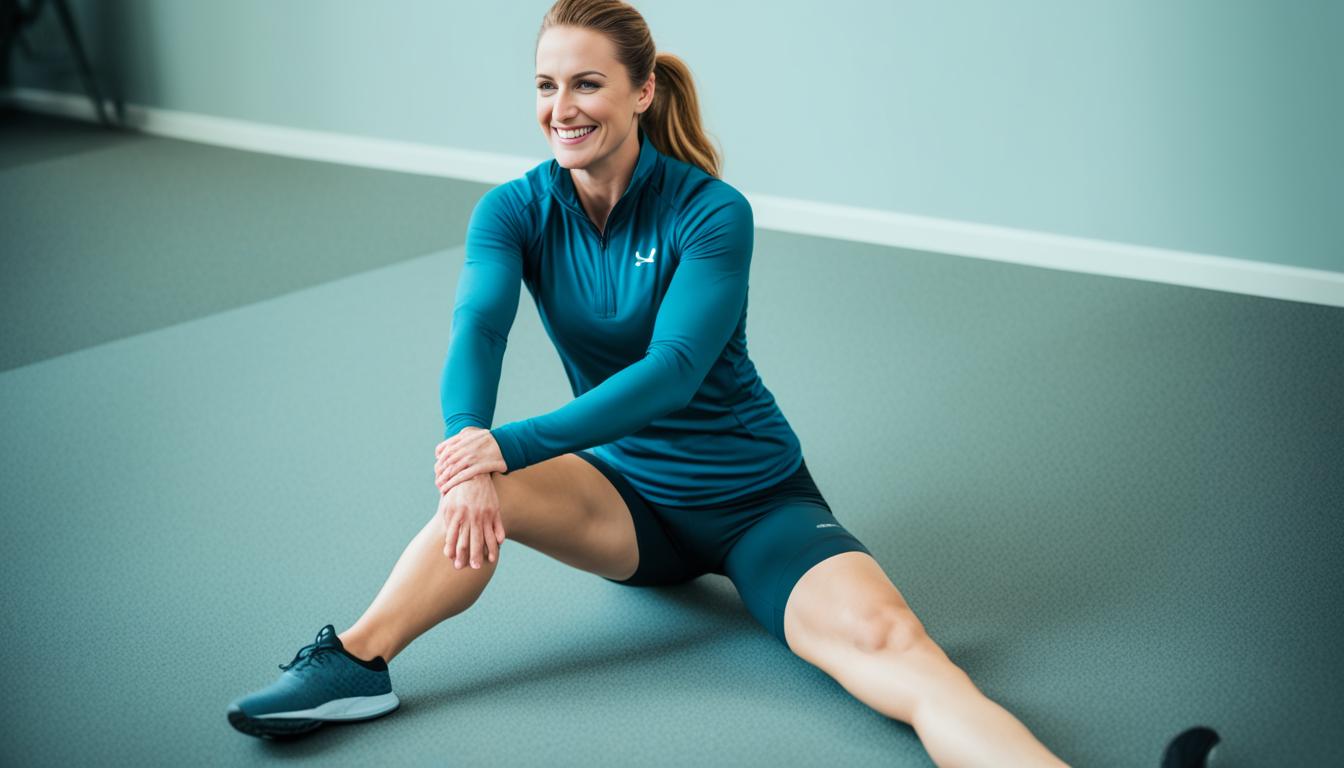
Flexibility is key to good health and wellness. By doing flexibility training, you gain many benefits. These include better joint range of motion, improved posture, less pain, and more athleticism. This guide will give you the tools and techniques to boost your flexibility.
If you’re an athlete wanting to get better or just someone wanting more mobility and health, this article is for you. We’ll talk about different stretching routines, like dynamic and static ones. We’ll also look at how adding yoga to your workout can help.
Let’s start exploring mobility exercises and discover how to fully use your body’s potential. Get ready to feel more flexible, move easily, and see how better flexibility can change your life.
Understanding the Importance of Flexibility
Flexibility is often seen as just a part of fitness, but it’s crucial. It can greatly reduce the chance of getting hurt and boost your athletic skills. Knowing how important flexibility is is the first step to using it to your advantage.
Benefits of Improved Flexibility
Having more flexibility means you can move your joints more easily. This makes moving around easier and helps you stand up straight, balance better, and move more smoothly. It also helps prevent injuries by easing the stress on muscles and tendons during exercise or daily activities.
For athletes, flexibility is key to doing well. Athletes with good flexibility move better, are stronger, and faster. Whether you’re a pro or just starting out, getting more flexible can take your fitness to the next level.
Common Flexibility Myths Debunked
Flexibility is often misunderstood, with many myths around it. One myth is that you’re stuck with your flexibility level because of your genes. But the truth is, you can get better with regular practice and effort. Another myth is that stretching is only for before or after working out. But stretching at different times of the day can really help over time.
By clearing up these flexibility misconceptions, you can see the real value of this key fitness area. This opens up new chances for better health, improved performance, and a more balanced fitness routine.
Preparing for Flexibility Training
Getting your body ready for flexibility training is key to a safe and effective workout. Start with a good warm-up to boost blood flow, grease your joints, and get your muscles ready for stretching. This approach not only boosts your flexibility but also lowers the risk of getting hurt.
Warm-up Exercises for Optimal Flexibility
Start your flexibility training with dynamic warm-up exercises. These moves wake up your main muscle groups and slowly increase how far you can move. Arm circles, leg swings, and torso twists are great options. They help with mobility preparation and injury prevention, making your flexibility training go smoothly.
Adding warm-up exercises that focus on certain muscles can also boost your flexibility training preparation. Shoulder rolls or knee hugs can get your shoulders and hips ready for deeper stretches. Proper warming up means you’ll move more easily and enjoy your flexibility training more.
Dynamic Stretching Techniques
Getting your body ready for exercise is key, and dynamic stretching is a big part of that. It’s different from static stretching, which keeps you in one spot. Dynamic stretching moves you through different motions to boost flexibility and joint mobility.
These routines focus on important muscle groups. They help increase your flexibility and make your joints more mobile. Adding them to your warm-up can activate muscles and get your body ready for harder activities.

When doing dynamic stretches, move smoothly and control your movements. Don’t bounce or jerk, as that can lead to injuries. Keep your form right and breathe well through each exercise.
Good dynamic stretches include arm circles, leg swings, lunges with a twist, and torso rotations. Adding these to your warm-up can make your joints more flexible, improve your motion range, and help you have a better workout without getting hurt.
Static Stretching Routines
Static stretching is about holding a stretch for a long time. It’s great for making your muscles more flexible and mobile. Adding static stretches to your workout can help you move better and perform better in sports.
Target Muscle Groups for Increased Flexibility
It’s key to focus on certain muscles to get the most from static stretches. These muscles include the hamstrings, quadriceps, calves, hip flexors, and shoulders. Stretching these can make you more flexible and lower your injury risk.
Proper Form and Breathing Techniques
Getting your stretches right is important for safety and effectiveness. Keep your posture right, engage the muscles you’re stretching, and breathe deeply. Don’t bounce or jerk, as it can hurt your flexibility and safety. Deep, steady breaths help your muscles relax and stretch fully.
Adding static stretches to your routine can greatly improve your flexibility and mobility. Focus on the right muscles, keep your form correct, and breathe right. With regular practice and focus, you’ll see big improvements in how you move and perform.
Incorporating Yoga into Your Flexibility Routine
Yoga is a great way to boost your flexibility and mobility. Adding yoga to your fitness plan helps you move better, balance better, and connect deeper with your body. We’ll look at easy yoga poses that focus on key muscles and joints. These poses will help you improve your flexibility.
Beginner-Friendly Yoga Poses
The child’s pose is a top choice for getting flexible. It stretches your hips, thighs, and lower back. This helps you move better in these areas. Start on your hands and knees, then sit back on your heels and fold forward, stretching your arms out.
The downward-facing dog is another great pose for flexibility. It stretches your hamstrings, calves, and shoulders, and strengthens your core. Start on your hands and knees, then lift your hips up and back, making an “V” shape with your body.
The pigeon pose is perfect for beginners. It works on your hips and helps with joint movement. Start in a lunge, bring your front knee to your chest, and stretch your back leg behind you. Lower your torso to the ground, feeling the stretch in your hips and glutes.
Adding these beginner yoga poses to your routine will open up new mobility. You’ll use your body’s full range of motion.
Health & Wellness Tips for Maintaining Flexibility
Keeping flexibility for a long time is more than just stretching and exercising. It’s about taking care of your overall health and wellness. By adding these tips to your daily life, you can keep up the flexibility gains and enjoy better mobility for many years.
Eating right and drinking enough water are key to keeping flexibility. Make sure your diet includes lean proteins, healthy fats, and lots of fruits and veggies full of antioxidants. Drinking plenty of water also helps your muscles and connective tissues stay flexible.
Managing stress is vital for keeping flexibility. Too much stress can make your muscles tight and reduce how well you can move. Try doing yoga, meditation, or just taking short breaks during the day to relax and stay flexible.

Regular exercise and active recovery are key to keeping up your flexibility. Add activities like walking, swimming, or cycling to your routine to keep moving and muscles working. Also, try foam rolling or self-myofascial release to ease muscle tightness and prevent injuries.
Putting flexibility first through healthy habits leads to better mobility, fewer injuries, and overall better health and wellness.
Foam Rolling for Muscle Recovery
Foam rolling, or self-myofascial release, is a key part of fitness. It’s simple yet powerful. It helps with flexibility, mobility, and muscle recovery. By focusing on certain muscles, you can ease tension, lessen soreness, and keep flexibility up. This is key for your health and how well you perform.
Self-Myofascial Release Techniques
Doing foam rolling right is all about the technique. First, find where you feel tight or sore. Then, roll the muscle over the foam roller slowly. Be gentle and skip over bones. Stop when it hurts too much.
Adding foam rolling after working out helps with muscle recovery. It works on the fascia, the tissue around your muscles. This helps break up knots, improves blood flow, and lessens soreness. Regular foam rolling also boosts flexibility and helps prevent injuries.
Don’t make foam rolling hurt. Adjust how hard you press and how long you roll based on what feels right for you. With regular practice, you’ll see better muscle recovery, more flexibility, and improved mobility. These benefits help with your overall health and performance.
Overcoming Flexibility Plateaus
Even the most dedicated fitness fans can hit frustrating plateaus in their flexibility. But don’t give up – with the right strategies, you can beat them and keep improving your flexibility and mobility.
Advanced Stretching Techniques
One way to break through flexibility plateaus is by using advanced stretching methods. Simple stretches may not work as well once your body gets used to them. Try PNF (proprioceptive neuromuscular facilitation) stretching, which uses muscle contractions to increase flexibility. Ballistic stretching, with controlled bouncing motions, can also help you go beyond your limits.
Trying out different stretching styles, like active isolated stretching or contract-relax stretching, can also lead to big improvements. The main idea is to keep challenging your body with new things to avoid getting stuck.
Also, focusing on specific muscle groups that are holding you back can make a big difference. Work on improving your range of motion in these areas with targeted stretches and exercises. This can help unlock your full flexibility potential.
With patience, consistency, and a willingness to try new advanced stretching techniques, you can beat even the toughest flexibility plateaus. This way, you can keep moving forward towards your fitness goals.
Integrating Flexibility into Your Everyday Life
Improving your flexibility doesn’t have to be just for workouts. By adding mobility habits to your daily life, you can feel more flexible all day. Simple stretches at your desk and choosing an active lifestyle can make flexibility part of your daily routine.
Boost your flexibility by setting reminders for standing breaks and desk stretches. These short movements fight the effects of sitting too long and help your posture. Try using an exercise ball or a standing desk to move more.
Outside of work, find ways to add flexibility to your day. Choose stairs over the elevator, have walking meetings, or visit parks during lunch. These changes can boost your mobility and lower the chance of pain. Making flexibility a key part of your life leads to more productivity and better well-being.