

In today’s fast-changing world, saving local wildlife is more important than ever. As our communities grow, we must act to protect nature’s balance. This guide will give you tips and insights to help protect wildlife in your area. Together, we can ensure a healthy future for the many species living among us.
Learning about wildlife’s role in nature helps us value our world more. By making our yards safe for wildlife, supporting conservation, and reducing our impact on the environment, we all play a part. Let’s work together to protect and preserve the local species that make our communities special.
Understand the Importance of Local Wildlife
Keeping our local ecosystems in balance is key to their health and diversity. Local wildlife is crucial for conservation efforts. It’s important to understand their role and how they connect with each other.
This knowledge helps protect the biodiversity that supports our planet for the future.
The Role of Wildlife in Ecosystem Balance
Every creature, big or small, has a special job in its ecosystem. Pollinators like bees and butterflies help plants reproduce. Predators keep animal populations in check. Decomposers like fungi and bacteria recycle nutrients back into the soil.
This balance between predators and prey, and producers and consumers, keeps ecosystems healthy and strong. It helps them adapt to changes.
Preserving Biodiversity for Future Generations
Keeping biodiversity is not just about the beauty of nature. It’s about making sure our planet stays sustainable for the future. Losing species can disrupt the entire web of life that supports us.
Protecting local wildlife and their homes keeps genetic diversity high. This lets ecosystems adapt to challenges like climate change and diseases. By doing this, we make sure our kids and grandkids will have a world full of life.
Identify Threats to Local Wildlife
Protecting local wildlife is key, but we must first know the main threats they face. Habitat loss and fragmentation are big problems. Human actions are taking over natural spaces, leaving many species without homes.
Habitat Loss and Fragmentation
Habitat loss is a big threat, happening when nature is turned into areas for human use like farms, cities, or roads. This forces wildlife to fight over what’s left or move to tiny, broken-up areas. Habitat fragmentation makes things worse by breaking up big habitats into small pieces. This makes it hard for animals to find food, shelter, or a mate.
This issue affects local wildlife in many ways, like reducing their numbers, genetic variety, and health. If species can’t adjust, they might disappear locally, upsetting the ecosystem balance. Knowing about habitat loss and fragmentation helps us act to save the natural homes of local wildlife.
Create a Wildlife-Friendly Backyard
Your backyard can be a key spot for local wildlife. By changing your outdoor area, you help the creatures in your area. This guide will show you how to make your backyard a safe place for wildlife. You’ll learn about planting native plants, offering water, and creating nesting spots.
Planting Native Species
Choosing the right plants is key for a wildlife-friendly backyard. Native plants are best because they feed and shelter local wildlife. They’ve grown with the animals in your area, so they’re perfect for your garden. Look for native flowers, trees, and shrubs that draw in a variety of wildlife.

Providing Water Sources
Along with native plants, having water sources is vital for wildlife in your backyard. Think about putting in a birdbath, small pond, or a simple dish of water. Make sure the water is clean and safe, and place it where animals can easily get to it.
Offering Shelter and Nesting Sites
Lastly, add wildlife shelter and places for them to nest. You could put up birdhouses, leave sticks or leaves for small animals, or let some areas get a bit wild. These things help many creatures make your wildlife-friendly backyard their home.
Support Local Conservation Efforts
Protecting local wildlife and the environment starts with action at the local level. Supporting local conservation efforts is a great way to help. By volunteering, you can make a real difference. You can help protect the natural resources that support local ecosystems.
Volunteering with Environmental Organizations
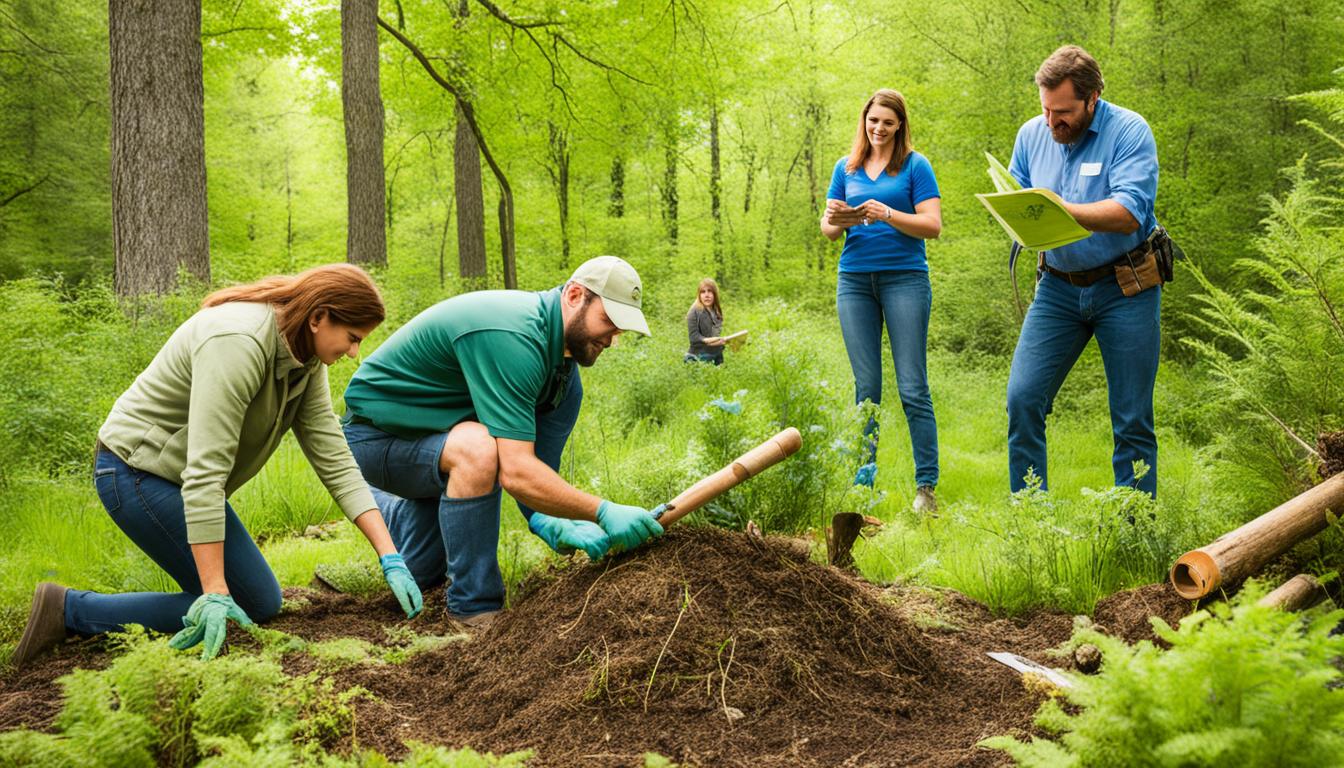
Volunteering for environmental causes offers many ways to get involved. You can work on projects like restoring habitats or supporting policies that help wildlife. There are roles for everyone, whether you love gardening, maintaining trails, or watching wildlife.
Volunteering lets you protect endangered species and habitats. You’ll also learn a lot and gain practical skills. This experience can make you more passionate about protecting nature and wildlife in your area.
Working with local conservation groups can really help protect wildlife and the environment. Even a little time you give can make a big difference. Your efforts can help keep your community’s natural resources safe for the future.
Reduce Your Environmental Impact
We all have a duty to protect our local wildlife and their homes. One key way to do this is by cutting down on our impact on the environment. By changing our daily habits, we can make a big difference in saving nature.
Minimizing Waste and Pollution
Reducing waste is key to lessening our environmental impact. Begin by cutting out single-use plastics like water bottles, bags, and straws. Choose reusable items like metal bottles, cloth bags, and eco-friendly straws instead.
Always recycle and compost when you can. Be careful with your energy use at home to lower your carbon footprint.
Choosing Sustainable Products
Choosing sustainable products also helps reduce your impact. Look for items made from renewable, biodegradable materials. Support companies that focus on being green in their work.
When you shop, think about the item’s life cycle. Pick things that are long-lasting, fixable, and good for the planet. By doing this, you help cut down on waste, save resources, and protect wildlife homes.
Every small change you make can help the local wildlife and ecosystems. By making smart choices every day, we can all help create a better future.
Nature & Wildlife: Appreciating the Natural World
Learning to love the natural world and its creatures is key to saving it. By watching, exploring, and admiring local ecosystems, we connect deeply with nature. This connection motivates us to protect the environments that support many species.
Appreciating nature and wildlife means more than just looking at it. It’s about diving into the world around us, using our senses, and being amazed by life’s complexity. Whether it’s the bright colors of a wildflower, the calm sound of a stream, or a bird in flight, these moments touch our hearts. They make us want to keep the world beautiful.

When we connect with nature and wildlife, we learn about the balance in our ecosystems. This knowledge might lead us to plant native plants, help conservation, or support wildlife-friendly laws. The more we’re involved with nature, the more we value it and see how it helps us.
Educate Others on Wildlife Protection
Teaching others about wildlife protection is key. Share your knowledge and love for local wildlife with your community. This can make your efforts more powerful and start a chain of positive change.
It’s important to get involved in outreach, host educational events, and encourage your neighbors to act. This section will show you how to do these things effectively.
Raising Awareness in Your Community
Teaching others about the need to protect wildlife is very effective. Begin by talking to your neighbors, friends, and family about the wildlife in your area. Plan community events like nature walks or workshops to get people interested in nature.
Also, work with local schools, community centers, or green groups to create educational programs. These programs can teach kids and adults about the dangers to wildlife and how they can help. By doing this, you can build a strong support base for wildlife protection in your area.
It’s not just about sharing facts about wildlife protection. It’s also about making people feel connected and responsible for their local environment. By doing this, you can help your community make a big difference for the wildlife around them.
Advocate for Wildlife-Friendly Policies
Protecting local wildlife is not just about what we do alone. It’s also about pushing for policies that help animals and their homes. We, as citizens, can shape decisions and help protect our ecosystems for the future.
Getting involved is easy. Go to city council meetings and speak up about wildlife issues. This way, you can talk directly to officials and ask them to support wildlife-friendly laws. You can also write to your local leaders, like city council members or state legislators, to push for wildlife conservation laws.
Supporting groups that push for wildlife-friendly policies is key too. These groups are active in politics and work with lawmakers to protect wildlife. By giving your time, resources, or voice, you help make a big difference for our natural world.
Pushing for wildlife-friendly policies is vital for protecting wildlife. By getting involved in politics and working with others, you can really help save local wildlife and their homes.
Responsible Wildlife Watching and Photography
Enjoying and documenting local wildlife can be rewarding, but it must be done right. By following responsible wildlife observation and wildlife photography ethics, you can enjoy nature without harming it. This way, you can appreciate the beauty of the world around you.
Keeping a safe distance from wildlife is key. Don’t get too close, as it can upset their natural ways and stress them out. Use binoculars, telescopes, or telephoto lenses to see and take pictures from afar. Always put the animals’ well-being first.
Also, think about where animals live and don’t harm their homes. Stay on marked trails and don’t go into areas where animals breed or live. Keeping their homes safe helps protect these amazing creatures for the future.