
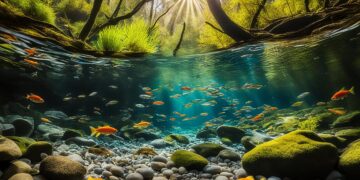





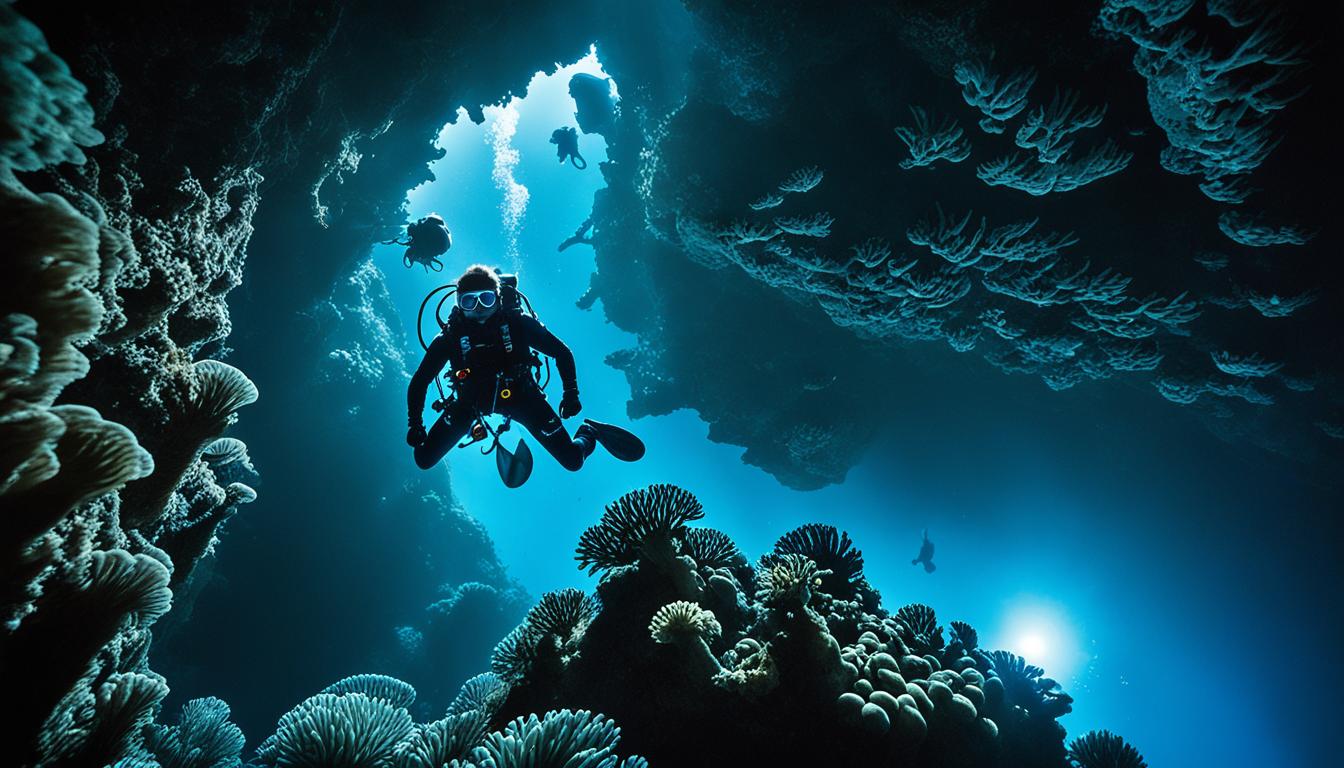
Let’s dive into the deep sea, where mysteries of the ocean depths are waiting. This article will take you on an amazing journey. We’ll discover incredible discoveries under the waves. From strange sea creatures to new scientific findings, we’ll see the ocean’s hidden wonders.
The deep sea is called the “final frontier” of our planet. It’s a vast, mysterious place that has always fascinated scientists and adventurers. Under the ocean’s surface, a world full of wonders is waiting. We haven’t yet reached the limits of what we know and explore.
Let’s explore the amazing discoveries in the deep sea. We’ll see the strange sea life that lives in extreme conditions. And we’ll learn about the new scientific insights that have changed how we see the ocean’s depths. Join us as we uncover the ocean’s secrets and see the latest in deep-sea exploration.
The Enigmatic Wonders of the Ocean’s Depths
Deep beneath the ocean’s surface, there are worlds full of mysteries and marvels. These deep-sea ecosystems are alive with life, showing us the vast marine biodiversity. They are full of strange creatures and hidden landscapes, calling us to explore their secrets.
Uncovering Nature’s Underwater Marvels
The deep sea has always fascinated humans. It’s home to many unique and fascinating species. Researchers are still learning about the deep-sea, finding new stories of how creatures survive in this strange place.
Exploring the Unknown Realms Beneath the Waves
The deep ocean is still a mystery to us, with much of it unexplored. Scientists and adventurers are drawn to its secrets, using new technology to learn more. As we explore deeper, we find a world full of life, color, and natural wonders that surprise us.
Amazing Discoveries: Bizarre and Captivating Marine Life
Deep in the ocean, a world full of strange and fascinating creatures exists. These marine animals have developed amazing ways to live in the harsh ocean depths. They show how diverse and creative life can be on Earth.
Imagine seeing creatures that are almost invisible or fish with huge teeth. The deep sea is full of such unusual life. These animals have special features like glowing bodies. This helps them survive in the dark, high-pressure ocean.
Exploring the deep sea has shown us many amazing things about marine life. Scientists keep finding new species and learning about these mysterious creatures. They reveal the incredible wonders that lie beneath the ocean’s surface.
Hydrothermal Vents: Thriving Ecosystems in Extreme Conditions
In the deep ocean, a special place exists – hydrothermal vents. These features are like underwater oases. They have superheated water full of minerals, supporting life in extreme conditions.
Chemosynthetic Life: A World Without Sunlight
At hydrothermal vents, life thrives in the dark. These places are home to extremophiles, organisms that love extreme conditions. They don’t need sunlight because they use chemosynthesis.
This process uses chemical energy from the vent water and seawater to make food. Giant tubeworms, shrimp, crabs, and fish live here. They’ve adapted to survive without sunlight, showing life’s incredible strength.

Hydrothermal vents are not just alive with creatures. They also teach us about the deep sea and how life began on Earth. Scientists study these vents to learn more about our planet’s extreme places.
Deep-Sea Trenches: Plunging into the Abyss
Let’s dive into the ocean’s deepest parts, where light is scarce and pressure is extreme. Here, deep-sea trenches stretch down thousands of meters. These deep areas are among the most extreme places on Earth, pushing the limits of exploration and science.
Deep-sea trenches form at the ocean’s deepest spots, where tectonic plates meet and the seafloor drops sharply. The pressure here is over a thousand times what we feel on the surface. This, along with no sunlight, makes a world unlike any other, where only tough life can exist.
Exploring the hadal zone, the deepest part of the ocean, has led to many discoveries. Scientists have found strange and fascinating creatures living here. These include giant isopods and shrimp that glow in the dark. They’ve adapted to the deep sea’s high pressure and darkness in unique ways.
As we learn more about deep-sea trenches, we grow more amazed by the ocean’s power and mystery. Thanks to new exploration and technology, we’re uncovering the secrets of these incredible places. This reveals a world full of mysteries and new discoveries.
Underwater Mountains: Towering Giants of the Ocean Floor
Underwater mountains, known as seamounts, dot the vast ocean floor. They are key to supporting deep-sea life and are rich in biodiversity. These mountains are like islands under the sea, teeming with life.
Seamounts: Biodiversity Hotspots in the Deep
Seamounts are mountains that rise from the ocean floor, reaching thousands of meters high. They are nature’s wonders and vital to the ocean’s landscape. These mountains affect ocean currents, making areas around them rich in nutrients. This supports a wide variety of marine life.
Seamounts create unique habitats that are home to many deep-sea species, including those we haven’t found yet. They act as underwater oases, attracting corals, sponges, fish, and rare species. Seamounts are true hotspots of biodiversity, showing how life can thrive in the deep ocean.
It’s important to understand seamounts’ role in the ocean’s ecosystem as we explore the deep sea. These giants under the water hold secrets of the ocean floor and the life that lives there. They are crucial to unlocking the mysteries of the deep.
Shipwrecks and Sunken Treasures: Remnants of Maritime History
The deep sea is full of stories from the past, with many shipwrecks and treasures hidden beneath the waves. Underwater archaeology has brought these stories to light. It shows us the rich history that lies beneath the ocean.
Deep-sea shipwrecks tell us a lot about exploring the ocean and the lives of sailors. They range from ancient trading ships to modern cargo vessels. Each one gives us a peek into the past, showing both the successes and failures of those who sailed the seas.
Finding sunken artifacts like maps, personal items, and cargo connects us to the people who sailed. These finds are not just interesting to the public. They are also crucial for scholars studying ocean exploration and maritime technology.
Underwater archaeology has grown a lot, thanks to new technologies. Tools like ROVs and advanced sonar let researchers explore deeper. These tools help us learn more about the history hidden under the sea.
Exploring the deep sea still holds many surprises. We might find new shipwrecks and treasures. These finds remind us of our curiosity and the human spirit. They show us the secrets the ocean still holds.
Unraveling Ancient Mysteries: Clues from the Deep Past
The ocean’s depths have always fascinated us, not just for their vastness but also for the clues they hold about Earth’s ancient past. Deep-sea paleontology, the study of ancient marine life, has found many fossils and remnants of extinct ocean species. These discoveries help us understand how life on Earth evolved.
Underwater, scientists have found fossils that show us the ocean’s ancient history. These fossils include the remains of ancient creatures and extinct species. They give us a lot of information about the evolution of marine life. The deep sea acts like a time capsule, keeping the ocean’s secrets and letting researchers learn about life underwater for millions of years.
Discovering Prehistoric Creatures and Extinct Species
Deep-sea paleontology is exciting because it finds prehistoric marine creatures thought to be extinct. Fossils of ancient species like the long-necked plesiosaurs or the toothy ichthyosaurs have been found. These discoveries change what we know about the ocean’s evolution. They also give scientists important data to understand how life has changed in the ocean.
The deep sea has also given us fossils of recently extinct ocean species, like the Steller’s sea cow. This huge, gentle herbivore was hunted to extinction in the 18th century. Finding its fossils helps us see how fragile marine ecosystems are and why we need to protect the ocean.
Exploring the deep sea is still a new frontier. The insights from deep-sea paleontology are key to understanding the ocean’s ancient past. They help us learn about the evolution of life on our planet.
Cutting-Edge Technology Unlocking Ocean Secrets
Our desire to learn about the deep sea is growing. Thanks to cutting-edge technology, we’re unlocking the ocean’s secrets. Tools like autonomous underwater vehicles (AUVs) and advanced submersibles are changing how we see the marine world.
Underwater robotics is a big step forward in deep-sea exploration. AUVs come with sensors and cameras. They go deep into the ocean, bringing back important data and stunning footage of deep-sea creatures and ecosystems.
These vehicles let researchers explore places they couldn’t reach before. They’re helping us understand the deep sea better.
Deep-sea submersibles also play a big role. They can go even deeper than AUVs. With the latest sensors and cameras, scientists can study marine life and the seafloor up close.
They help us learn about the unique life forms and the secrets of the ocean floor, like hydrothermal vents and seamounts.
Advanced sensors and imaging tech have changed deep-sea exploration a lot. High-resolution cameras and sonar systems capture detailed images and data. This tech is helping us see the ocean’s wonders in new ways.
It’s leading to new discoveries and progress in ocean research.
Deep-Sea Mining: Opportunities and Environmental Concerns
The global need for resources is growing, making the deep sea a tempting place for mining. Deep-sea mining means taking valuable resources from the ocean floor. It brings both chances and big environmental issues that need careful thought.
The deep sea has many resources like rare earth metals and precious minerals. Mining here could help meet the demand for these resources and lessen the harm from mining on land. It could also bring jobs and economic growth to coastal areas.

But, deep-sea mining has big environmental worries. The deep sea is home to many unknown marine species. Mining could harm these ecosystems, leading to the loss of species and disrupting the ocean’s food chains. There’s also fear that mining could release harmful chemicals and dirt into the water, hurting the marine life.
As deep-sea mining grows, we need to manage resources sustainably and protect the ocean. Leaders, scientists, and mining experts must work together. They need to make rules and practices that help mining and protect the ocean’s life and biodiversity.
Protecting the Wonders of the Deep: Conservation Efforts
As we learn more about the deep sea, we see the need to protect it more clearly. This vast ocean is full of unique marine life. But, it faces threats like overfishing, habitat destruction, and deep-sea mining. To fight these threats, conservation efforts are growing to protect the deep-sea ecosystems.
Sustainable Exploration and Responsible Stewardship
Protecting the deep sea starts with sustainable ocean exploration. Marine protected areas (MPAs) are set up to limit human activity and protect deep-sea habitats. These areas help save deep-sea life and let us learn more about the ocean through careful research and exploration.
New technology helps us explore the deep sea in a way that’s less harmful. Tools like ROVs and AUVs let us study the ocean without damaging it. This helps us learn about the deep ocean in a way that’s good for the environment.
Deep-sea conservation is important because the ocean helps control the climate, supports many ecosystems, and gives us valuable resources. By exploring the ocean in a sustainable way, we can keep its wonders safe for the future.
The Future of Deep-Sea Exploration: Boundless Possibilities
The deep sea is still a vast, unexplored area on our planet. With new technology, we’re on the brink of discovering more of the ocean’s secrets. Researchers are using advanced submersibles and autonomous vehicles to explore the deep sea.
These tools help us map the seafloor and find the amazing life that lives there. Projects like the Woods Hole Oceanographic Institution’s Deep Ocean Exploration program are leading the way. They use the latest technology to find shipwrecks, discover new species, and study how climate change affects the ocean.
As we move forward with ocean exploration, we must also think about conservation. It’s crucial to find a balance between exploring and protecting the ocean. By working together, we can find ways to use the ocean responsibly while keeping its wonders safe for the future.