






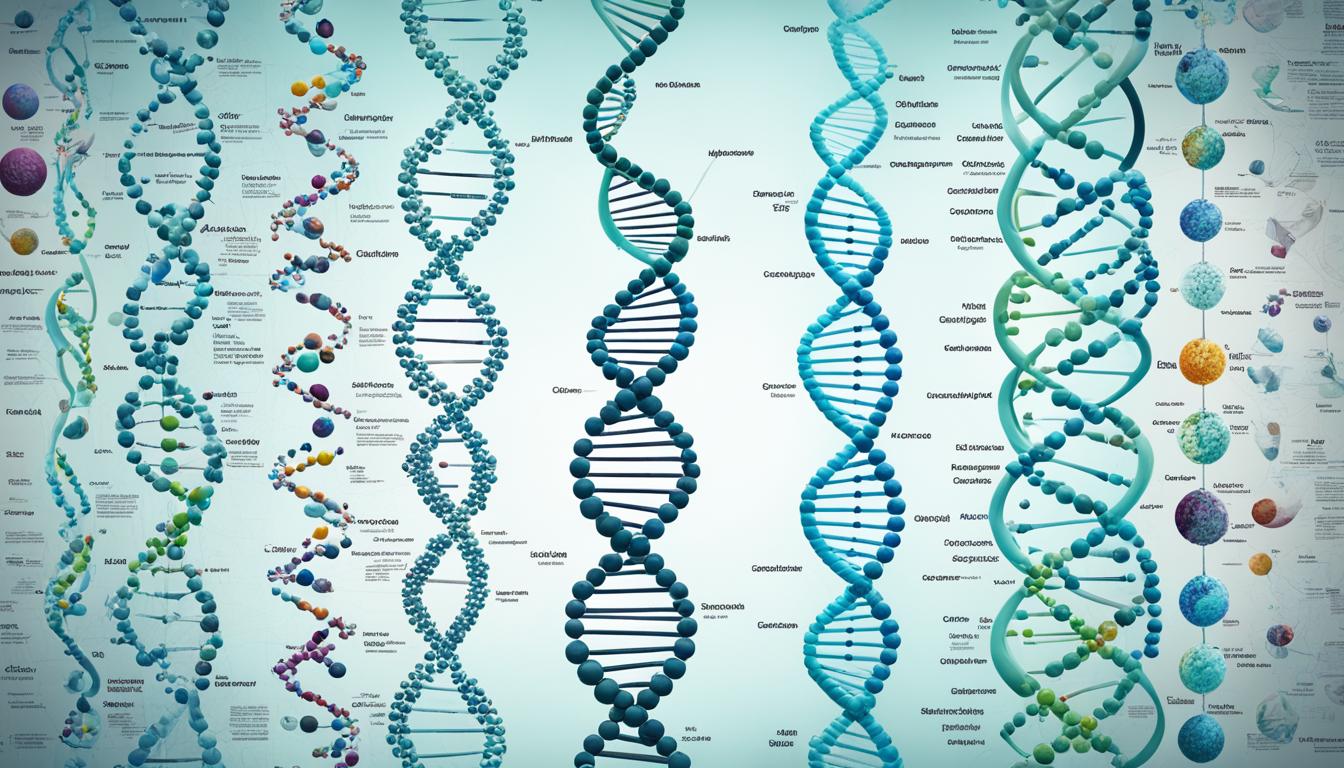
Genetics has seen major scientific breakthroughs in recent times. It has changed how we understand life and health. This article will look at key moments in genetics that have changed science and our daily lives.
Genetics has greatly impacted our world. It has led to new medical and agricultural discoveries. Scientists like Gregor Mendel and the discovery of DNA’s double-helix have changed everything.
We will explore how gene sequencing and the Human Genome Project have changed our view of genetics. We’ll also look at genetic engineering, CRISPR, and personalized medicine. These advancements are changing how we treat diseases and improve health.
Let’s dive into the amazing discoveries that have changed our view of life. These discoveries are shaping the future of science, medicine, and our understanding of the world.
The Birth of Modern Genetics
The Austrian monk Gregor Mendel laid the groundwork for modern genetics in the 19th century. His work changed how we see heredity and variation. Mendel’s experiments with pea plants revealed key inheritance principles. These include the ideas of dominant and recessive traits that shape modern genetics.
Gregor Mendel’s Pioneering Work
Gregor Mendel is called the “father of modern genetics.” He studied pea plants to understand inheritance patterns. His careful experiments and records led to Mendel’s laws of inheritance.
Understanding Heredity and Variation
Mendel’s research on heredity and variation is key to today’s genetics. He found out about dominant and recessive traits and how genes mix. This work set the stage for big advances in genetics, starting the modern genetics revolution.
The Double Helix: Cracking the Code of Life
In 1953, James Watson and Francis Crick made a huge leap in genetics. They found the DNA double helix structure. This was a big step forward, thanks to the work of many scientists before them.
Their discovery showed us the basic structure of DNA. This molecule holds the genetic info for all living things. It opened up new ways to understand genes and how they pass from one generation to the next.
Watson and Crick’s Groundbreaking Discovery
Watson and Crick’s find was a major scientific breakthrough. They used their skills and other researchers’ work to reveal DNA’s detailed structure. The DNA double helix, with its matching base pairs, showed how genetic info is stored and passed down.
This discovery changed how we see life’s basic workings. It started a new era in understanding life’s fundamental processes.
Watson and Crick’s work didn’t just show DNA’s shape. It also revealed the genetic code’s secrets. They showed how DNA’s sequence, the genetic code, tells our bodies how to make proteins. This was a huge step forward for genetics.
It led to big advances in fields like genetic engineering and personalized medicine.
Amazing Discoveries in Gene Sequencing
The field of genetics has seen huge leaps thanks to gene sequencing technology. This tech lets scientists read the genetic codes of many living things, including humans. It has opened up new ways to understand life, from genetic diseases to how species are related.
Gene sequencing has changed genetics forever. With DNA sequencing tech, scientists can quickly figure out the order of the genetic code. This has led to mapping many species’ genomes, giving us a lot of new info on their genetics and how life works.
The Human Genome Project was a big deal in gene sequencing. It was a global effort to sequence the human genetic code. This achievement has helped scientists understand human health better, leading to new medicines and treatments.

Gene sequencing has also helped us learn about other species, from plants to tiny organisms. This has changed how we see evolution, genetic diversity, and nature’s complex systems. By looking at the genes of different creatures, scientists can learn more about life’s basics, leading to new discoveries.
As gene sequencing tech gets better and easier to use, the possibilities are endless. It could help us understand rare diseases and the origins of humans. These advances in gene sequencing are set to change how we see the world and lead to new healthcare breakthroughs.
Genetic Engineering: Harnessing Nature’s Power
Genetic engineering has opened up new possibilities. It lets us change and modify genetic material in ways we couldn’t before. This has led to the creation of synthetic insulin and genetically modified crops. These changes have transformed industries, improved health, and changed the future of farming and the environment.
From Insulin Production to Genetically Modified Crops
One big step in genetic engineering was making synthetic insulin. Scientists put the human insulin gene into bacteria. This made a steady and large supply of insulin, changing diabetes treatment. This success led to more biotechnology advances and many GMOs.
In farming, genetic engineering has made crops better at growing, surviving tough conditions, and being more nutritious. These crops can fight pests, survive droughts, and even make their own bug killers. This means farmers can grow more food, feed more people, and farm in a way that’s better for the planet.
But genetic engineering isn’t just for medicine and farming. Scientists are looking at how GMOs can help clean up pollution, make biofuels, and create new kinds of organisms. As we learn more about genes, the ways we can use genetic engineering keep growing.
But, using genetic engineering comes with its own problems and ethical questions. There are worries about how GMOs might affect our health and the environment. These issues have led to debates and rules. As we explore new possibilities, we must think carefully about the impact on our planet and everyone living here.
The Human Genome Project: Mapping Our Genetic Blueprint
The human genome project was a huge step forward in genetics. It took over a decade and involved scientists from all over the world. They mapped and sequenced the entire human genome, giving us new insights into our genes.
This project has changed medicine, helped us understand genetic disorders better, and opened new doors for research. It’s a big deal for science.
Started in the 1990s, the project aimed to understand our genetic makeup. Scientists from everywhere worked together to find the genes in our genome. They also figured out the patterns and sequences that pass down from our parents.
Finishing the project changed genetics a lot. Scientists now know more about what makes us healthy or sick. This info helps make treatments that fit each person’s genes, making them more effective.
It also changed how we look at genetic diseases. Now, doctors can spot genetic changes that cause illnesses early. This means they can start treatments sooner. The project also led to new areas of research, like genetic engineering and studying human evolution.
The human genome project shows what we can do when we work together and push the limits of science. It’s opened up a lot of new knowledge. This knowledge is helping us in many ways, from medicine to understanding who we are.
CRISPR: A Revolutionary Gene-Editing Tool
CRISPR technology is a big step forward in genetics. It lets scientists change specific DNA sequences with precision. This could lead to new ways to treat genetic diseases and improve crops. CRISPR has changed genetic research, helping us understand life better.
Rewriting the Code of Life
CRISPR uses bacteria’s defense to edit DNA precisely. Scientists use a guide RNA and a protein to find and change genes. This opens new doors, from treating diseases to improving crops.
CRISPR’s potential excites scientists. It could fix genetic issues and help with diseases and crops. Researchers are looking into many ways to use CRISPR.
CRISPR could change how we treat genetic diseases and grow food. It might make crops stronger and more nutritious. This could help solve global food issues.
As CRISPR advances, we must think about its ethics and rules. There are talks to make sure it’s used right and safely. We need to balance its benefits with safety and ethical concerns.
CRISPR’s future looks bright, changing how we see genetics and tackle big challenges. It will likely change science and how we view the human genome and nature.
Personalized Medicine: Tailoring Treatment to Genetics
Genetic advancements have led to a new way of treating health issues called personalized medicine. Doctors now use a person’s genetic makeup to create treatments that work best for them. This approach, known as precision medicine, is changing healthcare for the better.
Precision Medicine and Targeted Therapies
Personalized medicine has grown thanks to big steps in genetic research and technology. Now, scientists can spot genetic changes that make some people more likely to get certain diseases or react to treatments in certain ways. This info lets doctors make treatments that fit each person’s body.
Targeted therapies are a big part of this new way of treating. They focus on the genetic causes of diseases. By targeting specific genetic changes, these treatments can work better and have fewer side effects. This has led to big improvements in treating some cancers.
Adding personalized medicine and targeted therapies to regular healthcare is still happening. But the benefits are huge. By making treatments fit a person’s genes, doctors can make them more effective and safer. As genetics keeps advancing, personalized medicine will keep changing healthcare for the better, helping patients all over the world.
Epigenetics: Beyond the Gene Sequence
Epigenetics has changed how we see genetics. It shows us that things outside of DNA can change how genes work. These changes don’t change the DNA itself but affect how it’s used.
This new area of study has shown how our genes and our environment work together. It helps us understand and treat diseases like cancer and brain disorders.
Epigenetics looks at the chemical changes on DNA or the proteins linked to it. These changes can switch genes on or off, without changing the DNA itself. They can also make genes work more or less.
Things like what we eat, how stressed we are, and what toxins we’re exposed to can change our genes. For instance, air pollution can make some genes more likely to cause breathing problems. Eating certain foods while pregnant can also affect a child’s health later on.
Epigenetics is very promising for personalized medicine. Knowing someone’s epigenetic profile can help doctors make better treatments. It helps us understand how our genes, environment, and health are connected.
Genetic Ancestry and Evolution
Genetic research has greatly improved our knowledge of human evolution and ancestry. By looking at the genes of different groups, scientists can track where our species came from and how it moved. This has helped us understand the complex story of how humans evolved.
These findings have made us appreciate our common roots more. They also tell us about the genetic diversity and changes that have shaped humans over time.
Tracing Our Roots and Understanding Human Origins
The study of genetic ancestry has changed how we see human beginnings. By looking at genetic markers and DNA, researchers can map out where our ancestors went and how they evolved. This gives us a detailed look at the genetic history of different human groups.
By comparing genes across populations, scientists have found out how genetic ancestry, evolution, and genetics work together. This knowledge helps us understand where our species started and how we adapted to different places.

Looking into genetic ancestry also helps us understand how genetic diversity and adaptations have shaped human evolution. By studying the genes of various groups, researchers are uncovering the complex mix of our genetic past, evolution, and genetics.
The Future of Genetics: Challenges and Opportunities
Genetics is evolving fast, bringing us closer to amazing discoveries and advancements. We’ll see progress in treating genetic disorders and improving sustainable farming. But, there are also ethical, regulatory, and tech hurdles to overcome.
Personalized medicine is a bright spot in genetics’ future. By knowing a person’s genes, doctors can create treatments just for them. This could make treatments more effective and safer, helping patients get better faster.
Genetic engineering, like CRISPR, is also showing great promise. It can help fight genetic diseases and boost crop production. But, scientists must think about ethics and rules when using these tools. It’s important to use them wisely, keeping humans and the planet safe.
The Human Genome Project has given us a lot of genetic data. Handling this data will need better computers, storage, and bioinformatics. We must solve these tech challenges to fully benefit from genetic research.
As we move forward in genetic research, we must use these advances for good. We need to tackle ethical, regulatory, and tech issues to make sure genetics helps humanity and the earth. The future looks bright for better health, more food, and understanding life’s basics.
Conclusion: Unlocking the Secrets of Life
Genetics has changed how we see life’s basic workings. From Gregor Mendel’s early work to CRISPR technology, genetics has given us a lot of new knowledge. This has opened doors to solving big human challenges.
As we delve deeper into our genes, we’re set to make more groundbreaking discoveries. These will change science, medicine, and how we see the world. Genetic research has led to big steps in personalized medicine and understanding human history and evolution.
The future of genetics is bright, full of promise. It could reveal life’s hidden secrets and lead to big advances in science, medicine, and society. By finding new ways to treat diseases, improving crops for food, or tracing our species’ history, genetics will be key to our future.