




Start an exciting journey through the life cycle of butterflies. These creatures show us the beauty of nature and wildlife. From tiny eggs to beautiful adults, we’ll see how they change. Get ready to be amazed by their incredible transformations.
Butterflies are not just beautiful; their life cycle shows their strength and adaptability. We’ll see how they change from a caterpillar to a flying marvel. Let’s explore the secrets of their transformation and appreciate their beauty and complexity.
Unraveling the Metamorphic Miracle
The life cycle of butterflies is full of transformation and wonder. It starts with a tiny butterfly egg, promising a magnificent creature. These eggs are as small as a pinhead and are placed on the right plant for food.
Then, a caterpillar comes out of the egg, starting the next part of its life. This caterpillar eats a lot and grows fast, ready to change into something new.
From Egg to Caterpillar: The Beginning of a Transformation
After coming out of the egg, the caterpillar starts a big change. It eats the leaves of its host plant, getting bigger and more complex. With each shedding of its skin, it grows into a new, larger form. This is better for its growing needs.
The Hungry Caterpillar: A Voracious Eating Machine
The caterpillar phase is a key part of the butterfly’s life story. It’s all about eating a lot and growing big. Right after it hatches, the caterpillar starts eating a lot. It eats leaves and other plants non-stop.
The caterpillar eats a lot, often eating more than its own weight in a day. This helps it grow big enough for a big change later on. This eating is key for the caterpillar to get the energy it needs to turn into a butterfly larva.
As it gets bigger, the caterpillar sheds its skin several times. This lets it grow more. Each time it sheds its skin, it gets ready for its big change into a butterfly.

The caterpillar eats a lot to get ready for its big change. This eating is important for its survival and growth. It shows how amazing these creatures are at adapting and surviving.
Chrysalis: The Cocoon of Transformation
After eating a lot, the caterpillar gets ready for its next big step. It forms a butterfly chrysalis, or pupa. This special cocoon starts the butterfly’s amazing change. It will turn the crawling caterpillar into a beautiful flying adult.
The Intricate Process of Metamorphosis
Inside the chrysalis, the caterpillar’s body changes in amazing ways. Its tissues and organs break down. At the same time, special cells called “imaginal discs” grow into the butterfly’s adult parts. This includes wings, antennae, compound eyes, and more.
The pupa looks still outside but is full of action inside. The caterpillar’s body turns to liquid, providing nutrients for the new butterfly. This process is crucial for the butterfly’s growth.
The time in the chrysalis varies by species and environment, usually 10 to 14 days. The butterfly stays safe inside, protected from predators and harsh weather. It’s a time of incredible change.
Nature & Wildlife: Witnessing the Butterfly’s Emergence
The moment a butterfly emerges is truly amazing. After changing inside its chrysalis, the adult butterfly comes out. It opens its wings and flies for the first time.
This event is the end of the butterfly’s change from a caterpillar to a beautiful flying creature. Seeing a butterfly come out of its cocoon is fascinating. It shows us the beauty of nature and wildlife. Watching the butterfly slowly open its wings and fly is incredible.
The butterfly’s emergence shows us the cycle of life. It reminds us that things are always changing and growing. These beautiful insects are important for the ecosystem. They help pollinate plants and add to the diversity of life.
Seeing a butterfly emerge is special. It lets us connect with nature and see its beauty up close. By watching and celebrating this, we learn more about the butterfly’s life and its importance in the world.
The Delicate Dance of Pollination
Butterflies are key players in the natural world as pollinators. They move from flower to flower, carrying pollen. This dance is vital for many plants to grow and reproduce. They are truly nature’s essential pollinators.
Butterflies: Nature’s Indispensable Pollinators
Butterflies move from flower to flower, picking up pollen. This process, called pollination, helps plants reproduce. Without them, many plants would not be able to make seeds.
Their pollination dance shows nature’s balance. As they move, they help plants grow. This keeps our world full of life and beauty.
Exploring Butterfly Diversity and Habitats
The world of butterflies is full of life, with many different kinds living in various places around the globe. They live in everything from lush rainforests to calm grasslands. Each place is perfect for a different butterfly, showing how diverse they are.

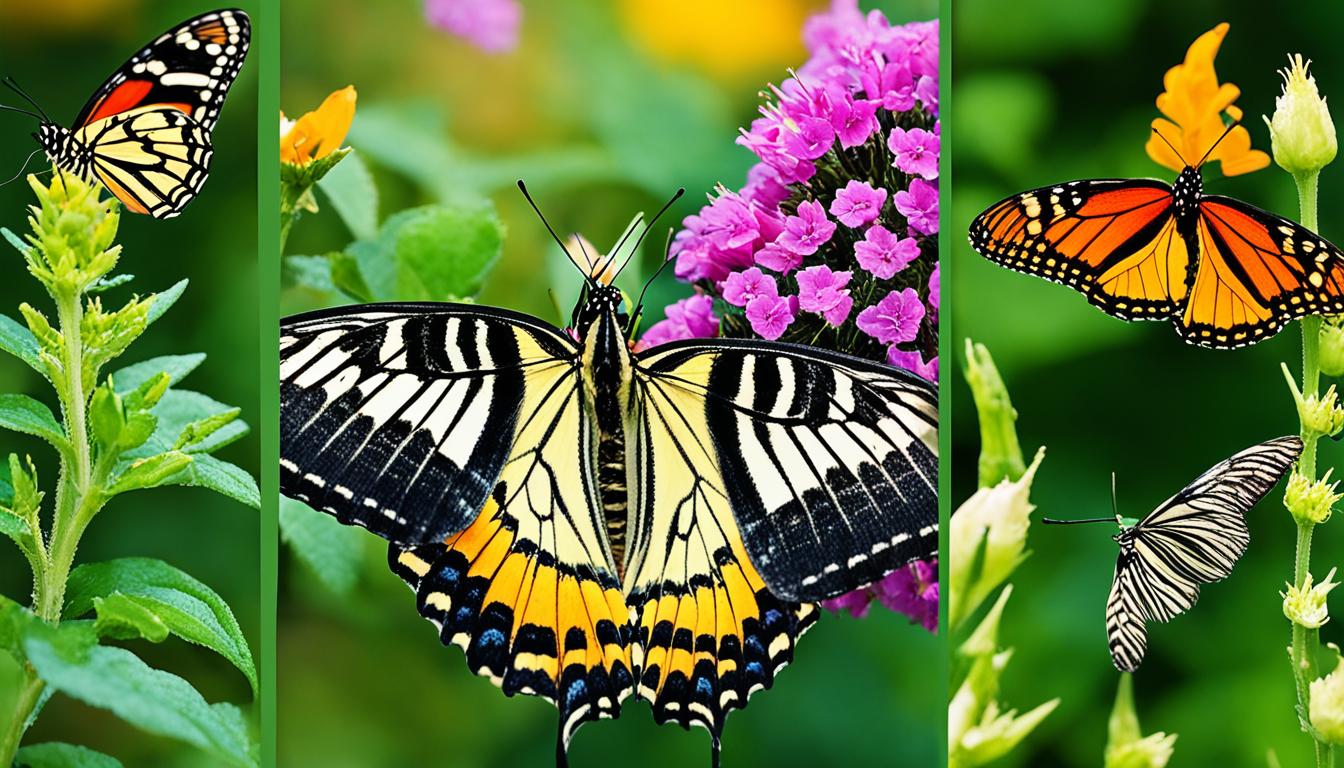
Butterflies are known for their bright colors and detailed wings. They show the beauty of nature. Whether it’s the Monarch butterflies flying long distances or the Swallowtails in meadows, each one fits perfectly in its home. This shows how diverse the butterfly world is.
Looking into butterfly homes helps us see the complex worlds they live in. Some live in gardens full of flowers, while others prefer the deep, shaded forests. Knowing what they need helps us protect these important parts of nature.
Conservation Efforts: Protecting Butterfly Species
Exploring the world of butterflies shows us how important their conservation is. Many species face threats like habitat loss and pesticide use. Climate change also affects them a lot.
This has led to a decline in many butterfly populations. Some are now endangered or threatened.
Threats and Challenges Faced by Butterfly Populations
Habitat loss is a big threat to butterflies. Urban growth and farming take over their homes. This disrupts their ecosystems.
Butterflies can’t find food or places to breed when their habitats are broken up. This makes it hard for them to survive.
Pesticides also harm butterflies. They can kill them or the plants they need for food and shelter. Climate change is another big problem. It changes the weather and temperature, affecting butterflies’ lives.
Despite these challenges, people are working to save butterflies. Governments, groups, and communities are joining forces. They’re setting up protected areas and teaching about sustainable living.
By learning about the threats and helping with conservation, we can keep butterflies around. They’re important for our ecosystems. Together, we can make sure they continue to thrive and add beauty to our world.
Butterfly Gardening: Creating a Sanctuary
Gardening for butterflies makes your outdoor space beautiful and helps butterfly conservation. By creating a butterfly-friendly garden, you give these amazing insects a safe place to live. This helps their numbers and keeps our nature and wildlife healthy.
To draw butterflies to your garden, pick the right butterfly-friendly plants. Use native flowers, plants full of nectar, and host plants for different butterfly types. Having many kinds of flowers that bloom all season gives butterflies food they need.
Butterflies also need water, shelter, and places to warm up. Design your garden with these things in mind. This way, you make a place that supports butterfly gardens and keeps these beautiful creatures safe for the future.