


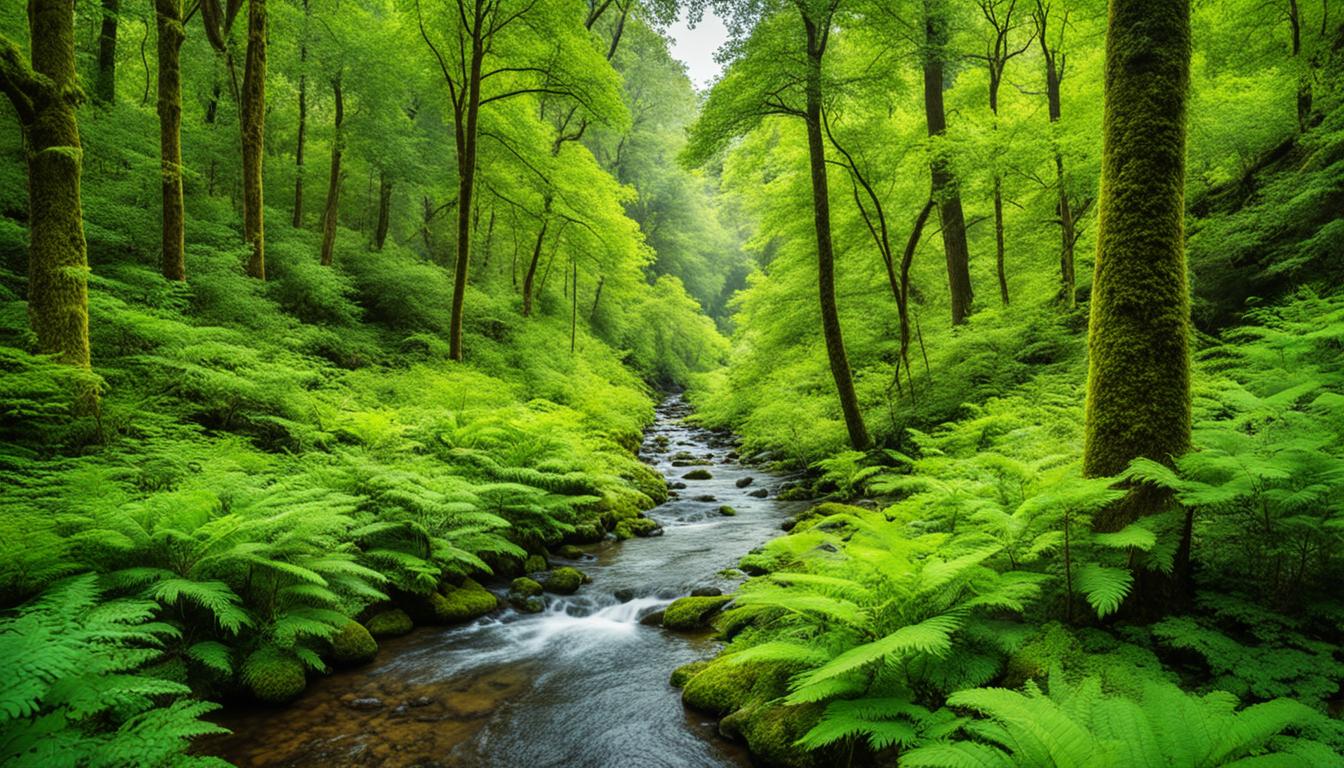
Our world is changing fast, and saving natural habitats is now crucial. Human activities are taking over the homes of many species. This makes it urgent to find ways to protect wildlife. Wildlife corridors are key to this effort. They connect broken landscapes, letting animals move and keep their ecosystems balanced.
Corridors are essential for keeping habitats connected. They help animals migrate and spread out, which is good for our planet’s biodiversity. By learning about their value, we can work to save them. This will help protect the many plants and animals that live on Earth.
What are Wildlife Corridors?
Wildlife corridors are key paths that link broken habitats, letting animals move freely. They are crucial for keeping ecosystems healthy and diverse. These corridors help animals, genes, and ecological processes move across the land.
Understanding the Role of Habitat Connectivity
Human actions like building cities, farming, and making roads break up animal habitats. This makes it hard for animals to move and find what they need. Corridors act as bridges, letting animals cross these barriers. They help with gene flow, migration, and keeping diverse wildlife populations alive.
Types of Wildlife Corridors: Natural and Artificial
Corridors can be natural or made by humans. Natural ones include rivers, mountains, and forests that let animals move easily. Artificial ones are made to help animals cross over roads and railways safely.
Both kinds of corridors are key for keeping nature’s balance. By understanding their importance, we can work to protect and improve them. This helps our planet and all living things.
Biodiversity Protection through Corridor Conservation
Wildlife corridors are key to keeping our planet’s biodiversity in balance. They help animals move between broken habitats. This movement is crucial for the survival and health of many species.
These corridors make sure animals can move freely. This helps them share genes, which is important for their survival. It also keeps ecosystems healthy and strong.
Facilitating Animal Movement and Gene Flow
Human activities like building cities and farming can break up animal habitats. This stops animals from moving naturally. Without movement, animals can become too inbred, making them more likely to get sick or die off.
Wildlife corridors are like roads for animals. They let animals move between broken habitats. This keeps their genes mixing, which is good for their health and the health of the environment.
These corridors help prevent animals from becoming too inbred. This means they can fight off diseases better. It also helps them adapt to changes in their environment.
Wildlife corridors also help migratory animals. They make sure these animals can find food and places to have their babies. This is important for keeping species migration going and for keeping our planet’s diversity.
Nature & Wildlife: Maintaining Ecological Balance
Wildlife corridors are key to keeping our natural world healthy. They let animals move freely and keep ecosystems diverse and strong. By saving these habitats, we help with important tasks like pollination and controlling the climate.
Keeping wildlife corridors safe is crucial for nature’s balance. They give animals a way to get to what they need to live. This keeps ecosystems healthy and diverse, keeping life’s complex web strong. Without them, animals could disappear and nature’s balance could be lost.
By saving wildlife corridors, we protect nature’s important services. These services, like cleaning water and fighting floods, are key for our health and planet’s future. They also help animals adapt to climate change by letting them move to new areas.
Keeping wildlife corridors safe is a big part of keeping nature in balance. By doing this, we make sure nature’s beauty and variety can continue. This lets our planet’s plants and animals flourish for years to come.
Threats to Wildlife Corridors
The world is getting more connected, but nature is facing big challenges. Habitat fragmentation is a big threat to wildlife corridors. It comes from human development and infrastructure growth.
Urbanization, building roads, and changing nature into farms or industrial areas harm these important paths. These paths let wildlife move and survive.
Habitat Fragmentation and Human Encroachment
Habitat fragmentation is a big worry for wildlife corridors. It happens because of human actions. As cities and buildings spread, they block animal paths. This cuts off animal groups and stops their genetic flow.
This isolation can cause a loss of species diversity. Animals have a hard time adapting to the new landscape. They face less space and resources.
Human growth also means more conflicts with wildlife. Animals may enter human areas for food or shelter. This can harm both humans and animals, showing we need a balance between saving nature and growing cities.

We must tackle habitat fragmentation and human impact on wildlife corridors. New strategies, like planning infrastructure and wildlife-friendly policies, can help. These steps can lessen the harm to these key nature paths.
Keeping habitats connected is key. It lets wildlife populations grow and keeps our natural world balanced. This is important for future generations.
Benefits of Preserving Wildlife Corridors
Preserving wildlife corridors has many benefits that go beyond just connecting habitats. These important paths help with species conservation, keep ecosystems healthy, and make them more resilient against challenges like climate change.
Promoting Species Survival and Ecosystem Health
Wildlife corridors let animals move between broken habitats. This helps them share genes, which is key for their survival. It also helps species adapt and bounce back from threats.
Keeping these corridors safe keeps ecosystems balanced and healthy. This is good for the overall health of nature.
Healthy ecosystems with wildlife corridors can better handle climate change. These paths let species move and adapt to new conditions. This helps keep biodiversity high and ecosystems strong.
Protecting wildlife corridors is crucial for our planet’s future. It’s about saving species and keeping our ecosystems healthy for a long time. By doing this, we help plants and animals thrive and support the services they give to us.
Global Initiatives for Corridor Conservation
Nations and conservation groups worldwide are working hard to protect wildlife corridors. They aim to keep habitats connected and work together across borders. This helps diverse ecosystems and species thrive.
The Yellowstone to Yukon Conservation Initiative (Y2Y) is a key project. It links Canada and the United States. Y2Y aims to protect the land and animals from the Yellowstone area to the Yukon. It does this by creating safe areas and promoting smart land use.
This helps animals like grizzly bears, wolves, and wolverines move between their homes.

In Europe, the Natura 2000 network is a big help. It’s a policy that protects natural areas and wildlife paths. This network lets species move between areas and keeps their gene pools healthy.
On a global level, the Convention on Migratory Species (CMS) helps animals that cross borders. Countries work together to make safe paths for animals like elephants, marine turtles, and birds.
These are just a few ways people are working to save wildlife corridors. By working together and making strong policies, we can protect our ecosystems and the animals they support.
Success Stories: Effective Wildlife Corridor Management
There are many success stories that show how well wildlife corridor management works. These stories highlight the importance of combining corridor restoration, community involvement, and sustainable land use. This approach leads to great conservation results.
The Yellowstone to Yukon (Y2Y) initiative is a great example. It aims to link ecosystems from Yellowstone National Park in the U.S. to the Yukon Territory in Canada. With help from government agencies, local people, and conservation groups, the Y2Y project has fixed key habitat corridors. Now, animals like grizzly bears, wolves, and wolverines can move freely across the area.
In the Eastern Ghats of India, the Nature Conservation Foundation worked with local people to create the Eastern Ghats Wildlife Corridor. By teaching sustainable land use and restoring habitats, this effort has helped wildlife move freely. It has also helped local communities and improved their lives.
South Africa’s Kruger to Canyons Biosphere Reserve is another great example. It combines corridor restoration, sustainable farming, and community development. This approach has made the area’s ecosystems strong and helped the local people.
These stories show how working together, engaging with the community, and using sustainable practices can protect wildlife corridors. By learning from these examples, we can keep improving our efforts in restoring corridors and protecting nature. This way, nature and communities can live together well.
Challenges in Establishing and Maintaining Corridors
Preserving wildlife corridors is tough. It needs to balance conservation with human needs. Often, these corridors cross areas meant for homes, businesses, or industries. This leads to conflicts between protecting nature and growing the economy.
Balancing Conservation and Development Needs
Managing corridors well means working with many groups. This includes policymakers, land managers, local communities, and conservation groups. It’s hard to get everyone to agree because they all have different goals and views. Finding solutions that help both wildlife and people is key.
Also, making laws to protect corridors is hard. It takes strong laws, good enforcement, and ongoing checks. Getting through the complex policy process and finding support from politicians is tough. This makes it harder to keep wildlife corridors safe.