






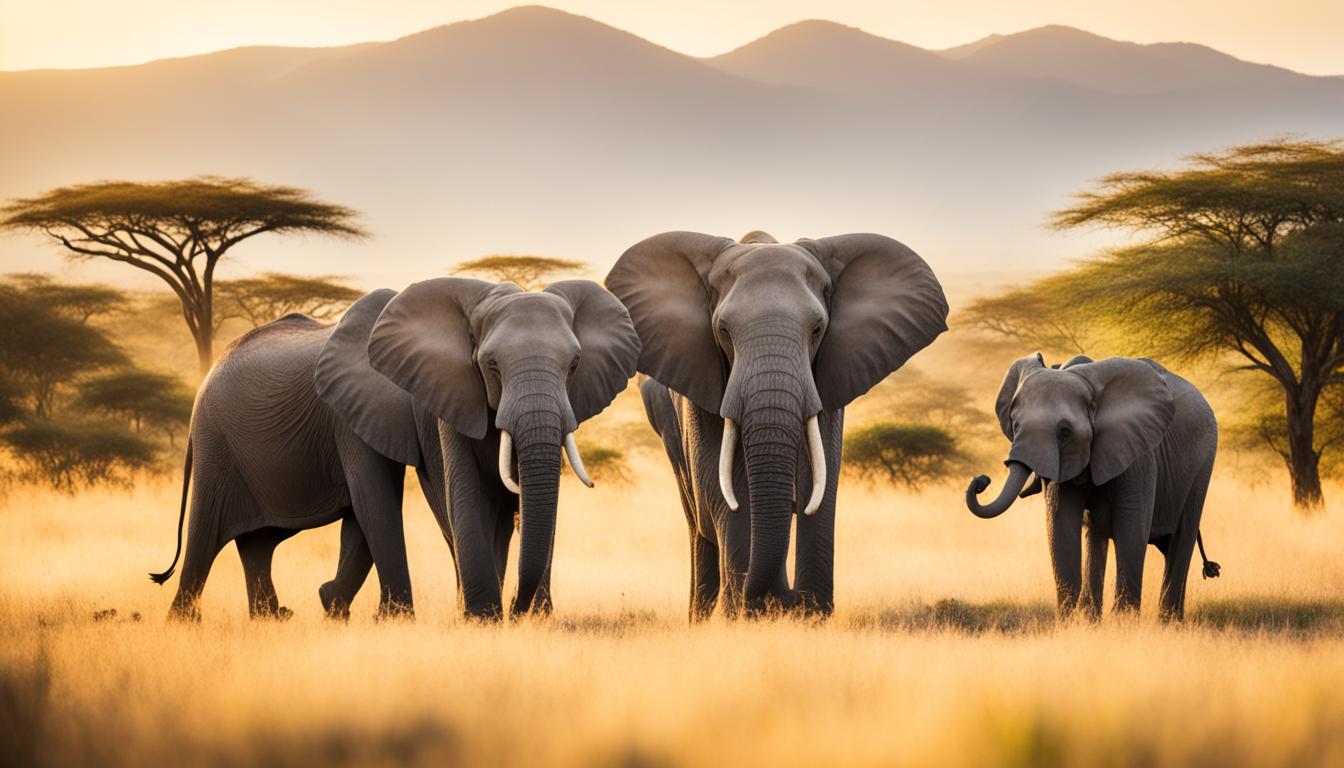
Elephants are truly remarkable creatures, known as the gentle giants of the natural world. They are the Earth’s largest land mammals. These animals have many fascinating traits that capture the hearts of people everywhere. In this article, we’ll explore 10 amazing facts about elephants. We’ll look at their incredible memory, intelligence, social structures, and conservation efforts.
Elephants are not just the biggest land mammals; they’re also among the smartest animals. Their brains can weigh up to 11 pounds. This makes them show complex social behaviors, have a great memory, and understand their world deeply.
These gentle giants are known for their strong family ties and a matriarchal society. They live in close herds, led by wise female elders. These leaders guide the group and keep everyone safe and well.
Elephants’ trunks are truly amazing. They use them for grabbing objects, communicating, and showing feelings. These trunks, which can be as heavy as 350 pounds, show how adaptable and clever these creatures are.
As we learn more about elephants, it’s clear they’re not just amazing but also need our help. We must protect them from threats like losing their homes, being hunted, and conflicts with humans. By understanding and valuing elephants, we can help save them and keep the natural world balanced.
Elephants: Nature’s Gentle Giants
Elephants are called “nature’s gentle giants” for a reason. These massive creatures live in the wild in Africa and Asia. They are known for their size and gentle nature. Let’s dive into the world of elephants and learn about their size, where they live, and how they behave.
Exploring the Fascinating World of Elephants
Elephants are smart and social animals that are key to their ecosystems. They amaze people with their size, trunks, and social lives. Their unique looks, complex ways of talking, and deep feelings make them a wonder to see.
What makes elephants stand out are their physical traits. These elephants are the biggest land animals, weighing 5 to 6 tons. Their long trunks and big ears are not just for show. They help them in their elephant habitat and elephant biology.
Elephants are also known for their social behaviors and intelligence. These gentle giants live in close family groups, led by a wise female. They talk to each other in many ways, including sounds and body language. They are smart, solving problems, using tools, and showing empathy to their friends.
The Largest Land Mammals on Earth
Elephants are truly remarkable creatures, holding the title of the largest land mammals. They are not only awe-inspiring in size but also fascinating in their biology and behavior.
The African elephant, the larger of the two species, can weigh up to 6 tons (12,000 pounds) and stand up to 13 feet tall. This size shows their power and majesty. The Asian elephant is smaller, with adult males weighing about 5 tons (10,000 pounds) and standing up to 11 feet tall.

Elephants’ size is not just about weight and height. Their massive heads, with large ears and long trunks, are balanced by sturdy legs and muscles. This helps them thrive in their habitats and makes them icons of the animal kingdom.
The size and weight of elephants vary with age, gender, and location. Younger elephants are smaller, while older ones can reach the impressive sizes mentioned. There are also slight size differences between African and Asian elephants, and within each species.
Despite these variations, elephants are the largest land mammals, a title they’ve held for millions of years. Their size and presence are awe-inspiring. They play a vital role in their ecosystems.
Incredible Memory and Intelligence
Elephants are known for their amazing cognitive skills. They have better memory and intelligence than many other mammals. Their brains, which can be up to 11 pounds heavy, have many complex connections. These connections help them remember and solve problems well.
Elephant Brains: Marvels of the Animal Kingdom
The elephant brain is a wonder of the animal world. It’s big and has a complex structure. These smart animals have the biggest brains of all land mammals. Their brains are very good at tasks that need a lot of thinking, like remembering where water is and who is in their herd.
Elephants can recognize and remember other elephants they met years ago. This is thanks to their brain’s special areas for seeing and understanding social stuff.
They also have a great long-term memory. They can remember where they found water and food years back. This shows they are very good at finding their way around.
Elephants are not just good at remembering things. They solve complex problems, use tools, and show signs of self-awareness and empathy. These behaviors show how smart these gentle giants are, making them true wonders of the animal kingdom.
Matriarchal Society and Family Bonds
Elephants are amazing creatures with a deep social structure. They live in close family groups led by the oldest female, the matriarch. This society is key to their survival, as the matriarch leads with wisdom and experience.
At the core of an elephant’s life are strong family ties. These families include related females and their young, forming a complex social network. Young ones learn important survival skills from the elders. Adults find comfort and safety with their family. This structure helps protect them from dangers.
The social order in elephant herds shows their high intelligence and emotional smarts. The matriarch, respected by all, makes important decisions for the herd. Her leadership comes from her vast experience and deep understanding of challenges. This leadership is crucial for their survival.
The way elephant families and societies work together is truly amazing. Their deep emotional bonds and teamwork show the incredible complexity of the animal world. By learning about their family ties and matriarchal leadership, we can better understand these fascinating creatures.
Trunk Power: A Multi-Purpose Tool
Elephants are known for their grand size and beauty. But what’s truly amazing is how versatile their trunks are. This part of their body is more than just a nose or snout. It’s a key tool that helps them do many important things.
The Incredible Versatility of an Elephant’s Trunk
An elephant’s trunk is a wonder of nature. It has thousands of muscles, making it the most flexible and sensitive part of their body. Elephants use their trunks for many important tasks, like eating, drinking, and talking to each other.
When eating, an elephant’s trunk is unmatched in its skill. It can pick up tiny objects and grab leaves or fruits from trees. The trunk’s touch is so sensitive that elephants can choose the best food for themselves.
The trunk is also used for drinking water and spraying it into their mouths. In social settings, it helps elephants communicate. They use it to touch, hug, and connect with each other in their herd.
Elephants’ trunks are incredibly strong and flexible. They can lift heavy objects, which is crucial for their daily life. This lets them live well in their natural habitats.
Nature & Wildlife: Elephants in Their Natural Habitat
Elephants are true icons of nature, playing a key role in their ecosystems. They live in Africa’s savannas and Asia’s forests, blending into their habitats. These creatures are essential to the balance of nature around them.
In their homes, elephants use their strength and smarts to keep their environments healthy. They move through the land, making paths and clearing growth. This helps many other species thrive. Their steps also help the soil, spreading seeds and helping plants grow back.
This relationship shows how elephants and their habitats are connected. It highlights the complex life systems that keep nature healthy.

Seeing elephants in the wild is amazing. It shows how these creatures live together with their ecosystems. We see their beauty, family ties, and social life. This gives us a peek into elephant ecology and why we must protect them.
By saving their habitats, we help these iconic animals and the balance of nature they support.
Communication and Emotional Intelligence
Elephants are truly remarkable creatures. They have a great ability to communicate and show a wide range of emotions. They use many ways to talk, like sounds, body language, and even sounds too low for humans to hear. This helps them share information, feel emotions, and keep strong social bonds in their herds.
Decoding the Language of Elephants
Elephants’ way of communicating is very complex. Researchers are always finding new ways these amazing animals talk to each other. They use everything from low sounds and loud trumpets to small body movements. This lets them share their needs, feelings, and social status in their close communities.
One interesting part of elephant communication is their infrasonic calls. These are sounds too low for humans to hear. They can travel far, helping elephants stay connected with each other over big distances. Scientists have seen that elephants can pick up and answer these calls, showing they have a high level of emotional smarts and social understanding.
Elephants also use body language a lot to show feelings and what they plan to do. A moving ear, a swishing tail, or a raised trunk can tell you how an elephant feels. For example, if an elephant is feeling playful, aggressive, or just saying hello. By watching and understanding these signs, scientists have learned a lot about the social and emotional lives of these smart animals.
As we learn more about how elephants communicate, it’s clear they have a high level of emotional smarts and social skill. This makes them similar to us in many ways. By understanding how elephants interact with each other, we can appreciate the amazing complexity of nature and the interesting lives of these gentle giants.
Conservation Efforts and Threats
The elephant, a symbol of the wild, faces many challenges that threaten its survival. Poaching for ivory has been a major problem, harming populations in Africa and Asia. Habitat loss, caused by human activities, has also pushed these animals to the edge of extinction in some areas.
Despite these challenges, a global movement to save the elephant has started. Wildlife groups, governments, and people who care about animals are working hard. They aim to stop poaching, protect habitats, and make people aware of the elephant’s situation.
Climate change is another big threat to elephants. It changes ecosystems and makes life hard for them. With less rain and more droughts, elephants struggle to find food and a safe place to live. We need to tackle this with research, new laws, and projects that involve local communities.