



Welcome to the world of microbiology, where tiny life forms hold big secrets. These tiny beings live everywhere, from deep oceans to high mountains. They amaze scientists and fascinate everyone.
This article takes you on a trip into the tiny world of microbes. We’ll see how they change our understanding of life. They play a big part in our health and the environment. Plus, they’re key to new technologies that will shape our future.
Get ready to be amazed by the world of microbes. We’ll explore their incredible variety and how they affect us. We’ll talk about fighting antibiotic resistance, finding out about ancient life, and using microbes for new tech. This journey is exciting, so let’s start and see what microbiology has to offer.
The Fascinating World of Microorganisms
Underneath our everyday world, there’s a hidden world full of tiny life. This world includes everything from ocean-dwelling bacteria to archaea that live in extreme conditions. It’s a world that’s both fascinating and full of mysteries.
Exploring the Diversity of Microbial Life
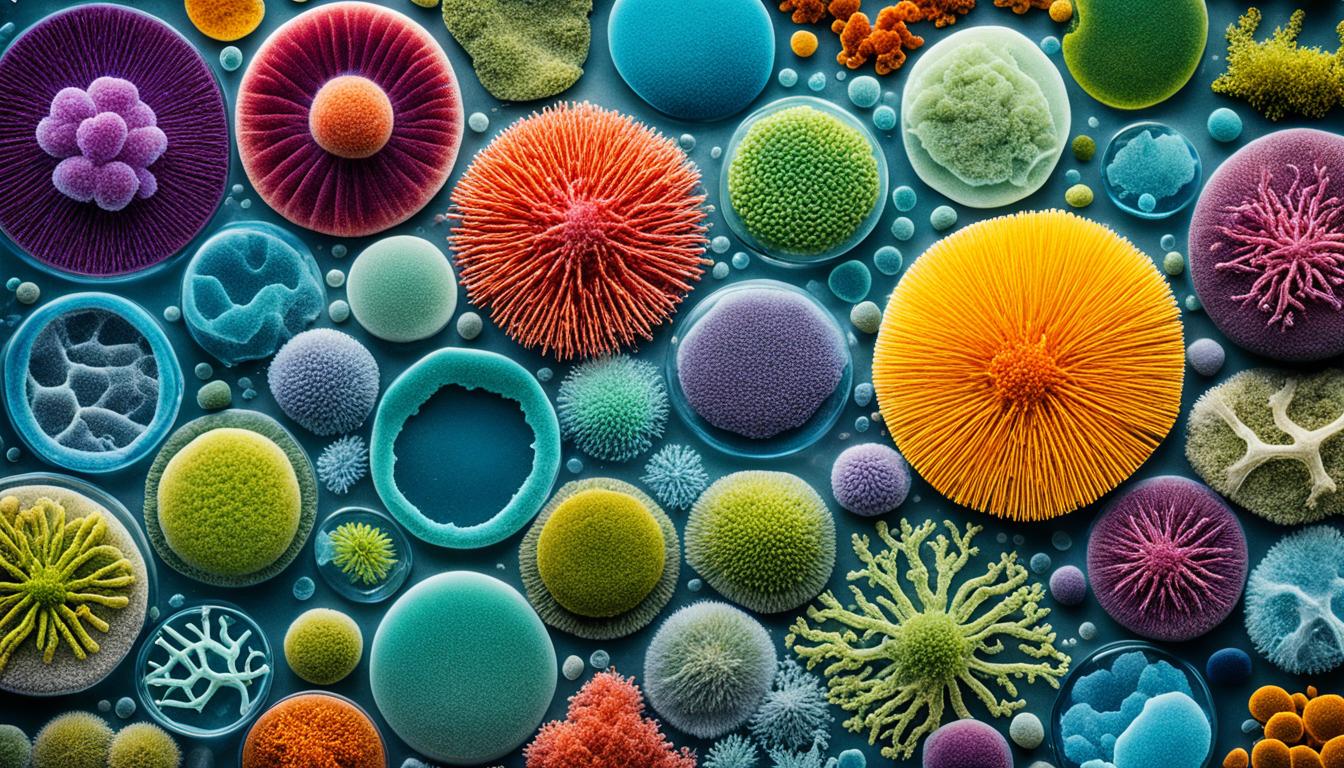
Microorganisms make up a wide variety of life forms. These include bacteria, archaea, viruses, fungi, and protists. Each group has a special role in our planet’s ecosystem. Bacteria are everywhere, from the hottest deserts to the coldest ice caps.
Archaea, known as “extremophiles,” can live in extreme conditions. Viruses, though not alive in the classical sense, help control microbial populations and influence their hosts’ evolution. Fungi break down organic matter and help the diversity of the microbiome. Protists, diverse eukaryotic microbes, are key producers and consumers in ecosystems.
Understanding the Vital Role of Microbes
Microbes play a huge role in our planet’s ecosystems. They’re crucial for nutrient cycling, decomposition, and producing gases. Many microbes have symbiotic relationships with larger organisms, offering important services in return.
The microbial world is complex and interconnected. It’s made up of countless tiny life forms that work together. Understanding these microbes and their roles is key to unlocking the secrets of our planet and improving life for everyone.
Groundbreaking Discoveries in Antibiotic Resistance
The rise of antibiotic-resistant microbes, or “superbugs,” is a big threat to our health worldwide. We’ll look into new discoveries that help us understand this issue. We’ll also see new ways to fight it.
Antimicrobial resistance is a complex problem. It comes from bacteria adapting to antibiotics. When bacteria face antibiotics, they can change or get new traits that help them survive. This has led to superbugs that are hard to treat because they resist many antibiotics.
Scientists have made big steps in understanding antibiotic resistance. They study how bacteria avoid antibiotics to learn how superbugs form and spread. This info is key for making new drugs and stopping resistance from getting worse.
New ways to fight antibiotic resistance are being looked into. Researchers are working on new antibiotics and other treatments like phage therapy and antimicrobial peptides. These efforts aim to keep up with the battle against bacteria.
Amazing Discoveries in Environmental Microbiology
The field of environmental microbiology has seen big changes in how we see microbes. These tiny organisms are key to keeping our planet healthy. They help with important cycles that move nutrients and energy around different ecosystems.
Microbes as Nature’s Recyclers
Microbes are amazing at recycling important elements like carbon, nitrogen, and phosphorus. They break down organic stuff, making nutrients available again for plants and other living things. This keeps the ecosystem balanced.
Studies show that microbes live in many different places and can survive in tough conditions. From deep in the ocean to dry deserts, they find ways to live and play a big role in nature.
As we learn more about microbes and their effects, scientists are finding new ways to use them to fix environmental problems. This could help with pollution and improving soil health. These discoveries could lead to a better future for our planet.
Unraveling the Mysteries of Human Microbiome
The human body is a complex ecosystem filled with trillions of microbes. These microbes live mainly in our gut and are key to our health. Research has shown how our gut microbiome affects our immune system and mental health.
The Intricate Relationship Between Microbes and Health
Our gut is home to a mix of bacteria, viruses, and other microorganisms. They work together to keep our body healthy. These microbes help our immune system fight off diseases and keep us in balance.
When the balance of microbes in our gut is off, it can lead to health issues. This includes problems like inflammatory bowel diseases and metabolic disorders. Probiotics are live beneficial microorganisms that can help fix these imbalances.
Probiotics are live good bacteria that can prevent and treat many diseases. They help with gut issues and even some respiratory infections. This makes them a big part of personalized medicine, as our unique gut microbiome can guide treatment plans.
Scientists are learning more about how our gut microbiome affects our health. They’re finding that it plays a big role in our immune system and brain function. This knowledge could lead to new ways to prevent diseases and tailor treatments to each person.
Harnessing Microbes for Biotechnological Applications
Scientists have made amazing discoveries in microbiology that are changing many industries. They are looking into microbial biotechnology. Here, microbes are used to make many valuable products.
Microbial Factories: Producing Valuable Products
Microbes are now key players in biotechnology. They are making things like biofuels, medicines, and industrial enzymes. Scientists use special methods to make the most of microbes’ abilities.
Microbes are helping make biofuels a big deal. Some bacteria and yeast can turn waste into clean fuels. This is a green alternative to old fossil fuels.
Pharmaceuticals also benefit from microbes. They help make many medicines and treatments. This is thanks to microbial fermentation.
But microbes do more than just make energy and medicines. They help make industrial enzymes too. These enzymes are used in many things, like clothes, cleaners, food, and farming. This makes industries more efficient and green.
The future of microbial biotechnology is bright. Researchers are finding new microbes and improving how we use them. They aim to make more biofuels, medicines, enzymes, and more. Microbes could change how we use the tiny world around us.
Amazing Discoveries in Extremophile Microbiology
Microbiology is a fascinating field, especially when it comes to extremophiles. These microorganisms can live in extreme places like hot springs and the frozen tundra. They have special ways to survive in such tough conditions. This has made scientists very interested in them, leading to new discoveries in astrobiology and biotechnology.
Extremophiles are microbes that live in extreme places. They can handle very high temperatures, lots of pressure, strong radiation, and even places without water or oxygen. By studying them, scientists learn about life’s limits and if there could be life on other planets.

In Yellowstone National Park, there are hot springs full of extremophiles. These microbes live in water over 100°C. They have special enzymes and structures that let them survive in such heat. This has led to new uses in industries and the discovery of new medicines.
There are also psychrophilic extremophiles that live in the cold of the poles and deep-sea vents. These microbes have ways to stay active in freezing temperatures. This helps us understand how life can exist in extreme cold and might even exist on other planets.
As we learn more about extremophiles, we see more ways they can help us. They can teach us about life’s beginnings and help us find new ways to solve problems. The study of extremophiles is opening up new areas in science and technology.
Microbes: The Unseen Heroes of Agriculture
Scientists have found out how important microorganisms are in helping crops grow and making soil fertile. They also help make farming more sustainable. These tiny heroes include beneficial bacteria and fungi that live in the soil.
Enhancing Crop Yields and Sustainability
Research has shown that microbes greatly affect how plants and soil work together. Some microbes can turn air nitrogen into a form plants can use, making soil richer. Others can protect crops from pests and diseases, cutting down on harmful chemicals.
The soil microbiome is full of these tiny helpers. They break down organic matter and cycle nutrients. This makes the soil better for plants to grow. By using this knowledge, farmers can grow more food with less harm to the environment.
New discoveries in agricultural microbiology are changing farming for the better. Using microbes for fertilizers and pest control is better for the planet. As we learn more about these tiny helpers, we could see big changes in how we farm.
Breakthroughs in Microbial Forensics
Scientists are unlocking secrets in the world of microorganisms in microbial forensics. They use tiny life forms to change how we investigate crimes and protect against threats. This field helps us find unique signs left at crime scenes and track deadly pathogens quickly.
Microbes are now key tools in solving crimes. Every person, place, and thing has its own set of microbes. These microbes create a unique signature that can link a suspect to a crime or track evidence. By analyzing these signatures, investigators can find important clues and solve crimes.
But microbial forensics isn’t just for crime scenes. It’s also vital in public health crises, like disease outbreaks or bioterrorism. It helps scientists quickly find and trace dangerous microbes. This leads to faster responses that can save lives and stop outbreaks.
Experts use microbial signatures, epidemiology, and genomic analysis to improve biosecurity. This keeps our communities safe.
The field of microbial forensics is always growing. It helps solve crimes and protect us from health threats. The future of forensic science and public health is linked to microbes.
Exploring the Microscopic World of Ancient Life
Explore the world of microfossils, tiny fossils that tell us about life’s evolution. They are the remains of ancient microbes. These fossils give us a peek into the lives of the first life forms on Earth.
Unraveling the Secrets of Microfossils
Microfossils are found in rocks and are very useful for scientists. They are tiny, often smaller than a grain of sand. These fossils help us understand the past and the lives of ancient microbes, including those that lived in extreme conditions.
Studying microfossils has changed how we see the early history of life on Earth. By looking at their shapes and what they are made of, scientists can learn about how different microbes were related. They also discover how these microbes adapted to their environments.

Microfossils show us life’s strength and ability to adapt. They help us see how life began on Earth, from the early oceans to dry lands. These tiny fossils inspire scientists to keep exploring the microbial world.
Advances in Microbial Genomics and Metagenomics
The fields of microbial genomics and metagenomics have seen huge leaps, changing how we see the tiny world. Scientists use new technologies to read the genes of single microbes and whole communities. This has opened up a world of new knowledge.
Microbial genomics lets researchers study the genes of many microbes, like bacteria and viruses. It helps find new genes and how they work. This is key for understanding how microbes survive in different places. Bioinformatics also helps by making sense of these genes, leading to new discoveries in fields like medicine and technology.
Metagenomics is another big step forward, focusing on the genes of all microbes in a community. By looking at DNA from the environment, scientists can see how microbes work together in places like our gut and the ocean. This new way of looking at microbes has changed what we know about their diversity and how they affect the world around us.