






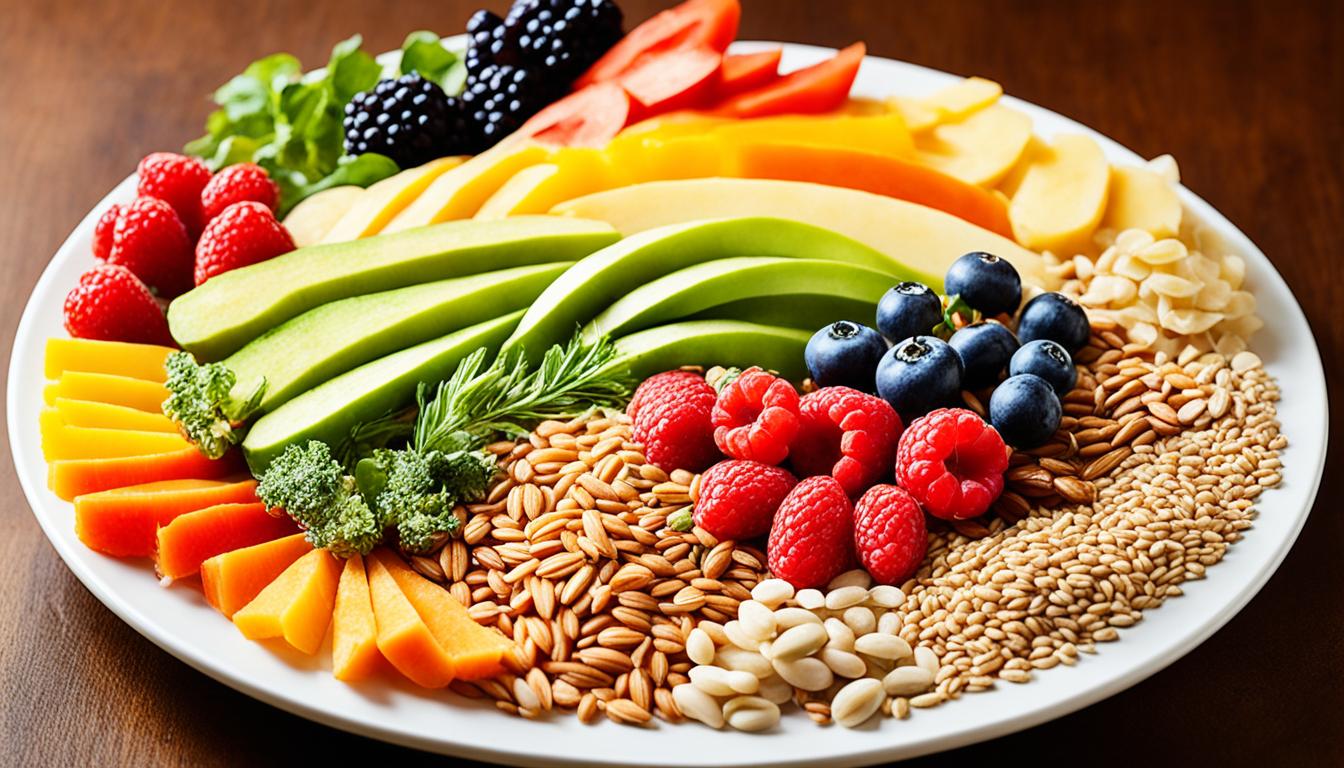
Fiber is a key part of a healthy diet but often overlooked. It’s essential for our well-being, helping with digestion, weight control, and lowering heart disease and diabetes risk. This article will cover the different types of fiber and their benefits. It aims to show how fiber can improve our health and make our lives better.
Fiber is found in many plant-based foods and is a special type of carb our bodies can’t fully digest. This might seem like a minus, but it’s actually a big plus for our health. Fiber moves through our digestive system, helping with bowel movements, making us feel full, and lowering cholesterol.
We’ll look into the many benefits of fiber in the next sections. You’ll learn how to add more of this important nutrient to your diet. Fiber helps with weight control, heart health, and preventing diabetes. It’s truly a key to good health.
Fiber: The Unsung Hero of Optimal Health
Fiber might not be as flashy as other nutrients, but it’s crucial for our health. It’s often ignored, but this nutritional hero has many benefits. Let’s explore how a diet rich in fiber can boost our health.
Understanding the Different Types of Fiber
Fiber has two main types: soluble and insoluble. Soluble fiber turns into a gel-like substance in water. This helps control blood sugar and lower cholesterol. Insoluble fiber doesn’t dissolve and helps keep bowel movements regular, preventing constipation. Together, these fibers support a healthy gut and offer many other benefits.
The Many Benefits of a Fiber-Rich Diet
Eating more fiber can greatly improve our health. A diet full of soluble and insoluble fiber helps with weight control, digestion, and lowers the risk of heart disease and diabetes. Fiber is key to a healthy life, making it vital to our well-being.
Fiber and Weight Management: A Dynamic Duo
Fiber is key for managing weight. It helps control your appetite and supports calorie control. This makes it a great ally for a healthy weight. If you want to keep your weight or lose some, fiber is important in your diet.
Fiber makes you feel full and satisfied. Foods high in fiber digest slowly, keeping you feeling full longer. This reduces the chance of eating too much or snacking too often. Studies show that eating more fiber means feeling fuller and eating fewer calories.
Fiber also affects your appetite by changing hunger and fullness hormones. Soluble fiber boosts hormones that make you feel full. This helps you eat less and feel satisfied.
Adding more fiber-rich foods to your diet helps with weight management. Fiber helps control calories, keeps you at a healthy weight, and offers many other benefits.
Boosting Digestion with Fiber
Keeping your digestion in check is key to good health. Fiber is a big help in this area. It helps with bowel movements, stops constipation, and keeps your gut healthy.
Fiber’s Role in Preventing Constipation
Eating more fiber can stop constipation. It makes your stool bulkier, helping it move better through your body. Soluble fiber turns into a gel-like substance, making waste pass smoothly.
Studies show eating enough fiber reduces chronic constipation. It helps with bowel movements, boosts gut health, and stops toxins from building up.

Fiber is also key for a healthy gut microbiome. It feeds the good bacteria in your gut, important for digestion, absorbing nutrients, and fighting off sickness. A healthy gut means better digestion and less constipation.
Adding foods high in fiber like whole grains, veggies, fruits, and beans helps your digestion. This leads to better health and less constipation.
Fiber for Heart Health
Keeping our hearts healthy is key to feeling good overall. Fiber is a big part of this. Studies show that eating more fiber can lower the risk of heart disease. This section will look at how fiber can help by lowering cholesterol levels. It will also give tips on eating more fiber to support your heart.
Lowering Cholesterol Levels Naturally
Fiber is great for the heart because it lowers cholesterol. Soluble fiber is especially good at this. It binds to cholesterol in the gut, helping your body get rid of it. This can lead to a 5% drop in bad cholesterol, which is good for your heart.
Fiber also fights inflammation, which is bad for the heart. It keeps your gut healthy and reduces inflammation. This can help prevent heart problems like atherosclerosis.
To get the heart benefits of fiber, eat more whole grains, fruits, veggies, beans, and nuts. Making fiber a big part of your diet is a smart way to keep your heart healthy. It can help lower your risk of high cholesterol and other heart issues.
Diabetes and Fiber: A Powerful Combination
Fiber is a hero for managing diabetes and fighting insulin resistance. It’s a key nutrient that helps control blood sugar and makes insulin work better. Adding more fiber-rich foods to your meals can help you fight diabetes effectively.
Fiber slows down the digestion of carbs, which stops blood sugar from rising too fast. This lowers the need for insulin and makes insulin work better. Studies show eating more fiber can cut the risk of type 2 diabetes by 20-30%.
Fiber does more than just help with diabetes. It also supports a healthy gut, which is key for your metabolism. By feeding good gut bacteria, fiber helps your body manage blood sugar and insulin levels better.
If you have diabetes or want to prevent it, eating more fiber is a smart move. You can find fiber in whole grains, legumes, fruits, and vegetables. Start eating more fiber to improve your blood sugar control and insulin sensitivity.
Health & Wellness Tips: Increasing Fiber Intake
Getting enough fiber is key for good health, but many find it hard to get the daily amount. This section offers easy tips to add more fiber to your diet. Enjoy the many benefits of eating more fiber.
Start by eating more whole grains, fruits, and veggies. Choose whole-wheat bread, brown rice, and oats for fiber. Snack on fresh berries, apples, and leafy greens to get more fiber all day.
Experts say aim for 25-30 grams of fiber daily. But many don’t hit this target. To meet your fiber needs, increase your intake slowly. And remember to drink lots of water to help fiber move well through your body.
Planning your meals is a great way to eat more fiber. When you shop, pick foods high in fiber. Add beans, lentils, and other legumes to your dishes for lots of fiber. Also, eat nuts, seeds, and whole-grain crackers to increase your fiber.
Small changes to your diet can make a big difference in fiber intake. Follow these tips to enjoy the health perks of eating more fiber.
Fiber-Rich Foods: Nature’s Bounty
Getting enough fiber is easy with the many whole foods available. Whole grains, fruits, and vegetables are full of fiber. They can make your meals and snacks much healthier.
Whole Grains: A Fiber Powerhouse
Whole grains are full of fiber and offer many health benefits. Foods like brown rice, quinoa, oats, and whole wheat bread are great for fiber. They help with digestion, keep blood sugar levels stable, and support heart health.
Legumes, such as lentils, beans, and peas, are also great for fiber. They are high in soluble fiber, which lowers cholesterol and helps control blood sugar. Nuts and seeds, like almonds, walnuts, and chia seeds, are full of fiber too. They make a healthy snack or add to meals.
Fruits and vegetables are also packed with fiber. Berries, pears, broccoli, and artichokes are some examples. Eating a variety of these foods gives you many nutrients and fiber sources for better health.
By choosing fiber-rich foods, you can make a diet that’s good for you. It’s a journey to a healthier life. Start by trying different fiber-rich foods you like and add them to your daily meals.
Fruits and Veggies: Fiberlicious Choices
Fiber is key to a healthy diet. Nature gives us many fiber-rich foods. Fruits and vegetables are great for getting fiber and important vitamins, minerals, and antioxidants.
Apples, pears, berries, and citrus fruits are top fiber sources. They help with digestion and weight control. Avocados, with 7 grams of fiber per serving, are a tasty choice.
Leafy greens like spinach, kale, and collards are fiber giants. Broccoli, Brussels sprouts, and artichokes are also high in fiber. Legumes, such as lentils, black beans, and chickpeas, are easy to add to meals.
Make fruits and vegetables your diet’s base to boost fiber. They help with a healthy gut and blood sugar control. Fiber-rich foods are easy and effective for staying well.
Fiber Supplements: When Dietary Sources Aren’t Enough
Getting enough fiber is key for good health. Sometimes, eating enough fiber can be hard. That’s when fiber supplements can help.
Fiber supplements like powder or tablets can fill the gap when you’re not getting enough fiber from food. They give you a lot of fiber at once. This helps with digestion, weight, and heart health.
When picking fiber supplements, choose high-quality ones from trusted brands. Make sure they have different types of fiber like psyllium or chicory root. Also, check the amount of fiber in each serving and follow the directions to avoid stomach issues.
If you’re having trouble getting enough fiber from food, supplements can be a big help. They’re especially good if you have health issues that need more fiber. Always talk to your doctor before starting any new supplements to make sure they’re right for you.

Using fiber supplements can help you get the fiber your body needs. This supports your digestive health, helps with weight, and boosts overall well-being. A mix of eating fiber-rich foods and using supplements is a great way to stay healthy over time.
Overcoming Fiber Challenges
Starting to eat more fiber can be tough, like feeling bloated or gassy. But, you can beat these issues and make a fiber-rich diet work for you. Just focus on two main things: slowly adding more fiber and drinking enough water.
Gradual Increase and Hydration: Keys to Success
When you want to eat more fiber, do it slowly. Adding fiber-rich foods bit by bit lets your body get used to it. Start with one or two new high-fiber foods a week. Then, slowly increase how much you eat over time. This way, your body won’t get upset.
Drinking enough water is also key. Fiber needs water to move through your body. Try to drink at least 8 glasses of water a day. Also, eat hydrating fruits and veggies like watermelon, cucumbers, and oranges to help.
By slowly adding more fiber and staying hydrated, you can get past the tough parts. You’ll enjoy the benefits of a fiber-rich diet, like better digestion, managing your weight, and lowering the risk of heart disease and diabetes.
Embracing a Fiber-Filled Lifestyle
Starting a fiber-rich diet is a big step towards better health and energy. By focusing on fiber every day, you open up many benefits. These go way beyond just better digestion.
Benefits of eating more fiber are many and big. It makes you feel full, which helps with weight control. Fiber also keeps your digestive system healthy, cutting down on constipation and helping with regular bowel movements.
Fiber does more than just help with digestion. It lowers cholesterol and controls blood sugar, which can lower the risk of serious health problems. By choosing a fiber-rich lifestyle, you’re taking a big step towards a healthier, happier life.