



Step into the amazing world of animals, where the ordinary and the magical mix. Discover the incredible skills and strange behaviors that make us think differently. Meet creatures with amazing adaptations and those that show off their smarts.
This article takes you to a place where the impossible becomes possible. Here, nature’s secrets are revealed, and animals show off their strength and flexibility. Join us on this exciting journey into the animal kingdom, full of wonders and mysteries waiting to be uncovered.
The World of Biomimicry: Nature’s Ingenious Solutions
Scientists and engineers are looking to nature for new ideas. This field, called biomimicry, combines biology with advanced design and engineering. It’s changing how we solve problems.
Exploring Nature’s Blueprints for Innovation
Nature has many solutions that could help us. For example, the lotus leaf and the humpback whale are both inspiring new designs. Researchers study how living things adapt to learn from their strategies.
This helps them create designs that work as well as nature’s do. It’s all about finding the beauty and efficiency in nature.
Biomimetic Breakthroughs in Engineering and Technology
Biomimicry has many uses. In sustainable tech, it helps make buildings that use less energy and materials that can fix themselves. The lotus leaf has led to self-cleaning coatings that use less water and chemicals.
Sharkskin has also inspired new designs for planes and cars. These designs cut down on drag and save fuel. Biomimicry is bringing new ideas to many fields, thanks to nature’s inspiration.
Biomimicry shows us how smart nature is. By copying nature, scientists and engineers are making big strides in innovation. They’re working towards a future that’s both sustainable and efficient.
Evolutionary Marvels: Uncovering Nature’s Adaptations
In the animal kingdom, evolutionary adaptations have led to many survival strategies. Through natural selection, species have changed to live in diverse places. This shows how nature has found smart ways to overcome life’s challenges.
Living things are incredibly adaptable. Chameleons change color, and some snakes have venom. These examples show the amazing things species can do to survive. By looking at these adaptations, we learn how nature’s creatures have developed to live in their environments.
Apex predators have special hunting ways, and some insects live together in complex groups. Studying these adaptations shows how animals and their environments interact. This interaction has created a world full of different species, each with unique traits shaped by millions of years of natural selection.
Exploring evolutionary adaptations shows us the beauty and complexity of nature. It also inspires us to learn from these creatures. By understanding how they survive, we can see nature’s genius. This can help us in engineering, medicine, or other areas.
Extraordinary Behaviors: Remarkable Animal Intelligence
The animal kingdom is full of wonder, showing us creatures with amazing minds. They have skills that go beyond what we thought was possible. From solving problems to complex talks, studying animals has changed how we see the world.
From Problem-Solving to Complex Communication
Recent studies show how smart some animals are at solving problems. Chimpanzees and gorillas use tools and work together to get things done. Even crows and ravens are smart, using their senses to solve complex problems.
Animals also talk to each other in complex ways. Whales and dolphins make sounds, and elephants use body language. These ways of talking help them connect and share information, showing how smart they are.
Animal Cognition: Challenging Our Perceptions
Looking into animal minds has changed what we thought animals could do. We’ve found they can think about themselves, feel empathy, and even have a basic consciousness. Their behavior shows they can learn, remember, and solve problems, making them seem more like us.
Exploring animal intelligence shows us how complex and diverse nature is. These findings help us understand animals better and open new areas of research. They also show us how nature can inspire new ideas, like in biomimicry.

Amazing Discoveries: Unveiling Nature’s Hidden Wonders
The natural world is full of hidden wonders, from deep oceans to remote corners of the Earth. We keep finding amazing creatures and ecosystems that surprise us. They challenge what we thought we knew about nature.
Under the sea, the oceans are full of unexplored places. These are homes to many strange and unique sea creatures. Scientists are still learning about the ocean’s secrets. They find new discoveries that show us how these sea animals live and behave.
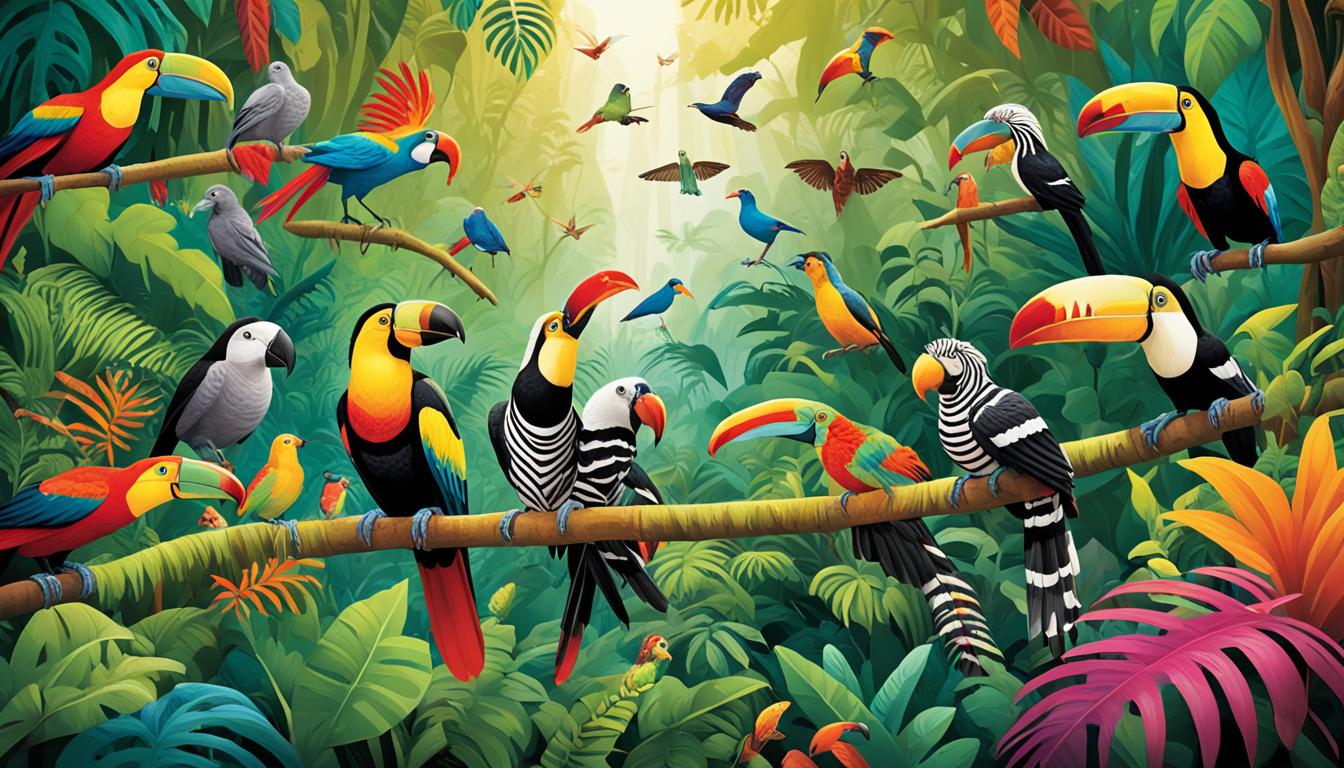
In the world’s tropical rainforests and remote areas, there are many natural wonders. These places have elusive creatures and complex ecosystems. Scientists and nature lovers are always learning from these places. They inspire us to explore and protect these special areas.
Exploring nature shows us how diverse and complex life is on our planet. We see creatures that are unlike anything we’ve seen before. Their unique ways of living and surviving amaze and inspire us.
Bizarre and Unique: Peculiar Creatures of the Animal Kingdom
Step into the world of nature’s most peculiar creatures. From the ocean depths to the rainforest heights, the animal kingdom is full of bizarre animals and unique creatures. These creatures have developed amazing adaptations that challenge our understanding of nature.
Defying Expectations: Extraordinary Animal Adaptations
Explore the world of animal oddities and learn about their amazing adaptations. Meet animals that live in extreme places, showing traits that seem almost magical. See creatures that can blend into their surroundings or regrow lost limbs.
Meet the nudibranch, a colorful sea creature with intricate patterns and bright colors. Or the axolotl, a salamander that can regrow its limbs. These creatures show the incredible diversity of life on Earth.
As we keep exploring, we find new and fascinating creatures. Each one has its own special adaptations and history. By learning about these animals, we appreciate the complexity and resilience of life on Earth. We also see the wonders that still await us in the animal kingdom.
Unraveling the Mysteries of Animal Migration
From the vast oceans to the skies above, animals show us amazing migratory behaviors. These journeys are incredible, leaving us amazed by their navigation skills and how they adapt to travel long distances.
Navigating Nature’s Pathways: Incredible Journeys
Every year, millions of animals move with the seasons. Humpback whales cross oceans, gray whales go from the Arctic to Baja, and monarch butterflies fly thousands of miles. They find their way back year after year, showing off their amazing navigation skills.
Animals use instincts, environmental clues, and advanced senses to navigate. Birds use the sun, stars, and the Earth’s magnetic field to cross continents and oceans. Marine mammals use smells, currents, and the Earth’s magnetic fields to find their way in the water.
Studying animal migration helps us understand how they travel such long distances. It also helps us learn about evolution and behavior. This knowledge inspires new ideas in navigation, robotics, and transportation.

Symbiotic Relationships: Exploring Nature’s Intricate Connections
In the natural world, symbiotic relationships are key to thriving ecosystems. These partnerships, where different species work together, show how complex and connected life is. From mutualism to commensalism, these connections highlight the amazing ways species adapt and evolve.
Mutualism is a win-win situation for both species involved. A great example is the clownfish and sea anemone. The clownfish protects the anemone from predators, and the anemone keeps the clownfish safe from its predators. This shows how species can work together for mutual benefit.
Commensalism, on the other hand, benefits one species without affecting the other. Remora fish and sharks or whales are a good example. Remoras ride on these larger animals to eat leftovers without harming them. This shows how species can live together without direct harm.
Looking into mutualism and commensalism helps us understand the importance of symbiotic relationships. These relationships are not just interesting to learn about. They are key to keeping our planet’s ecosystems healthy and strong.
Conservation Challenges: Safeguarding Nature’s Treasures
We’re discovering the wonders of animals, but we must face conservation challenges too. Threats like habitat loss and climate change are big problems. They put many species at risk.
Addressing Threats to Biodiversity
Many species are facing the risk of extinction. Deforestation and urban growth harm their homes. Climate change also disrupts their habitats.
Invasive species and pollution add to the problems. They harm native animals and ecosystems. This makes it hard for endangered animals to survive.
Innovative Solutions for Wildlife Protection
Despite the challenges, there’s hope. Groups, governments, and people are finding new ways to protect wildlife. They’re creating safe areas and paths for endangered animals.
New ways in farming, energy, and waste management help reduce harm to nature. Programs teach people to care for their local nature. This builds a love for the natural world.
We can tackle the threats to nature with sustainable solutions. Together, we can keep the animal kingdom safe and thriving. Our efforts will protect these treasures for the future.
Frontiers of Animal Research: Pushing the Boundaries
Scientists are on an exciting journey in animal research, pushing what we know and finding new discoveries. They explore everything from animal behavior to evolutionary biology. This work is changing how we see the animal kingdom.
New technologies have changed animal research a lot. They let scientists study animal thoughts and how they talk to each other. Now, we know more about how animals think and learn, which changes what we thought was possible.
At the same time, evolutionary biologists are learning about how animals adapt to different places. These discoveries help us appreciate nature more and give us new ideas for technology. By studying nature, we can make new things that work better.