






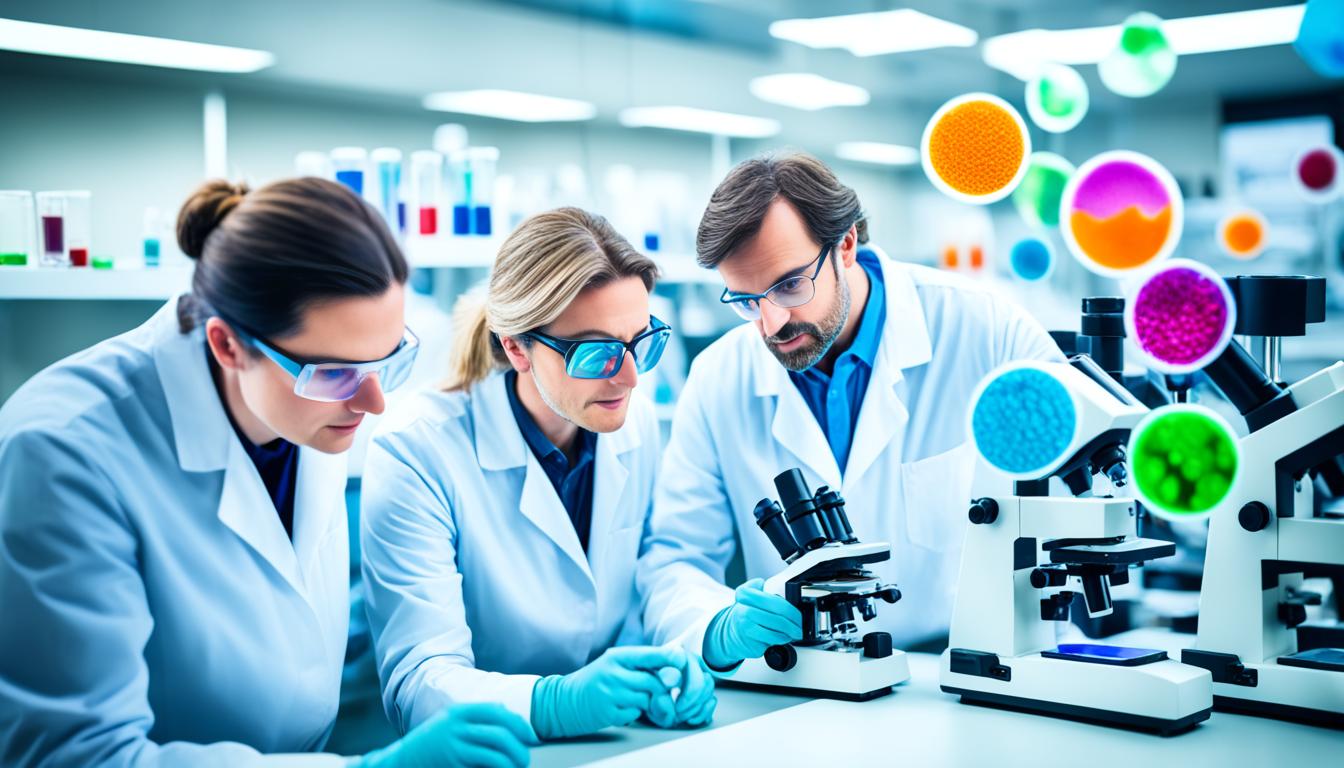
Biology has seen many amazing discoveries that have changed how we see the living world. From the groundbreaking theory of evolution to the mapping of the human genome, these discoveries have led to scientific progress. They have also unlocked the mysteries of life. Let’s explore the fascinating world of biology and see the incredible discoveries that have shaped our knowledge.
Charles Darwin’s theory of evolution is a key moment in biology. He studied the natural world and looked at fossils and genes. His idea of natural selection changed how we see species change and grow over time. This idea still guides scientists today as they try to understand life on Earth.
The discovery of DNA has been crucial in biology. James Watson and Francis Crick found the double-helix structure of DNA. This discovery led to new understanding of genetics and how life works. It has helped in fields like personalized medicine and genetic engineering.
Evolution: The Groundbreaking Theory that Shaped Our Understanding
Charles Darwin, a famous naturalist, changed how we see life’s beginnings and growth on Earth. His idea of evolution through natural selection has been proven right over time. It’s backed by lots of evidence from fossils and genetic studies.
Charles Darwin’s Revolutionary Concept
In “On the Origin of Species” in 1859, Darwin shared his evolution theory. He noticed that each species has natural variations. Those with traits fitting their environment are more likely to live and have babies. Over time, these traits become more common, helping species change.
Evidence from Fossil Records and Genetics
Fossils and genetics also support evolution. Transitional fossils show how organisms changed over time. Genetics has found similar DNA in related species, proving they share a common ancestor.
Evolution has changed how we see the world and helps in many areas like medicine and conservation. Understanding evolution helps scientists tackle big challenges. This includes finding new treatments and saving endangered species.
DNA: The Blueprint of Life
The discovery of DNA changed biology forever. This molecule, known as deoxyribonucleic acid, holds the genetic information that makes each living thing unique.
DNA looks like a twisted ladder, known as the “double helix.” It’s made up of four chemical blocks: adenine, thymine, cytosine, and guanine. These blocks form a code that tells our bodies how to make proteins. Proteins are key for cell functions and shape our bodies.
In 1953, James Watson and Francis Crick discovered DNA’s structure. This discovery changed how we see molecular biology and inheritance. It helped scientists understand how living things work, from tiny microbes to complex lifeforms.
Studying DNA has led to many breakthroughs. We can now trace evolutionary history, diagnose genetic diseases, and develop new treatments. As we learn more about DNA, we’ll likely make even more important discoveries.
The Human Genome Project: Mapping Our Genetic Makeup
The human genome project changed how we see our genetic makeup. It has led to big steps in personalized medicine. It also brought up big questions about using our genetic info.
Implications for Personalized Medicine
By mapping the human genome, scientists learned more about our genes and health. This has led to new ways to make medicine more personal. Now, doctors can create treatments that fit each person’s genes better.
This means patients get better care and health outcomes. It’s a new way to look at healthcare, focusing on each person’s unique genetic makeup.
Ethical Considerations and Privacy Concerns
The human genome project has made big scientific leaps. But, it also brought up tough ethical and privacy issues. There are worries about using genetic info in ways that could harm people.
There’s a big debate about how to balance medical progress with protecting our privacy. It’s important to make sure our genetic info is used right and kept safe.

As we move forward with genetic mapping and personalized medicine, we must think about these ethical issues. We need to make sure the benefits of the human genome project are used in a way that respects everyone’s privacy and well-being.
Stem Cell Research: Unlocking the Potential for Regenerative Therapies
Stem cells are special cells that can turn into different cell types in the body. This makes them key to regenerative medicine. They offer hope for treating many diseases and injuries, from brain disorders to organ damage.
Scientists are leading the way in using stem cells for new therapies. These therapies aim to fix or replace damaged tissues. By engineering tissues, researchers turn stem cells into specific cells like neurons or heart cells. These cells can then help heal damaged areas.
Stem cells could do more than just repair tissues. They might help grow new organs or tissues for transplants. This could solve the shortage of donor organs and lower the risk of rejection.
The future of stem cell research looks bright. It could lead to groundbreaking therapies for tough medical conditions. By exploring stem cells, scientists are finding new ways to improve lives and tackle health challenges.
Amazing Discoveries in Microbiology: The Unseen World
Microbiology has opened a world of tiny life forms, from bacteria to viruses. It has led to major discoveries, changing how we see the tiny world around us.
Antibiotics: Battling Bacterial Infections
Antibiotics have been a huge step forward in fighting infections. These drugs target and kill harmful bacteria. They help treat many diseases, from simple infections to serious illnesses.
Alexander Fleming discovered penicillin in the 1920s, saving many lives. Antibiotics have been key in fighting diseases like pneumonia and tuberculosis. They’ve greatly improved health and cut down on deaths worldwide.
But, using antibiotics too much has made some bacteria resistant. This makes fighting infections harder. Scientists are finding new antibiotics to keep up with these resistant bacteria. They aim to keep us safe from infections.
Microbiology keeps showing us the amazing world of tiny life. By exploring this world, we find new ways to use tiny organisms. This helps in making new medical treatments and understanding nature better.
The Wonders of Photosynthesis: Fueling Life on Earth
Photosynthesis is how plants turn sunlight, carbon dioxide, and water into energy. It’s the base of life on Earth. This process supports the ecosystem and could change how we see renewable energy.
Harnessing Photosynthesis for Renewable Energy
Scientists have always been amazed by photosynthesis. By studying it, we can find new ways to use its power for sustainable energy. Biofuels from plants are a key way to use photosynthesis for energy.
Microalgae are great for making biofuels. They can catch sunlight and turn it into energy. This energy can be used as a clean fuel. Research in plant biology is helping us make better biofuels.
Photosynthesis also inspires new solar energy tech. Scientists are working on solar cells that work like plants. These cells can make clean electricity from sunlight.
We need sustainable energy solutions now more than ever. Photosynthesis shows us a bright future. By using this natural process, we can make more renewable energy. This is a big step towards a sustainable future.
Breakthroughs in Neuroscience: Unraveling the Mysteries of the Brain
Neuroscience has made huge leaps in understanding the human brain’s complex workings. Scientists have found new insights into brain function and the causes of neurological disorders. This section will look at major breakthroughs in neuroscience and how they’re changing our knowledge of the brain.
Understanding Neurological Disorders
Neuroscience has focused on studying neurological disorders. These disorders affect how we think, sense, and move. By studying conditions like Alzheimer’s, Parkinson’s, and multiple sclerosis, researchers have found better treatments.
Advanced brain imaging and genetic analysis have helped in this research. They show how the brain, environment, and lifestyle interact. This has led to new treatments and hope for those with these diseases.
Recent discoveries show how neuroinflammation causes neurodegenerative diseases. This has led to new treatments that target inflammation. Neuroplasticity, the brain’s ability to change, offers new ways to help people recover.
The study of the brain is still uncovering new secrets. Researchers are finding ways to improve treatments and help those with neurological disorders. Their work is leading to a better future for those affected.
The Fascinating World of Genetics
Genetics is all about studying heredity and how genes work. It’s a key part of modern biology. It looks into how traits are passed down and how our genes affect us in many ways.
Heredity and Gene Expression
At the core of genetics is heredity. This is how traits from parents become traits in their kids. Gene expression turns our genes into the things that make us who we are.
This mix of heredity and gene expression helps us understand our unique traits. It shows how our genes shape us.
Applications in Agriculture and Medicine
What we’ve learned from genetics has changed many areas. This includes agriculture and medicine. In farming, genetic engineering has made crops stronger, tastier, and more abundant. This helps feed more people.
In medicine, new genetic research has led to better treatments. Now, doctors can tailor treatments to specific genetic conditions. This has improved health care a lot.
As we keep exploring genetics, we see endless chances to make things better. This field could lead to better health, more food, and new discoveries. The world of genetics is full of hope for the future.
Exploring the Depths: Discoveries in Marine Biology
The oceans are vast and mostly unexplored, leading to amazing discoveries in marine biology. Scientists have found diverse ecosystems full of life and deep sea secrets. These discoveries have changed how we see the aquatic world.
Marine biology shows us the incredible variety of life in the ocean. Researchers have found many species, from colorful coral reefs to mysterious deep sea creatures. These discoveries have shown us how life in the ocean is connected and adapted.
The deep sea is full of surprises. Brave marine biologists use new tech to study life in the dark depths. They’ve found glowing creatures and fish with unique features, showing us how different life can be.

Marine biology also teaches us about our planet’s complex systems. By studying oceans, we learn about currents, climate, and coastal ecosystems. This helps us understand how the Earth works and the importance of oceans for life.
Exploring the oceans still has many secrets to reveal. Marine biology will likely bring more exciting discoveries. It helps us understand the deep sea and how human actions affect the ocean. This field is changing how we see our world.
The Frontiers of Biotechnology: Shaping the Future
Biotechnology is leading the way in scientific advancements. It’s changing how we understand and work with living systems. With genetic engineering and synthetic biology, we’re seeing huge leaps in innovation.
CRISPR technology is a key player in this change. It lets researchers edit genes, which opens doors in medicine, agriculture, and more.
The future looks bright for biotechnology. Genetic engineering lets us target and change genes for better therapies, crops, and fuels. Synthetic biology is designing new biological systems. These could solve big global problems in a sustainable way.
This field is set to change our world in big ways. It’s tackling diseases, improving food security, and helping the environment. The potential to make a difference is huge, and we’re on the cusp of a new era.