





Get ready for an amazing journey into the world of whales, the ocean’s giants. These huge marine mammals have always fascinated us. They inspire us with their size, beauty, and the secrets of the deep sea. From gentle giants to powerful predators, whales are incredible creatures of our planet.
Whales are not just big; they have complex behaviors and play a key role in the ocean. As we learn about their amazing adaptations and importance, we’ll see how they connect to the ocean’s health. This shows the deep link between these amazing animals and our oceans.
Let’s dive into the whale kingdom and discover their mysterious ways and important roles in the ocean. See the beauty and strength of these sea giants. Learn about the efforts to save these incredible creatures for the future.
Exploring the Vast Underwater World
The ocean is full of life and mystery. It’s a place where many different kinds of marine life live. When we go deeper into the ocean, we find out about the amazing ways whales live and behave.
Unveiling the Mysteries of the Deep
The ocean’s depths are like a different world. Here, the rules of the surface don’t apply. Whales have adapted to live in this world. They have special bodies and senses to move through the water.
By exploring this world, we see how amazing these creatures are. We learn to appreciate the ocean and its wonders more.
Discovering Nature’s Gentle Giants
Whales are huge and move beautifully. They are symbols of the ocean’s beauty. From the big blue whale to the sperm whale, they amaze us with their smarts, social nature, and strength.
Learning about whales shows us their special ways of communicating and their important role in the ocean.
Whale Species: Diversity in the Oceans
The oceans are filled with a wide variety of whale species, each with its own special traits. These marine mammals are key to keeping the ocean’s balance. From the huge blue whale to the elegant humpback, their diversity shows how rich our oceans are.
Studying whales, dolphins, and porpoises is called cetacean classification. Whales are split into two main groups: mysticetes and odontocetes. Mysticetes, like the blue, fin, and gray whales, use plates to filter food from the water. Odontocetes, including the killer whale and sperm whale, hunt with their sharp teeth.
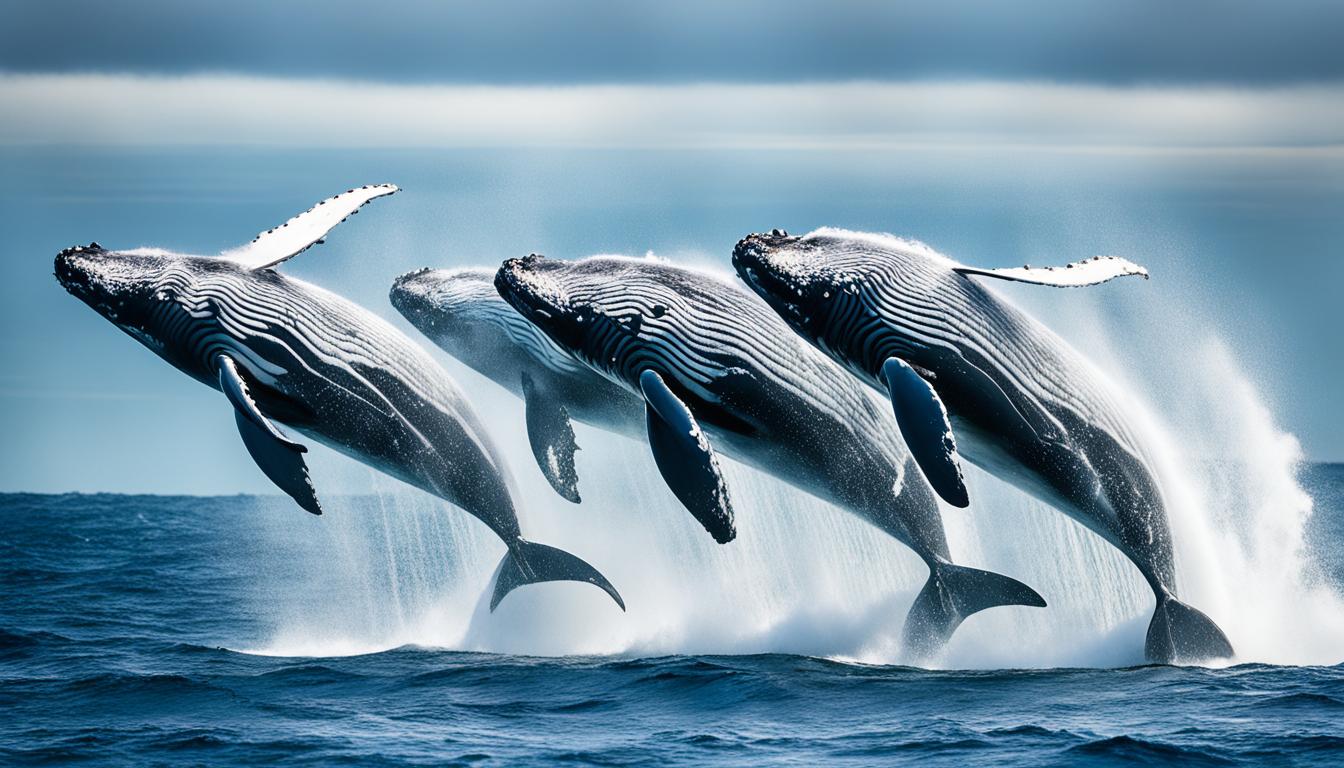
There are many whale species, each with its own special ways and behaviors. The humpback whale is known for its jumping skills. Beaked whales are hard to spot but add to the ocean’s variety. These whales help make the ocean rich and complex.
Exploring the ocean shows us how diverse whales are. This diversity highlights their strength and ability to adapt. By learning about different whales, we can work to protect them. This way, they can keep living in our oceans for a long time.
Anatomy and Behavior of Whales
The ocean is full of amazing creatures, but none are more fascinating than whales. These huge sea mammals have developed special features to live in the water. Their bodies and behaviors show how well they rule the deep sea.
Unique Adaptations for Aquatic Life
Whales have changed a lot to live in the water. Their smooth shapes help them move easily through the sea. Their big tail flukes push them forward in the ocean.
Their thick layer of fat, called blubber, keeps them warm and stores energy for long trips. This shows how whales have adapted to life underwater.
Whales also have special ways to talk to each other. They make sounds like songs and calls for many reasons, like staying together, finding their way, and hunting. These ways of communicating show how smart whales are.

As sea mammals, whales have learned how to breathe in unique ways. They use their lungs to hold their breath for a long time. This lets them go deep into the ocean to find food and shelter. This skill is key to their success in the sea.
Whale Migration Patterns
The ocean is vast and mysterious, filled with diverse marine life, including whales. These gentle giants are famous for their annual migrations. They travel thousands of miles across the seas for their life cycles. From the Arctic to the tropics, whales make these epic journeys, guided by instinct.
Annual Journeys Across the Seas
Every year, whales start their migration as seasons change. They leave their feeding grounds for warmer waters to breed and calve. These whale migration patterns are shaped by ocean travel, seasonal movements, and marine life cycles. For example, humpback whales travel up to 5,000 miles from the Arctic to the tropics for breeding and calving.
Whales’ migrations are incredible feats of endurance and navigation. They cross vast oceans, sometimes crossing international borders, to get to their destinations. They face many challenges, like changing weather and predators. But their drive to make these seasonal movements shows their resilience and adaptability.
The whale migration patterns are key to the balance of the ocean’s ecosystems. These migrations help whales find food and spread nutrients. They also keep habitats healthy for many other marine species.
The Role of Whales in Marine Ecosystems
Whales are key to keeping marine ecosystems balanced. They are top predators and important species that help keep the oceans healthy and full of life. Their actions greatly affect the food chains and the health of the ocean.
Whales do more than just exist in the ocean. They move and eat, spreading nutrients and minerals as they go. This acts like a natural fertilizer for the sea. Their waste feeds many marine creatures, from tiny plankton to big predators.
Whales also have a big impact on the food chain. As top predators, they keep their prey populations in check. This stops any one species from taking over, keeping the ocean’s life diverse and healthy.
Whales also help with the carbon cycle. They store a lot of carbon in their big bodies. This helps fight climate change and keeps the oceans healthy.
Nature & Wildlife: Preserving Whale Habitats
Whales are icons of nature’s beauty in the vast ocean. They play a key role in keeping marine ecosystems balanced. Their survival is linked to the health of our oceans. But, modern threats threaten their survival, making it crucial to protect their homes.
Protecting whale habitats is complex and involves many efforts. It’s about keeping their feeding grounds and migration paths safe. Marine conservation groups are leading the charge to save these spaces for whales.
Researchers, policymakers, and citizens worldwide are fighting to save whales and their homes. They’re tackling climate change, pollution, and human activities. These efforts aim for a future where whales can live well. By spreading awareness, supporting laws, and funding research, we can help protect these amazing creatures and their habitats.

We must protect the wonders of our oceans as planet stewards. Saving whale habitats is key to maintaining life’s balance on Earth. With determination and creativity, we can make sure whales continue to amaze future generations in their natural habitats.
Whale Watching: A Thrilling Experience
Whale watching is now a favorite eco-tourism activity. It lets people see these amazing creatures in their home. Seeing whales move and their huge size is unforgettable. It’s a way to connect with nature and see wildlife up close.
As more people want to be close to nature, whale watching is becoming a green way to enjoy the ocean’s beauty.
Ethical Guidelines for Responsible Observation
Whale watching is exciting, but we must follow rules to protect whales and keep it sustainable. We need to stay away from them, move quietly, and not scare them. This helps keep the whales safe and their home undisturbed.
By watching whales responsibly, we can enjoy their beauty and help protect them. Educational efforts and responsible watching help spread the word about protecting whales and the environment.
Conservation Efforts for Whale Protection
More people around the world are now aware of the dangers facing whales. This awareness has led to a big push for whale conservation. Researchers, activists, and groups are working hard to protect these amazing sea creatures.
Raising Awareness and Promoting Sustainability
One key goal is to make people aware of the struggles of endangered whales. Educational campaigns, public outreach, and media coverage help spread the word. They tell us about the dangers of habitat loss, pollution, and overfishing.
This knowledge aims to inspire people to help and support sustainable ways. By understanding and valuing whales, we can all make a difference.
Conservation groups also push for sustainable actions. They work for eco-friendly shipping, safe whale watching, and fishing that doesn’t harm whales. By partnering with governments, businesses, and communities, they aim for a better balance between humans and whales.
Thanks to these efforts, whales and their ocean homes are getting the protection they need. As more people learn and act sustainably, whales have a brighter future ahead. They could continue to live in the oceans for many years to come.
Cultural Significance of Whales
Whales have always caught our attention, becoming part of many cultures worldwide. They appear in ancient myths and modern art, showing our deep bond with nature.
In many native cultures, whales are seen as sacred. They represent nature’s power and act as guides or protectors. The Inuit people of the Arctic have always valued whales in their lives and stories. They honor these creatures with rituals passed down through generations.
Indigenous cultures in the Pacific Northwest also celebrate whales in their art. They create stunning totem poles and masks. These pieces show the whale’s strength and beauty.
Art and literature have been influenced by whales too. Writers and artists have been inspired by them for years. Works like Herman Melville’s “Moby Dick” feature whales, showing our amazement at nature.