




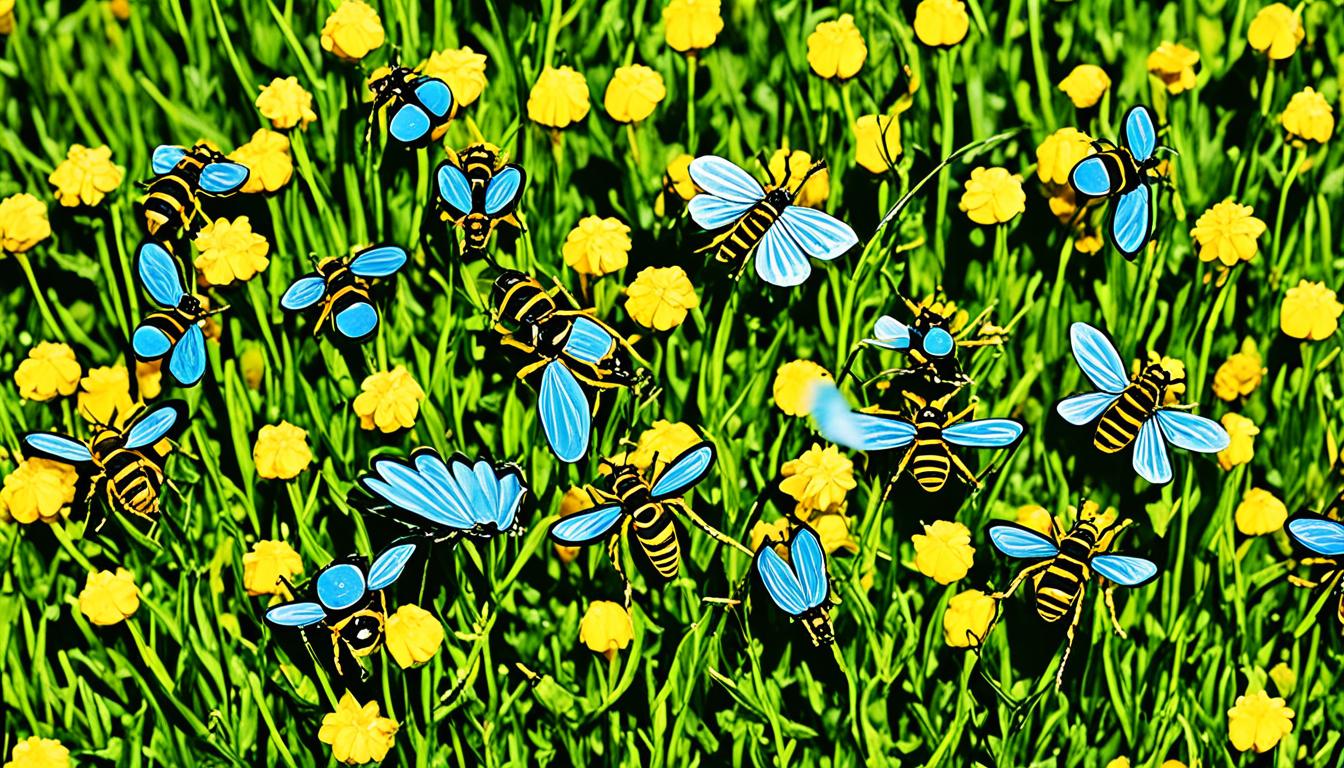
Step into the amazing world of insects, where many different life forms live together. From busy honeybees to beautiful butterflies, insects show us the beauty of nature. They prove how diverse and amazing the natural world is.
Insects are incredible creatures that often go unseen. They are the builders of the tiny world around us. With their amazing adaptations and important roles in nature, they capture our interest and respect. Let’s explore the wonders of the insect kingdom and see how they help keep our planet balanced.
Let’s go on an exciting adventure into the world of entomology. Here, we’ll learn about the complex lives of insects. We’ll see their detailed ecosystems, their smart designs, and how they are crucial for life on Earth.
Nature & Wildlife: Marvels of the Miniature World
Under our forests and meadows lies a world of wonder – insects. These tiny creatures are vital to our planet’s health. They show us the beauty of the small world.
Butterflies and ants are just a glimpse into their world. Insects are key to our ecosystem’s balance.
Biodiversity Unraveled: Exploring Insect Abundance
Insects are incredibly diverse. There are over 1 million known species, with many more to find. This shows how well they’ve adapted to live on Earth.
Each insect has a special role in nature. They help keep our ecosystems strong and healthy.
Ecological Keystones: The Vital Roles of Insects
Insects are crucial to our world. They pollinate plants and break down organic matter. Without them, nature would be very different.
These small creatures keep our ecosystems balanced. They help plants and animals thrive together.
Insects are vital to our planet. They show us the beauty and complexity of nature. By learning about them, we can protect our world better.
Metamorphosis Unveiled: A Miraculous Transformation
Insects have amazing transformations, and their life cycle is a wonder. From caterpillar to butterfly, it shows nature’s genius. This journey starts with an egg, where the insect’s change begins.
After the egg hatches, a young insect comes out, looking nothing like the adult. Caterpillars, maggots, and grubs are some examples. They grow fast and gather resources for later.
Then, the insect enters the pupal stage, where a big change happens. Inside a cocoon, the insect changes completely. Cells and tissues are rearranged to form the adult body. This shows how resilient and adaptable these creatures are.
Finally, the insect becomes an adult. Whether it’s a butterfly’s wings, a beetle’s jaws, or a fly’s eyes, the adult insect is a work of evolution. It has special features to live well in its world.
The insect’s journey from egg to adult is fascinating. It shows how diverse and strong insects are. These tiny creatures amaze and inspire us, showing the beauty and complexity of our world.
Architects of the Unseen: Ingenious Insect Constructions
In the natural world, a fascinating story is told. It’s about tiny creatures with engineering skills that match human architects. Bees build amazing honeycombs and spiders create stunning webs. These show the incredible talent of these small designers.
From Honeycombs to Spider Webs: Marvels of Engineering
Honeybees are known for their hive building skills. These hives are key to their colonies. They use beeswax to make them, with cells arranged in a hexagonal pattern. These cells store honey and are nurseries for new bees.
The design of these hives is amazing. It’s strong and efficient. Humans have looked to them for inspiration in engineering.
But there’s more to insect engineering than just hives. Spider webs are another incredible example. They’re made of silk that’s stronger than steel. These webs catch prey and can handle nature’s forces.
From the orb webs of garden spiders to the funnel traps of trapdoor spiders, these webs show off spiders’ engineering skills. They’re a true wonder of the insect kingdom.

Looking deeper into insect engineering, we see these tiny beings know a lot about building things. They understand structural mechanics, material science, and aerodynamics. Their structures are strong, adaptable, and efficient.
This amazes scientists and naturalists. It gives us new insights into the insect architecture.
Societal Marvels: The Intricate Lives of Social Insects
In the world of insects, some creatures are truly amazing. They live in complex societies with organized communities. These social insects include ants, bees, wasps, and termites. They have developed ways to work together, communicate, and share tasks that are as complex as human societies.
Ant Colonies: A Paradigm of Cooperation
Ant colonies are a prime example of social insects. They show how working together can solve big problems. Each ant has a special job, helping the colony survive and thrive. Workers gather food, while soldiers protect the colony.
Ants use special signals to talk to each other. These signals help them work together, share news, and adapt to new situations. They build complex nests, grow fungus for food, and take care of their young. This shows how well they work together.
Studying ants has taught us a lot about how groups of animals can work together. These tiny creatures show us the power of teamwork. They help us understand the complex social lives on our planet.
Pollination Champions: Insects in the Botanical World
Insects are the top pollinators on Earth, playing a key role in nature. They include bees and butterflies, among others. These tiny creatures help many plants reproduce and thrive.
Pollination is key for making fruits and seeds. Insects do this by moving pollen from a flower’s male parts to its female parts. They do this while looking for nectar and pollen, helping plants reproduce.
Insects and plants work together, benefiting each other. Plants give insects food, and insects help plants spread their kind. This partnership is crucial for many ecosystems, keeping both plants and insects diverse and abundant.
Hummingbird moths and honey bees are just a few examples of insects that pollinate plants. Their work is amazing. By understanding how insects and plants interact, we see how important they are to our world.
Defensive Strategies: Insect Survival Tactics
Insects face a tough battle for survival in their vast world. But they’ve evolved amazing defense tactics to stay alive. From hiding in plain sight to startling predators, insects use clever ways to protect themselves.
Camouflage Masters: Blending into Nature’s Canvas
Camouflage is a key insect defense. They can hide so well, it’s like they vanish. By looking just like their surroundings, they avoid being seen by predators.
The walking stick insect looks just like a twig. The orchid mantis matches the colors of flowers. These tricks help them stay safe and avoid being eaten.

Some insects have more complex ways to stay safe. The giant atlas moth has eyespots on its wings to scare off predators. The bombardier beetle can spray a hot, smelly liquid to defend itself.
These tactics show how insects have adapted over time. They are incredibly resilient and adaptable. As we learn more about insects, we’re amazed by their clever survival strategies.
Culinary Delicacies: Insects on the Menu
Edible insects are becoming a big deal as a sustainable and nutritious food choice. People all over the world are getting into entomophagy, eating insects as food. From crunchy crickets to savory mealworms, the options are endless and exciting.
Insects are packed with protein, vitamins, and minerals. Species like grasshoppers, ants, and beetles are great for a healthy diet. With more people on the planet, there’s a big push for new protein sources. This has made insect-based foods more popular.
In places like Mexico, Thailand, and parts of Africa, eating insects is a tradition. Insect dishes are seen as local treasures. Now, chefs and food creators worldwide are adding insects to all kinds of dishes, from snacks to desserts.
Roasted crickets, sautéed mealworms, and ant eggs are just a few examples of the tasty options. The culinary world loves the unique flavors and health benefits of insects. It’s an exciting time for food lovers to try out the world of edible insects.
Insects in Culture: Myths, Legends, and Symbolism
Insects have always caught the human eye, becoming part of myths, legends, and art. They’ve been important in cultures from old to new times. Artists, writers, and thinkers have been inspired by them.
Insect Inspirations: Art, Literature, and Beyond
Artists have always been drawn to insects for their beauty and complexity. Butterflies, beehives, and spiders have inspired many works. Paintings, sculptures, and textiles show off their unique qualities.
In literature, insects help tell stories and symbolize big ideas. Works like Kafka’s “Metamorphosis” and Dahl’s “James and the Giant Peach” use them to talk about change and being human. In poetry and stories, they connect us to nature.
In myths and folklore, insects are seen in many ways. Some are symbols of strength and hard work. Others are seen as signs of good luck or divine messages. These views have shaped how we see insects today.
As we learn more about insects, their impact on culture will grow. From ancient Egypt to today, they’ve left a lasting mark. They inspire us to appreciate the natural world’s beauty.
Conservation Challenges: Protecting the Insect Kingdom
Insects are vital to our ecosystems, but they face big challenges. They play a key role in keeping our world healthy. Yet, many threats put their survival at risk.
Habitat loss is a big problem for insects. As cities and farms grow, they take over natural spaces. This leaves many insects without homes and disrupts their way of life.
Chemicals like pesticides also harm insects. They’re meant to fight pests but can kill off helpful insects too. This hurts the balance in ecosystems and affects the food chain.
Climate change is another big threat. Rising temperatures and changing weather patterns make it hard for insects to adapt. This can change where they live, when they are active, and how they interact with others.
Conservationists and scientists are fighting to save insects. They’re working on restoring habitats, promoting sustainable farming, and reducing pesticide use. Their goal is to help insects flourish in the future.
Insect Encounters: Responsible Observation and Appreciation
Exploring the world of insects is fascinating. It’s key to approach them with respect and care. This way, we can enjoy their beauty and help protect them.
When watching insects, keep a safe distance and don’t disturb them. Observe their movements, like the flight of butterflies or the work of ants. Don’t touch or catch them, as it can harm their homes. Enjoy seeing how they adapt and the important jobs they do.
We can also show our appreciation by learning about insects. They play a big role in our world, from pollination to complex social structures. Understanding and respecting them helps us feel connected. It also encourages others to protect these amazing creatures.