






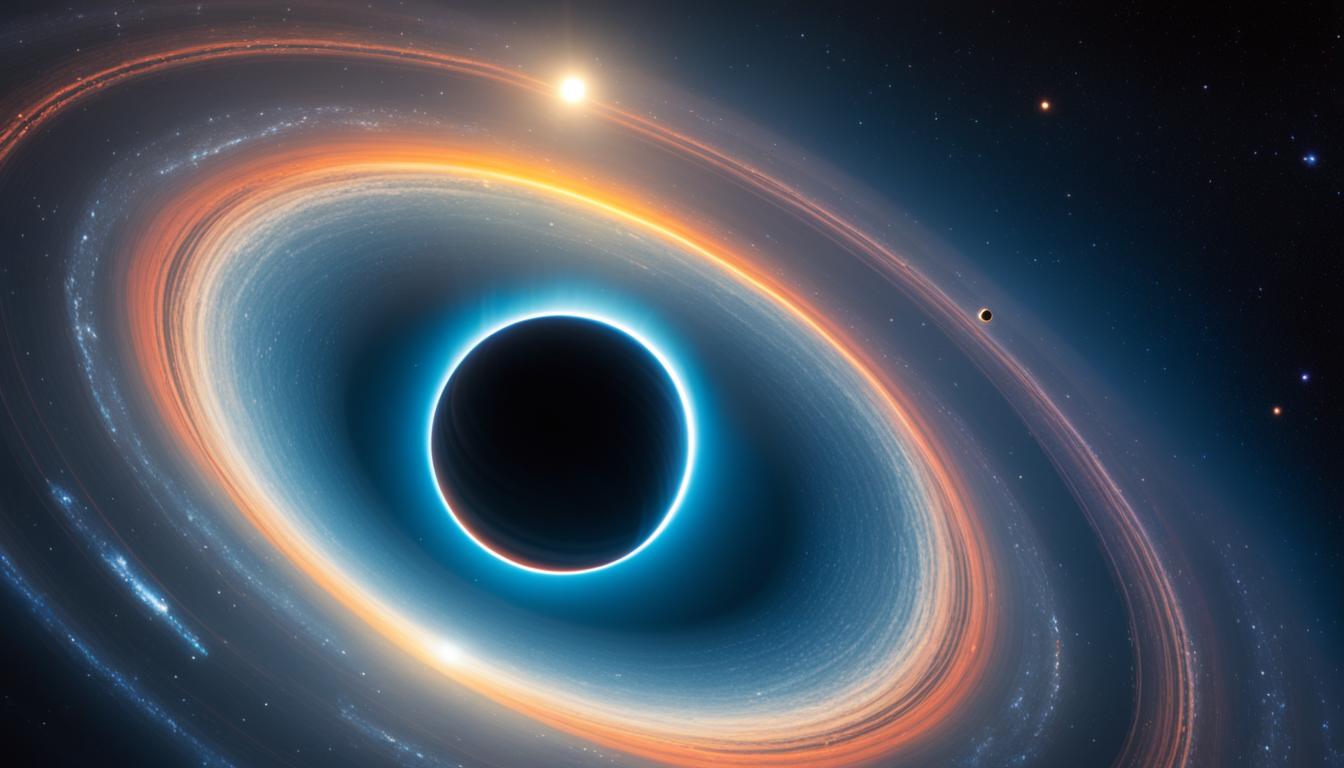
The cosmos is full of endless wonder, always showing us new marvels. Every moment brings new discoveries that capture our imagination. From finding exoplanets to studying black holes, astronomy has grown a lot. This article will explore the most amazing discoveries that have changed how we see the universe.
Our desire to learn has driven us to explore the universe. As we explore, we’ve seen cosmic wonders like distant galaxies and black holes. These discoveries have made us see the universe in a new light. They’ve sparked our curiosity and made us want to learn more about the universe we live in.
The Cosmic Frontier
Space exploration is a vast and captivating frontier. It pushes the limits of what we know. With new tech, we’re unlocking the universe’s secrets and understanding the cosmos better.
Cutting-edge missions explore our solar system’s farthest reaches. Groundbreaking research sheds light on the universe’s nature. This journey is thrilling and always changing.
Pushing the Boundaries of Exploration
Recent years have seen amazing space exploration advances. Robotic probes have gone deeper into our solar system, revealing new insights. They’ve shown us more about the planets and their moons.
Advanced telescopes and observatories have also expanded our knowledge. They help us see and understand the universe better. These tech breakthroughs let us explore the cosmic frontier like never before.
Unraveling the Mysteries of the Universe
Astronomical research is also making big strides. Scientists are figuring out the universe’s deep mysteries. They’re looking into stars, galaxies, black holes, and the universe’s origins.
With advanced tools, simulations, and global teamwork, we’re slowly uncovering the universe’s secrets. This inspires awe and wonder in everyone who looks at the stars.
Hubble’s Breathtaking Galactic Views
The Hubble Space Telescope has changed how we see the universe. It has captured stunning images of distant galaxies, nebulae, and other celestial wonders. This telescope has given us a peek into the vast universe, showing us the beauty and complexity of galaxies beyond our own.

It shows us the beauty of spiral galaxies and the beauty of nebulae. The Hubble has shown us the wonders of space. Its clear images let us see the universe’s scale and diversity. This has helped us learn about the universe’s creation, evolution, and its many wonders.
The Hubble has made big contributions to astronomy. It has given us a new view of the universe and helped us explore more. As we keep exploring space, the Hubble’s work will inspire others. It will help us learn more about the universe through space photography and images of galaxies.
The Hunt for Exoplanets
The universe is full of secrets, and finding exoplanets is a thrilling task for astronomers and space fans. These planets orbit other stars and have sparked our curiosity. We’re eager to learn about life beyond Earth.
Unveiling Alien Worlds
Technology has changed how we find and study exoplanets. Now, we can see distant stars and their planets with great detail. We use methods like the transit method and the radial velocity method to spot these planets.
These methods help us find thousands of exoplanets. Each one tells us more about the universe and its planets. We’ve found everything from huge gas giants to planets like Earth, showing how diverse they can be. Some might even support life.
As we learn more about these planets, we get closer to finding life elsewhere. This makes the search for exoplanets even more exciting.
Finding exoplanets is a big deal for science and our curiosity. With every new discovery, we learn more about the universe. We might even find a planet like our own.
Gravitational Waves: A New Window into the Cosmos
The discovery of gravitational waves has changed how we explore the universe. These tiny ripples in spacetime give us new insights into the universe’s most powerful events.
Gravitational waves come from massive objects moving fast, like black holes merging or neutron stars colliding. These events make spacetime curve more, sending out waves at the speed of light. By catching these waves, scientists can see into the universe’s most extreme places. They learn about black holes, neutron stars, and how galaxies form.
The first detection of gravitational waves by LIGO in 2015 was a big deal. It proved Einstein right and opened a new area of study. This achievement showed us the power of gravitational astronomy.
Now, scientists can study the universe’s most powerful events with gravitational waves. They learn about gravity and how the universe changed over time. This gives us a new way to see the universe’s secrets.
Amazing Discoveries from the James Webb Space Telescope
The James Webb Space Telescope (JWST) has started a new chapter in deep space exploration. It’s the most advanced space observatory ever launched. It looks deeper into space than before, revealing secrets about the early universe.
Peering into the Depths of Space and Time
The JWST uses cutting-edge infrared technology. This lets it see the faintest and most distant objects in space. It’s like looking back in time to the early days of the universe.
By studying the faint infrared light from early galaxies, scientists learn about the universe’s beginnings. This helps us understand how galaxies formed and evolved.
One big find from the JWST is seeing some of the oldest galaxies. These galaxies are from just after the Big Bang. They tell us about the early universe and how stars and elements formed.
The JWST is also changing how we see the universe today. It can study exoplanets in detail, which might help find signs of life elsewhere. This telescope is opening new doors in space exploration.
The Cosmic Dawn: Unveiling the First Galaxies
We are now exploring the early universe, a time when the first galaxies started to form. This era, called the cosmic dawn, is a fascinating area of study. It helps us understand how our galaxy and the universe began.
Telescopes like the Hubble and James Webb Space Telescope have given us new insights. They show us the first galaxies’ faint light. This helps scientists learn about galaxy formation and evolution.

Studies of the cosmic dawn have revealed important facts. They show how dark matter and dark energy shaped the early universe. Simulations and data have helped us see how the first galaxies formed and interacted.
The cosmic dawn is still a mystery we’re trying to solve. Each new discovery brings us closer to understanding the universe’s beginnings. It’s like unraveling a mystery that has fascinated scientists for years.
Black Holes: Enigmatic Giants of the Universe
In the vast universe, black holes are objects that fascinate scientists and the public. They have an incredible gravitational pull. This makes them a mystery that challenges our understanding of physics.
Unraveling the Mysteries of Spacetime
Black holes are not just huge objects. They are areas where spacetime curves so much that nothing, not even light, can escape. Studying them has given us new insights into the universe.
These insights include how light bends around them and the strange things that happen at their event horizons. The event horizon is the point of no return, where physics as we know it ends.
The first image of a black hole was a major breakthrough. It showed us what these mysterious objects look like. By looking at a supermassive black hole in the galaxy Messier 87, scientists learned more about gravity and spacetime.
Our study of black holes is still ongoing. We’re learning more about how they work and the secrets they hold. Each new discovery helps us understand the universe better. It also opens up new areas for research into the unknown.
Dark Matter and Dark Energy: The Unseen Drivers of the Cosmos
The universe is vast and full of mysteries. Most of it is hidden from us. Dark matter and dark energy are two forces we can’t see but feel. They shape the universe and our place in it.
Dark matter makes up about 85% of the universe’s matter. We know it exists by how it affects galaxies and bends light. But, we don’t know what it is. Scientists are working hard to find out more about it.
Dark energy is another mystery. It’s a force that makes the universe expand faster. It’s about 70% of the universe’s energy. Scientists are trying to understand it better with new observations and theories.