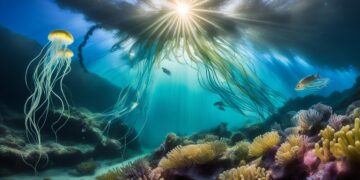
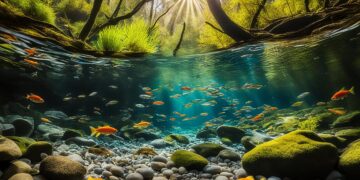




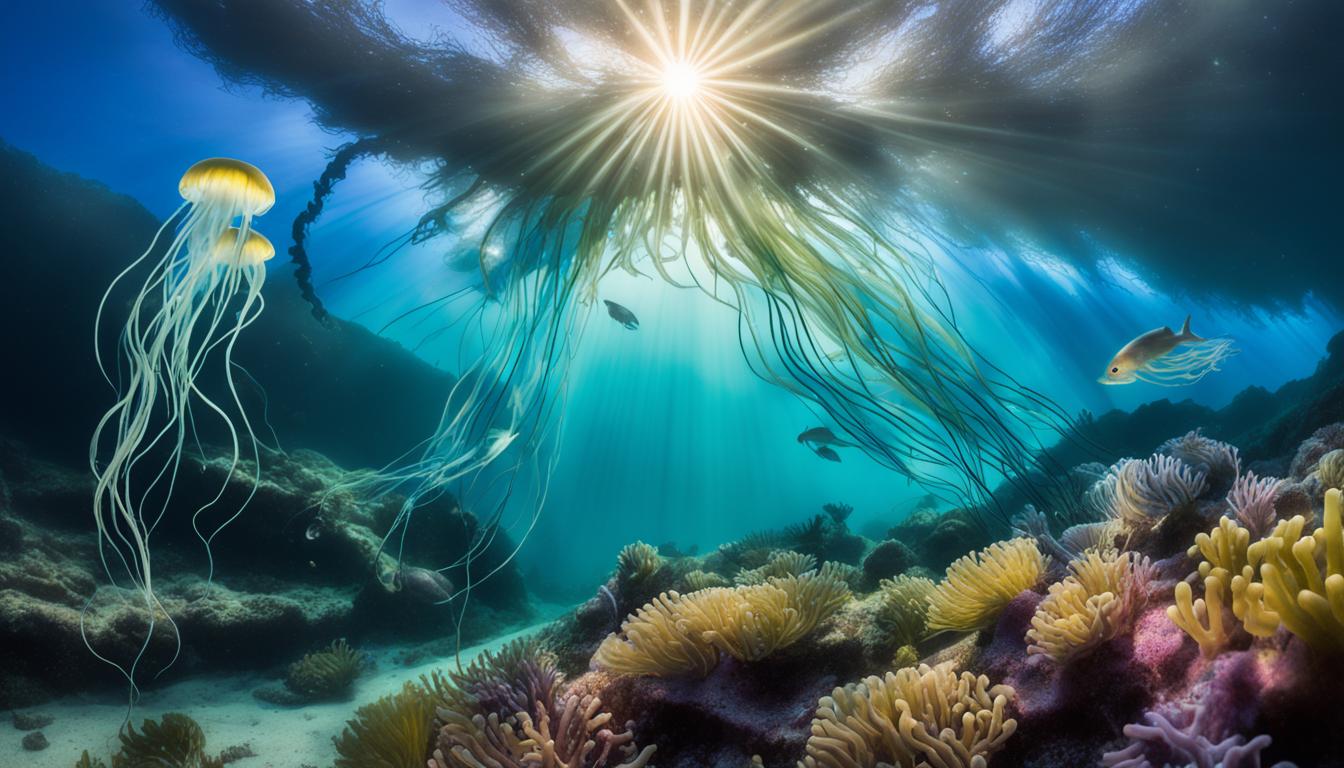
Dive into the ocean’s world, where life is vibrant and full of mystery. Here, you’ll find everything from colorful fish in coral reefs to creatures in the deep, dark sea. The ocean creatures living in our planet’s waters are truly amazing.
This article will take you on a journey to learn about the hidden secrets and amazing ways of marine life. You’ll see the wonders of Nature & Wildlife under the sea. We’ll look at how sea creatures survive and the complex ocean ecosystems they live in.
Learn about their unique ways to blend in and light up the dark sea. We’ll also explore ocean migration and how these creatures keep their world alive.
Join us on an exciting journey to discover the hidden world of aquatic biodiversity under the sea.
Unveiling the Depths of Marine Ecosystems
The ocean is vast and full of life. It has everything from colorful coral reefs to deep-sea places that are hard to see. These marine ecosystems are amazing. Let’s dive in and see the ocean’s life and the special places that support it.
Exploring Ocean’s Biodiversity
Oceans are full of different marine species, each living in their own way. Coral reefs are full of life, with fish, invertebrates, and more. You’ll see sea turtles, tropical fish, and many other creatures there.
Unique Habitats Beneath the Waves
Going deeper, you find more amazing places. The ocean floor has many different habitats, from bright to dark places. Hydrothermal vents are special spots where hot water supports unique life forms.
Exploring the ocean shows us a world full of wonders. From coral reefs to deep-sea creatures, these ecosystems show nature’s diversity and strength. Let’s keep exploring the ocean’s secrets together.
Nature & Wildlife: Marvels of the Underwater World
The oceans are full of amazing marine life. They show us the beauty and diversity of nature and wildlife. Sea turtles and glowing deep-sea creatures make the underwater world a wonder to see. We’ll look at the unique traits of these sea creatures and how they live in the water.
The ocean is filled with different kinds of nature and wildlife. It has everything from colorful coral reefs to deep, mysterious seas. These sea creatures have amazing adaptations to live in the water. They show how strong and diverse nature can be.
Sea creatures like those with glowing bodies and sea turtles are amazing. They have special traits that help them live in the ocean. By learning about them, we can appreciate the beauty and complexity of our ocean’s life.
Incredible Adaptations for Survival
The ocean is tough and always changing. But, the creatures living there have evolved amazing ways to survive. They use camouflage and mimicry to hide and special traits to overcome challenges.
Camouflage and Mimicry Masters
Many ocean creatures can blend in with their surroundings. They change their color, texture, or shape to hide from predators and sneak up on prey. Cuttlefish can change their skin to look like the seafloor or rocks.
Some fish can look like other sea creatures. For example, a mimic octopus can look like a venomous sea snake or a lionfish. This helps them avoid danger.
These skills show how smart ocean life is. By using camouflage and mimicry, these creatures can survive in a tough environment. They have found clever ways to deal with predators and threats.

Bioluminescence: Nature’s Dazzling Light Show
Under the ocean, a magical event happens – bioluminescence. This is when some sea creatures make their own light. It creates amazing lights that amaze everyone. From glowing plankton to deep-sea fish, many sea beings use this light for different reasons.
The science behind bioluminescence is amazing. It happens when certain sea creatures mix chemicals like luciferin and luciferase. This mix creates a bright light. This light helps them catch food, avoid predators, or talk to others.
There’s a lot of different bioluminescent sea life. You can see the ocean glow with dinoflagellates, tiny plankton. Or the deep-sea anglerfish with its spooky light to catch prey. Each one uses bioluminescence in a special way, making the sea full of light.
Exploring the ocean shows us more about bioluminescence. It’s a way to see how sea life has adapted and survived. It shows us the amazing things our oceans can do.
Ocean’s Top Predators and Their Hunting Strategies
The oceans are full of powerful ocean predators. From the big great white shark to the elegant orca, these top predators have amazing hunting skills. They have evolved to live in the deep sea. Their special senses and ways of eating show how complex underwater hunting is.
Shark Senses and Feeding Behaviors
Sharks are at the top of the ocean’s food chain. They have a great sense of smell, can feel electric signals, and see very well. These senses help them find and catch prey with amazing accuracy.
Sharks use different hunting methods, like the great white shark’s jumping attacks and the hammerhead’s wide search patterns. These methods are perfect for their surroundings and the animals they hunt.
Learning about shark behavior helps us understand how these marine predators fit into their world. By studying their senses and how they hunt, we can appreciate the ocean’s top hunters more. We also learn about the balance in the ocean’s food chain.
Deep-Sea Dwellers: Bizarre and Fascinating Creatures
The deep ocean is full of mystery and wonder. It’s home to many bizarre and fascinating creatures. These creatures have evolved to live in the dark and high pressure of the deep sea. They show how nature can create amazing things.
The anglerfish is one of these creatures. It has a glowing lure to catch prey in the dark. The anglerfish uses a special fin to hold a light that looks like a fishing rod. This trick helps it catch food.
Another strange creature is the giant squid. It’s a huge cephalopod that has always fascinated people. It lives deep in the ocean and is rarely seen.

Species like the vampire squid and the dumbo octopus live in the deep sea’s extreme conditions. They have bodies that are soft and glow in the dark. They also have special ways to hide from predators.
These deep-sea creatures show how diverse and strong life can be on our planet. As we learn more about the deep sea, we’ll find even more amazing creatures. These discoveries help us understand the ocean’s incredible life and how these creatures survive.
Mysteries of Ocean Migration and Navigation
The ocean is vast and full of mysteries. It’s home to many creatures that migrate over huge distances. Sea turtles and whales make incredible journeys, always returning to the same places. They find their way back with amazing precision.
Scientists are very interested in how these creatures navigate. New technologies and research are helping us understand their amazing skills. By tracking these animals, we’re learning how they make their long journeys. This gives us insights into the complex life in the ocean.
Tracking Marine Life’s Epic Journeys
New tools like satellite tracking and acoustic telemetry have changed how we study ocean migration. Now, scientists can track marine animals with great accuracy. They’re discovering the paths these animals take and how they navigate.
Sea turtles use magnetic fields to find their way, while whales have complex ways of navigating. These studies are uncovering the incredible skills of ocean migration.
Learning about how marine animals migrate and navigate helps protect them and their homes. As we delve deeper into the ocean’s secrets, understanding ocean migration is key to saving our marine life and environments.
Ocean’s Life-Giving Role and Its Fragile Balance
The oceans are crucial for our planet’s balance. They control the global climate, make most of the world’s oxygen, and support many marine species. But, these threats from humans are putting their balance at risk.
Human actions like overfishing and pollution harm the oceans. Climate change also has a big impact. This is making the oceans less healthy. Losing marine life and harming ocean ecosystems threatens life on Earth.
We must protect the oceans because they are vital. We need to save marine life, fight climate change, and use ocean resources wisely. These steps are key to keeping the oceans healthy. By taking care of the oceans, we help ourselves and many other species.
Protecting Marine Ecosystems: Conservation Efforts
The world’s oceans and their amazing creatures face many threats. These include overfishing, destroying habitats, pollution, and climate change. But, there are people and groups working hard to protect our marine ecosystems and the species that live there.
Threats to Ocean Life and Solutions
Overfishing is a big problem, harming many fish populations. To fight this, governments and conservation groups have made rules for fishing and support sustainable fishing. They also set up protected marine areas, limit catches, and help develop eco-friendly fishing tech.
Plastic pollution is another big issue, with tons of plastic ending up in oceans every year. To fix this, groups are leading clean-up efforts, pushing for less plastic use, and promoting biodegradable and recyclable materials.
Climate change is also a major threat, causing ocean acidification and rising temperatures. Scientists and policymakers are trying to cut down on greenhouse gases, protect coastal areas, and find ways for ocean life to survive these changes.