






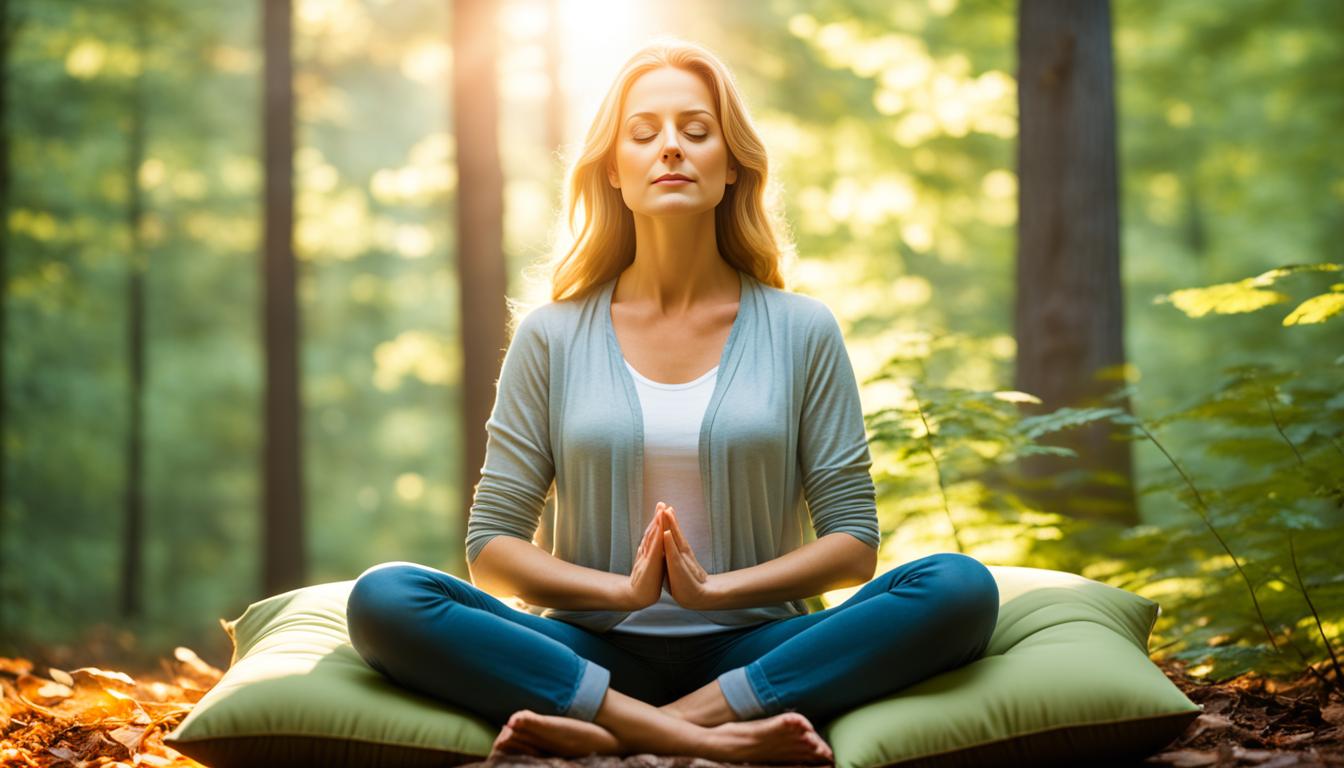
In today’s busy world, meditation and mindfulness are key for personal growth and stress relief. They help us connect deeply with the now. This brings inner peace, clarity, and resilience into our lives.
Starting with meditation and mindfulness means understanding true happiness isn’t about what we have or achieve. It’s about inner calm, knowing ourselves, and enjoying the now. Regular practice helps us quiet our minds, tune into our feelings and body, and find purpose and balance.
Looking to reduce stress, boost mental and physical health, or just live better? Meditation and mindfulness can help. They open the door to personal growth, peace, and wellbeing. By trying these practices, you can change your life for the better.
What is Meditation and Mindfulness?
Meditation and mindfulness can change our lives. They focus on being aware of the present moment. Meditation means quieting the mind and focusing inward. Mindfulness is being fully present and engaged in the moment, without worrying about the past or future.
Understanding the Concepts
The basics of meditation and mindfulness are simple but powerful. By focusing on the breath or an object, we can keep our minds in the present. This helps us notice our thoughts and feelings without getting lost in them. It makes us more aware and compassionate towards ourselves.
Benefits of a Daily Practice
Adding meditation and mindfulness to our daily routine has many benefits. It can reduce stress and anxiety, improve focus, and help with emotional control. It also boosts physical health. By taking time to be present and non-judgmental, we find inner peace and wellbeing. A regular daily meditation practice can lead to personal growth and change.
Health & Wellness Tips: Incorporating Meditation into Your Routine
Modern life can be fast-paced, but adding meditation and mindfulness to your day can change everything. These tips are for both new and experienced meditators. They can help you see the big benefits of meditation.
Start small. You don’t have to dive deep into meditation right away. Begin with 5-10 minutes a day. Then, slowly add more time as you get used to it. Making meditation a daily habit is important.
Find a quiet spot. Pick a quiet place in your home or office for meditation. It could be a simple chair or a special cushion. Having a special spot tells your mind it’s time to relax.

Try different meditation styles. There are many ways to meditate, like mindfulness or guided visualizations. Experiment to find what feels right for you. Mixing techniques can help you find what suits you best.
Use meditation in your daily life. Mindfulness isn’t just for meditation sessions. Look for chances to be present during your day. Even short moments of meditation can greatly improve your well-being.
Success in meditation comes from finding what fits you. Tailor your approach to make it a part of your life. This way, you’ll enjoy the many benefits of meditation, like less stress and better focus, leading to a happier life.
The Science Behind Meditation
The study of meditation is growing fast, showing how it changes our body and mind. Researchers have found many benefits of meditation and mindfulness. They have studied how it helps us.
Physiological Effects of Meditation
Meditation changes the body in many ways. It helps control stress hormones like cortisol. It also boosts the immune system, lowers blood pressure, and may even slow aging.
Studies show meditation changes the brain. It makes more gray matter in areas for emotions, learning, and memory. This helps with better thinking and feeling happier.
Psychological Effects of Meditation
Meditation is good for our minds too. It helps with anxiety, depression, and stress. It also makes us more focused, attentive, and flexible in thinking.
It makes us more aware of ourselves and others. This helps in personal growth and relationships. Meditation makes us more resilient and helps us handle stress better.
It teaches us to live in the moment and stay calm. This way, we can deal with stress and life’s ups and downs more easily. Meditation makes us more positive and balanced.
Research on meditation is ongoing. It’s showing us more about how it helps us. The evidence keeps growing, proving meditation is a great way to improve our well-being.
Mindfulness in Daily Life
Mindfulness isn’t just for meditation. It’s a way to change our everyday life. By making mindfulness part of our daily routine, we can feel more present, grateful, and connected to the world.
Being mindful means paying attention to our everyday tasks. This can be eating, walking, or talking to someone. These simple acts help us enjoy the now and reduce distractions.
We can use mindfulness techniques like focusing on our breath or body sensations in our daily life. Taking short breaks to check in with ourselves helps us stay mindful. This builds a stronger connection with the world.
Living mindfully means creating habits that keep us present. By doing this, we find more joy, satisfaction, and strength when facing challenges.
Guided Meditation Techniques
Meditation is a powerful way to find peace, reduce stress, and be more mindful. Guided meditation is a great way to start. It gives you clear steps to focus your mind, improve your breathing, and connect with now.
Breathing Exercises
Breathing exercises are key in guided meditation. They help calm your mind, lower anxiety, and bring deep relaxation. Try the 4-7-8 technique: breathe in for 4 seconds, hold for 7, and breathe out for 8. Do this a few times to feel the calming effects.
Body Scans
The body scan is another strong meditation technique. You pay attention to different body parts, noticing feelings or tight spots. Start at your toes and move up to your head, feeling your body and any tight spots. This helps you connect with your body and emotions, leading to deep relaxation and awareness.
Adding guided meditation, like breathing and body scans, to your day can greatly improve your life. It helps you focus on now, reconnect with your body, and enjoy the benefits of meditation and mindfulness.

Overcoming Obstacles to Meditation
Starting a regular meditation practice can be tough, but you can beat the usual hurdles. Things like restlessness, distractions, and losing motivation can test our dedication. But, by knowing the challenges and using good techniques, we can make our meditation routine better and more rewarding.
One big challenge is the restless mind. When we sit still, our thoughts can run wild, making it hard to stay in the moment. To help, focus on your breath. The steady flow of breath can keep you grounded and calm your mind. Also, body scans or guided meditations can make you more aware of the present and less caught up in thoughts.
Distractions, both inside and outside, can mess with our meditation. Today, we’re bombarded with things that try to grab our attention. To fight this, set up a special place for meditation, away from daily distractions. Turn off your devices and stick to a regular meditation schedule to stay focused and consistent.
Not feeling motivated is another big hurdle. It’s easy to stop meditating when the excitement wears off. To stay on track, make meditation fun and rewarding. Try different methods, bring mindfulness into your everyday life, and celebrate your small wins. Aim for regular, short sessions instead of trying to meditate for hours at once.
By knowing the usual problems with meditation and using smart ways to get past them, you can make your practice more consistent and fulfilling. Facing challenges and finding new ways to solve them will improve your meditation and help you grow in self-discovery.
Cultivating a Mindful Workspace
In today’s fast-paced work world, finding ways to reduce stress and boost productivity is key. One great way is to make our workplaces more mindful. Mindfulness means being fully present and aware right now. It can greatly change how we work.
Reducing Stress and Increasing Productivity
Adding mindfulness to our work can really cut down on stress. By staying present and focused, we handle our job demands better. This leads to better mental health and more work done.
Mindfulness techniques like deep breathing and short meditation help us control our thoughts and feelings. This lets us tackle tasks with a clear mind.
A mindful workplace also helps with teamwork and support. Being present with coworkers leads to better communication and stronger teams. This makes everyone happier at work and helps the company do better.
Adding mindfulness at work doesn’t have to be hard or take a lot of time. Simple actions, like deep breathing for a few minutes daily or a short meditation, can really help. By making our workspaces more mindful, we can improve our focus and presence. This makes work more rewarding and fulfilling.
The Power of Mindfulness for Personal Growth
Mindfulness is a key tool for personal growth and self-improvement. It helps us focus on the present and accept things without judgment. This leads to better self-understanding, emotional control, and the ability to handle life’s challenges.
At the core of mindfulness is paying attention to ourselves. We observe our thoughts, feelings, and body signals with curiosity. This deep self-awareness reveals our true values and strengths. It helps us understand where we need to grow.
By living in the moment, we gain control over our reactions. This boosts our emotional smarts and helps us make better choices.
Mindfulness also teaches us to be kind to ourselves. It helps us stop criticizing ourselves and move towards positive change. This kindness is key to personal growth and happiness.
As we explore mindfulness, we find new ways to improve ourselves. It makes us better at making decisions and solving problems. It also helps us adjust to changes more easily. Mindfulness gives us purpose, clarity, and strength for personal growth.
Integrating Meditation into Your Lifestyle
Adding meditation and mindfulness to your daily life is key to enjoying their deep benefits. It’s the first step towards a more balanced and fulfilling life. Begin by setting aside a time each day, even just 5-10 minutes, for your meditation.
It’s important to get past barriers like finding time or staying motivated for a lasting meditation habit. Try different types of meditation, like guided or silent contemplation, to find what works best for you. Having friends, family, or an online group to support you can help keep you on track.
Seeing meditation as a long-term practice, not just a quick fix, is the best way to see its real benefits. Be patient and keep at it, as the effects of regular meditation may take time to show. Trust the process and let your meditation grow and deepen, leading to a more centered and meaningful life.