






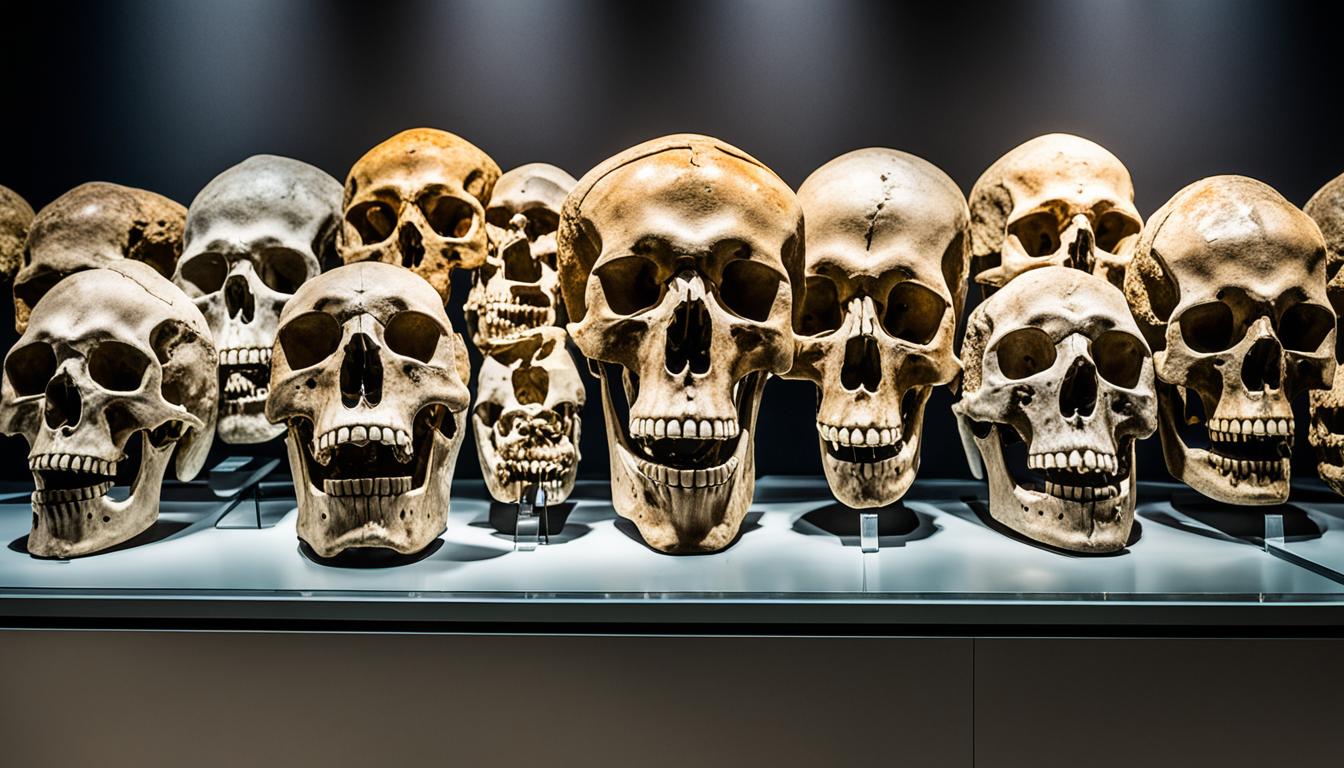
Humanity’s origins have always sparked curiosity among scientists, historians, and the public. Through hard work by researchers and archaeologists, we’ve learned a lot about our past. They’ve found ancient fossils and made big steps in genomic research. These discoveries have changed how we see our origins and evolution.
Experts in anthropology and evolutionary biology have told a fascinating story. They’ve studied fossils to learn about our ancient ancestors. This has given us a clear picture of their looks, where they lived, and how they survived. These stories show how resilient and smart our ancestors were. They also challenge old ideas about where humans came from.
Genomics has also made big strides, giving us new insights into our evolution. By studying genes of ancient and modern humans, scientists have learned a lot. This has opened new ways to understand how we adapted, moved, and interacted with other species.
As we keep exploring human evolution, we find more amazing discoveries. These findings change how we see our beginnings and our role on Earth. Let’s go on a journey through time with these exciting stories from anthropology and evolution.
The Origins of Humankind: Revelations from the Past
Studying where humans came from is fascinating and has given us many insights. By carefully looking at fossils, scientists have learned a lot about our ancestors. They found “Lucy” in Ethiopia, which is over 3 million years old. More recently, they found Homo naledi in South Africa. These fossils tell us about our ancient relatives’ looks and where they moved around.
Fossil Finds: Piecing Together Our Ancestral Lineage
The fossil record is full of clues about our ancestors. Scientists have looked closely at these fossils. They’ve learned about their bodies, how they lived, and their environments.
This helps us understand how humans evolved over millions of years. By studying these fossils, we can see our family tree back in time.
Genomic Insights: Unraveling the Genetic Blueprint
Genomics has changed how we see human origins. By looking at our ancestors’ genes, scientists have found new connections. This has given us a clearer picture of how different human species are related.
This research has also changed some old ideas. It has given us a deeper understanding of our past.
Putting fossils and genes together has given us a detailed story of human origins. It shows the long journey that led to the many humans today. As we keep looking into our past, we’re likely to find even more new things.
Tracing the Footsteps of Our Ancestors
The story of human evolution is full of incredible journeys and adaptations. Early humans, like Homo erectus, left Africa and faced new challenges. These challenges shaped our migration paths. Archaeological finds show us the lives of our ancestors and their resilience.
The out-of-Africa theory suggests that humans first came from Africa and then spread out. This idea is backed by genetic and fossil evidence. By studying ancient DNA and bones, scientists can see where our ancestors went and how they lived.
From the Neanderthals in Europe and Asia to the Denisovans in Siberia, each group of humans left their mark. These ancient settlements help us understand how our species adapted and thrived in new places.
Studying our ancestors’ paths helps us see the amazing journey of human evolution. By looking at where humans lived and how they adapted, we learn about our species’ growth over time.
Amazing Discoveries: Redefining Our Understanding
The story of human evolution is full of amazing discoveries. These have changed how we see our species’ journey. From the ways our ancestors adapted to survive to the big steps forward in culture, these findings have changed our view of the past.
Evolutionary Adaptations: Survival of the Fittest
Scientists have looked closely at fossils and genes to learn about our ancestors’ adaptations. These changes helped them survive and thrive in different places. Things like walking on two feet and making tools were key to our evolution.

Cultural Advancements: From Stone Tools to Civilizations
Our cultural story is just as exciting. Our ancestors moved from simple stone tools to building complex societies. Studies have shown how we went from living in small groups to farming and building cities. This progress was driven by our creativity and working together.
These discoveries have shown us how strong, adaptable, and creative our species is. By learning about our past, we appreciate more the forces that made us who we are. This inspires us to see what we can achieve together.
Bridging the Gap: Connecting Past and Present
Exploring human evolution shows us that our story is deeply tied to nature. The way humans and the environment interact has shaped our history. This knowledge is key to tackling today’s sustainability and human impact challenges.
Biodiversity and Human Impact: A Delicate Balance
Our ancestors lived closely with their ecosystems, just like us today. They adapted and used technology to survive, but this was a careful dance. By looking back, we see how human actions have affected nature, both good and bad.
The past teaches us how our ancestors dealt with limited resources, climate change, and changing species. This helps us see the big role humans play in keeping our planet sustainable. We can use this knowledge to find a balance between our needs and nature’s well-being.
Today, we face the harsh truth of our impact on nature. Our actions, like deforestation and species loss, have harmed the natural world. By learning from history and embracing a holistic view of ecology, we can aim for a future where humans and nature thrive together.
The Future of Human Evolution: What Lies Ahead?
Our world is seeing huge leaps in technology, making us wonder about the future of human evolution. We’re looking at genetic engineering and human-machine hybrids. These changes could deeply change who we are.
Transhumanism is a big idea now. It suggests we can use technology to make us better. With advances in genetic engineering and nanotechnology, we might be able to fight diseases, live longer, or think better. This makes us think about what it means to be human and the risks of changing ourselves.
Also, combining advanced artificial intelligence and robotics with us could change what we are. This idea of “transhumanism” is getting closer to reality. It makes us wonder about our future and the right way to change ourselves.
The future of human evolution is still up in the air, but one thing is sure: technology will keep pushing us forward. As we face these big questions, we need to be curious and respect the journey we’re on.
Remarkable Feats: Pushing the Boundaries of Human Potential
Humans have always gone beyond what was thought possible. We’ve pushed our limits in both body and mind. From big steps in neuroscience and evolutionary psychology to amazing achievements that caught the world’s attention, our potential is truly inspiring.
Cognitive Capabilities: The Power of the Human Mind
The human brain is a wonder, able to handle lots of information, solve tough problems, and come up with new ideas. Research in neuroscience has shown how our minds work. It helps us understand how we make discoveries and expand our knowledge.
Evolutionary psychologists have looked into how our minds help us adapt and succeed in different places. Our ancestors’ complex thinking and our ability to solve problems creatively show how powerful our minds are.

From the world’s top scientists to elite athletes and creative artists, we’ve seen incredible human achievements. These show how limitless our minds and bodies can be. As we keep exploring our abilities, the future looks bright for us.
Unraveling the Mysteries of Ancient Civilizations
Studying ancient civilizations has always fascinated us. We try to learn about our shared past. Archaeologists and historians have shown us the amazing things our ancestors achieved. They’ve also left us with mysteries that make us curious.
Archaeological Wonders: Unlocking the Secrets of the Past
The ancient world has left us many mysteries. From Egypt’s pyramids to Peru’s Nazca Lines, these sites amaze and puzzle us. Each discovery shows us how smart and resourceful our ancestors were.
Deciphering old languages, finding lost cities, and studying artifacts have taught us a lot. They show us the social, economic, and tech progress of ancient cultures.
Looking into these mysteries has expanded our knowledge and sparked our imagination. It helps us connect with our ancestors and understand human nature. These ancient civilizations show us the power of the human spirit and our shared identity.
By studying ancient evidence, we honor our ancestors and learn a lot about being human. These mysteries inspire us to improve our culture and technology. They connect us to the future, helping us understand our shared humanity and history.
Global Perspectives: Diversity in Human Origins
Our planet shows the beauty of human diversity, telling the story of our evolution. From Africa’s rugged lands to the Arctic’s icy tundras, humans have shown great resilience and creativity. Through cultural studies and genetic research, we see how our species has adapted in different places, showing our vast potential.
Following our ancestors’ paths, we find clues of how people moved around the world. This movement has shaped the genes of people everywhere. It shows how our diversity and the environment have created many cultures and beliefs. This view tells us that our stories are many, each with its own special rhythm.
Evolutionary views help us see how humans have overcome challenges, from ancient climates to today’s fast-changing world. By looking at our genes, we understand how people have adapted and changed. This shows us the strength of our species and the amazing diversity that makes us a global family.
As we keep learning about where we come from, we’ll get more from looking at culture, genes, and evolution. This approach will help us understand ourselves and our global family better.
Ethical Considerations: Respecting Our Shared Heritage
As we learn more about human evolution, we face tough ethical questions. Using genetic and archaeological data right, keeping cultural heritage safe, and protecting indigenous rights are key. These issues need our full focus.
Bioethics helps us deal with the tricky issues in human origins research. Researchers and policymakers must balance scientific progress with respecting human dignity and privacy. It’s vital to protect individuals and communities as we explore our past.
Keeping cultural heritage safe is also crucial. Artifacts, sites, and traditions from past generations are very valuable. They’re not just for study, but for the communities that feel a strong link to their ancestors. Working with local people, indigenous groups, and heritage groups is key to protecting these important parts of our history.