






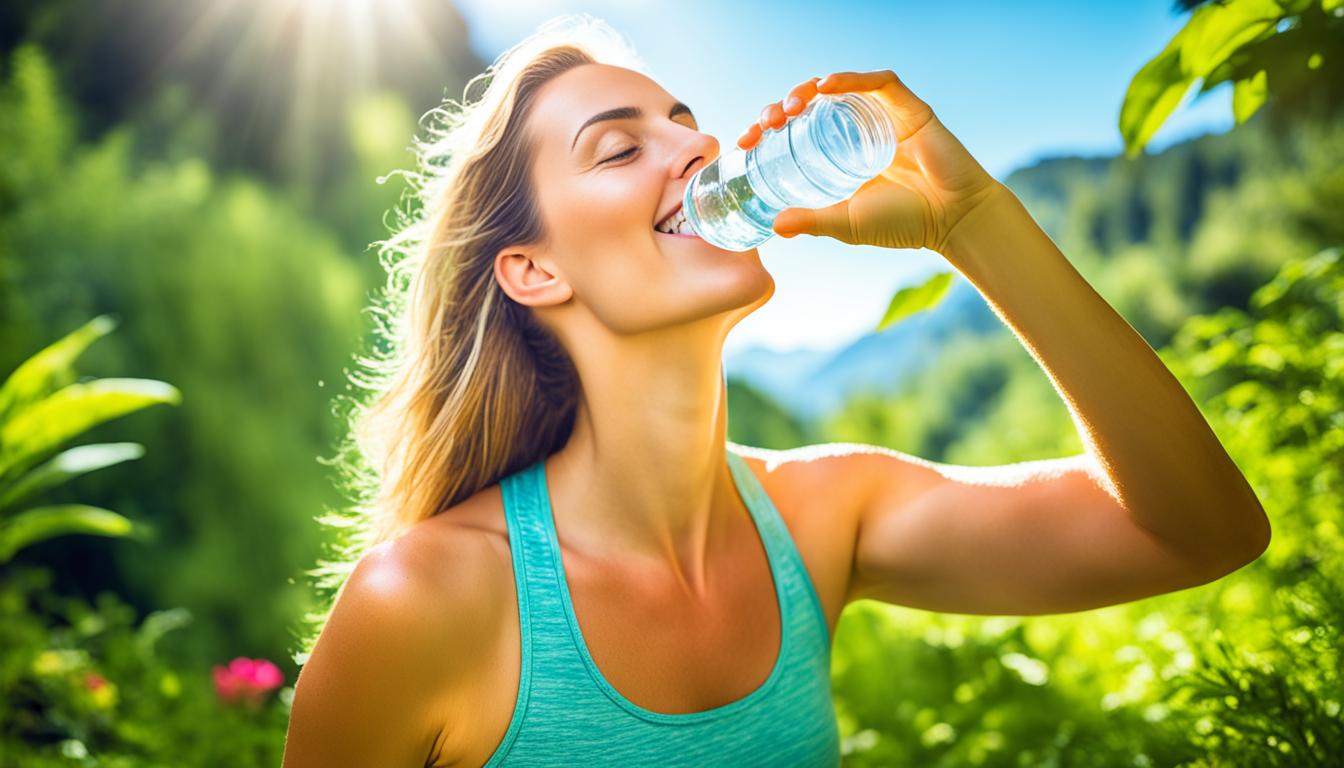
Staying hydrated is key to a healthy life. Water is vital for our bodies to work right. It plays a big role in many body functions. By knowing how important hydration is, people can choose to drink more water and stay healthy.
Being hydrated means keeping the right amount of water in our bodies. It helps our organs work well, aids digestion, and keeps our body temperature in check. Not drinking enough water can cause problems like brain fog and feeling tired.
This guide will cover the basics of staying hydrated. We’ll look at how water helps our bodies, signs that we’re not drinking enough, and the health perks of drinking enough water. By learning about hydration, people can make better choices to keep their bodies healthy.
What is Hydration and Why is it Crucial?
Hydration means keeping enough water in the body. It’s key for good health and feeling well. Our bodies are about 60% water, and it’s vital for many functions.
Understanding the Role of Water in the Body
Water does a lot in our bodies. It helps control body temperature, carries nutrients, and removes waste. It keeps our joints, skin, and organs healthy. Drinking enough water is important for our brains, energy, and how well we perform physically.
Signs and Symptoms of Dehydration
Dehydration happens when we lose more water than we take in. Signs include a dry mouth, feeling tired, headaches, less urine, and feeling dizzy. If dehydration gets worse, it can cause serious problems like heat exhaustion, kidney issues, and even organ failure. Spotting dehydration early is key to staying healthy.
Hydration is very important. Knowing how water helps our bodies and spotting dehydration signs helps us stay hydrated. This supports our health and wellness.
Health Benefits of Proper Hydration
Drinking enough water is key for your health. It helps your body work better and boosts your energy. Staying hydrated can make you think clearer, feel more energetic, and support your overall health.
Improved Cognitive Performance
Even a little dehydration can hurt how well you think. Drinking enough water helps your brain work better. This means you’ll focus better, remember things easier, and solve problems more effectively.
Water keeps your body’s fluids balanced, which is important for your brain.
Increased Energy Levels
Drinking enough water is also key for staying energetic. Water helps turn food into energy, called ATP. When you’re not drinking enough water, your body has to work harder to make energy. This can make you feel tired and sluggish.
By drinking enough water, you help your body make energy easily. This keeps your energy up all day.
Overall Well-Being
Drinking enough water is important for your health. It helps your body do many things, like keep your temperature right, keep your skin healthy, and help with digestion. Drinking enough water can lower your risk of health problems and help your body work well.
There are easy ways to drink more water during the day. You can carry a water bottle or set reminders to drink. Doing these things can really help your brain, energy, and overall health. Drinking enough water is a great way to take care of yourself.
Hydration and Physical Performance
Drinking enough water is key for top physical performance, whether you’re a pro athlete or just love to move. It keeps your body balanced and supports important processes for doing your best.
Staying Hydrated During Exercise
When you exercise, your body loses fluids to keep cool. Not replacing these fluids can make you dehydrated. This can hurt how well you perform, make you tired faster, and increase the chance of getting sick from the heat.
To stay hydrated, drink water before, during, and after your workout. Experts say to have 16-24 ounces of water 2-3 hours before exercise. Then, sip on 6-12 ounces every 15-20 minutes while you’re working out. This keeps your body hydrated and helps you perform better.
Hydration for Athletes and Active Individuals
Athletes and those who are very active need more water because they lose more fluids. They need special ways to stay hydrated to keep up their performance and recover well.
Drinking water isn’t enough for athletes. They might also need sports drinks with electrolytes like sodium and potassium. These help replace minerals lost through sweat and prevent muscle cramps and getting tired. By drinking enough water, athletes and active people can do their best, last longer, and recover faster.
Health & Wellness Tips: Staying Hydrated Daily
Keeping your body hydrated is key for good health. There are easy tips and tricks to help you drink more water and stay hydrated. By making a few small changes, you can make sure you’re drinking enough fluids to keep your body working right.

One simple way to drink more water is to always carry a water bottle with you. Keep it in sight, like on your desk, in your car, or when you’re out. Seeing the bottle will remind you to drink water all day. Also, set reminders on your phone or smartwatch to drink water at certain times.
Adding fresh fruits, herbs, or vegetables to your water can make it taste better. This makes drinking water more fun and helps you drink more. Try mixing lemon and cucumber, strawberry and basil, or watermelon and mint to find your favorite taste. Drinking water has never been so tasty!
Remember to drink water before, during, and after exercise. Whether you’re at the gym, jogging, or just walking fast, drink water to replace what you lose through sweat. These habits will keep you energized and support your health.
The Importance of Water Quality
Hydration is key, and the water you drink matters a lot. Clean, safe water keeps you hydrated and healthy. But, many people don’t know the dangers of bad water, which can harm their health.
Choosing Safe and Clean Water Sources
Having access to safe drinking water is a basic need. Yet, millions worldwide don’t have it. Drinking contaminated water can cause stomach problems, infections, and even harm organs over time. So, it’s important to check the water quality and purity before drinking it.
When picking a water source, think about how close it is to pollutants, its treatment, and any contaminants. Municipal water is usually safe because it’s treated and regulated. But, keep up with local water quality news. If you use private wells or other clean water sources, test them often and use good filters to keep the water quality up.
Choosing safe drinking water and focusing on water quality helps your body get the hydration it needs. This supports your health and well-being.
Hydration for Specific Groups
Keeping enough water in our bodies is key for good health. But, different ages have different needs for water. It’s important to know how much water kids and older people should drink to keep them healthy.
Hydration Needs for Children
Kids have more water in their bodies than adults do. This makes them more likely to get dehydrated. Parents and caregivers should make sure kids drink water all day. This helps them stay hydrated.
The amount of water kids need depends on their age and how active they are. It’s usually between 7 to 11 cups (1.7 to 2.6 liters) a day.
Hydration Needs for Seniors
As we get older, our bodies don’t balance water as well. This makes older people more likely to get dehydrated. They might not feel thirsty as much, which can lead to not drinking enough water.
Some health issues and medicines can also make dehydration worse for seniors. Older men should aim for 11.5 cups (2.7 liters) of water a day. Women should aim for 9.5 cups (2.2 liters).
It’s important to make sure kids and seniors drink enough water. Knowing how much they need helps keep them healthy and hydrated.
Hydration and Weight Management
Drinking enough water is key for good health and helps with weight management. It’s often overlooked, but staying hydrated is vital for a healthy weight. The link between water and losing weight is interesting and can help people reach their weight goals.
Drinking water can aid in weight loss in several ways. It can make you feel full, which means you might eat less. Water is also important for your metabolism. Drinking enough of it can help you burn calories more efficiently.
Studies show that people who drink plenty of water have lower BMIs and body fat. Staying hydrated is especially important when exercising. It helps keep your body cool and prevents muscle tiredness, making workouts more effective and calorie burning better.
Also, drinking enough water can prevent water retention, which can make you weigh more temporarily. By staying hydrated, you can avoid this and keep your weight stable and consistent.
In conclusion, hydration and weight management are closely linked. Drinking enough water supports weight loss, boosts metabolism, and improves overall health. Adding this to your lifestyle can help you maintain a healthy weight.
Hydration and Skin Health
Drinking enough water is key for your health and your skin’s health too. It makes your skin look better and younger. Knowing how water helps your skin can make you look radiant and young.
The Link Between Hydration and Glowing Skin
Water keeps your skin soft, full, and healthy. When you drink enough water, your skin works well. It makes the oils and fats that protect and feed it. Not drinking enough water can make your skin dry, flaky, and dull.
Drinking enough water keeps your skin elastic and less wrinkled. It makes your skin glow. Hydration also helps your skin in many ways, like making it stronger, less inflamed, and preventing some skin problems.

Try to drink water all day to take care of your skin. This can make your skin look brighter and younger. Adding water to your daily life can greatly improve your skin and health.
Hydration and Digestion
Drinking enough water is key for your health and your digestive system. Water helps with digestion in many ways. It’s important to know how water and digestion are connected to drink the right amount for your health.
The Role of Water in Proper Digestion
Water is crucial for digestion. It breaks down and absorbs nutrients from food. It also makes saliva, which starts breaking down food in the mouth.
Water softens stool and helps it move through the intestines. This prevents constipation and keeps bowel movements regular.
Hydration helps the kidneys and liver work right. These organs manage waste and toxins. Drinking enough water supports them in cleaning out toxins, which is good for your digestion.
Not drinking enough water can hurt your digestion. It can cause constipation, bloating, and other stomach problems. Drinking enough water helps your digestive system work well and keeps you healthy.
Hydration and Kidney Health
Drinking enough water is key for our overall health and keeps our kidneys working right. Our kidneys filter out waste and extra fluids. They need enough water to do this job well.
Being well-hydrated helps the kidneys remove toxins and stops kidney stones from forming. Not drinking enough water makes the kidneys work too hard. This can lead to painful kidney stones. Drinking enough water lowers the risk of kidney stones and other problems.
Drinking more water can also slow down chronic kidney disease. It keeps the kidneys filtering waste and balancing fluids in the body. This helps kidneys stay healthy and slows down kidney function decline.
To keep your kidneys healthy, drink lots of water all day. How much you need depends on your age, gender, and activity level. Aim for at least eight 8-ounce glasses of water daily. Remember, staying hydrated is crucial for your kidney health, so drink up and support your kidneys.
Practical Tips for Increasing Water Intake
Staying hydrated is key to a healthy life. We’ve gathered some easy tips to help you drink more water every day. From reminders to adding fruits to your water, these ideas can make drinking water a part of your daily life.
Carrying a reusable water bottle is a great way to increase your water intake. It keeps water in sight and easy to grab. Also, set reminders on your phone or use apps to remind you to drink water regularly.
Adding fresh fruits, herbs, or citrus to your water can make it taste better. This makes drinking water more enjoyable. Try mixing lemon and cucumber, strawberry and mint, or orange and basil for a tasty change from plain water.