






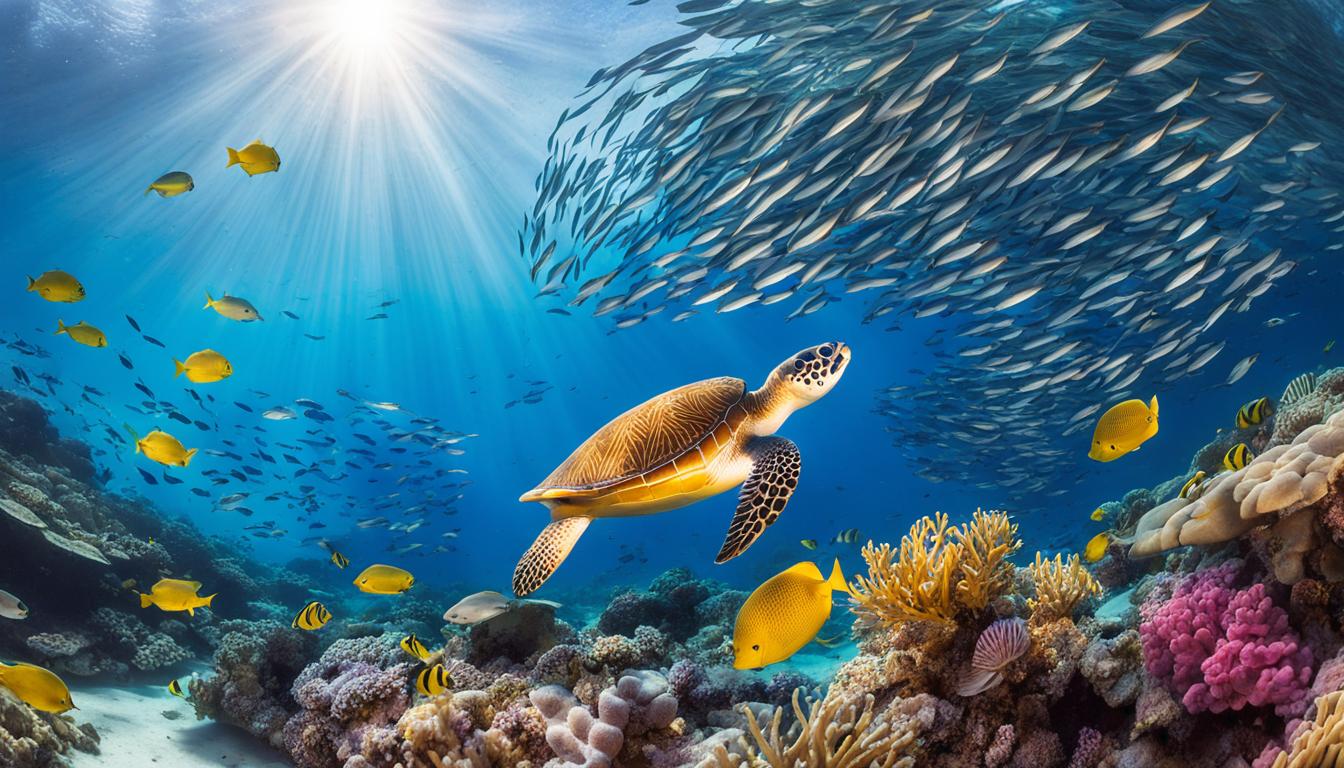
Coral reefs are magical underwater worlds full of life. They are colorful and beautiful, making everyone who sees them amazed. This article will take you on a trip to see the beauty of these natural wonders.
Coral reefs are not just pretty; they are vital for our oceans. They act like underwater forests, supporting many marine life and habitats. It’s important to understand their role in nature to protect them for the future.
But, coral reefs are facing big challenges like climate change and pollution. This article will talk about these problems and how we can help. By supporting conservation, we can help protect these amazing places.
Let’s dive into the world of coral reefs together. We’ll learn about their secrets and the best places to snorkel and dive. Get ready to be amazed by the stunning photos and interesting facts about these natural wonders.
Vibrant Tapestries of Marine Life
Coral reefs are full of life, filled with many different marine species. Dive into their colorful world to see the amazing variety of fish, invertebrates, and other creatures. These underwater places are home to a wide range of life.
Exploring the Biodiversity Hotspots
Meet the colorful clownfish and the beautiful sea turtles in coral reefs. You’ll also see reef sharks and delicate coral polyps. These places are full of life, showing the ocean’s amazing diversity. They are perfect for those who love nature and taking photos underwater.
Magnificent Creatures of the Reefs
When you visit coral reef hotspots, you’ll see a lot of marine life. Watch the angelfish dance and the sea anemones move. You’ll also see reef sharks protecting their home. Coral reefs are like a living painting of the ocean’s beauty.
Nature & Wildlife: Underwater Rainforests
Coral reefs are often called the “underwater rainforests” of the ocean. They are full of life, just like their land-based counterparts. These underwater forests are home to many different marine species, showing how nature and wildlife adapt in the ocean.
Under the sea, you’ll find colorful fish, vibrant corals, and other amazing creatures. Fish like clownfish swim among anemones, and manta rays move gracefully. The life in coral reefs is as diverse as any land ecosystem, showing the ocean’s rich biodiversity.
The reefs are made by corals and tiny algae called zooxanthellae. These algae give the corals the energy they need to grow. In return, the corals protect and feed the algae. This partnership is key to the reef’s life, supporting many marine species and creating a safe place for nature and wildlife.
Ecological Importance of Coral Ecosystems
Coral reefs are vibrant underwater worlds full of life. They are key to keeping our oceans healthy. These ecosystems are vital for many species, offering food, shelter, and places to breed. This helps protect the rich variety of life in our oceans.
Nurturing Marine Habitats
Coral ecosystems do more than just support marine life. They provide important services to both humans and nature. By acting as natural barriers, they protect coastlines from waves and storms. This is crucial in a time of rising sea levels and severe weather.
These reefs also support the lives of millions of people around the world. They are a source of food, income, and cultural heritage. Saving coral reefs is essential for the environment, society, and economy.
Threats to Coral Reef Survival
Coral reefs are vibrant underwater worlds full of life. But, they face many threats that could destroy them. Climate change, pollution, and overfishing put a lot of pressure on these delicate places.
Climate change is a big threat to coral reefs. Rising ocean temperatures cause corals to expel vital algae. Without these algae, corals can die. Also, the increase in carbon dioxide makes it hard for corals to build their skeletons.
Pollution is another big problem for coral reefs. Pollutants from land harm the marine life. These pollutants can kill coral colonies and upset the balance of the ecosystem.
Overfishing is also a major threat. Taking away important species like herbivorous fish hurts the reef. This can make the reef weaker and reduce the variety of life there. Bad fishing methods like dynamite fishing can also damage the coral.
We need to tackle these threats together. This means cutting down on greenhouse gases, controlling pollution, and fishing sustainably. By protecting these ecosystems, we can save the coral reefs. They are crucial for the health of our oceans.
Preserving Nature’s Underwater Treasures
As coral reefs face threats, conservation efforts have grown. People worldwide are working hard to protect these natural treasures. They use international agreements and local actions to keep coral ecosystems healthy.
Conservation Efforts and Initiatives
Coral reef conservation is key. This includes creating protected areas and limiting harmful activities. Governments and global agreements, like the Coral Reef Protection Act, help lead these efforts.
Local groups and activists also play a big part. They start restoration projects to fix damaged reefs. These projects use methods like coral transplantation and artificial reefs, showing the impact of community action.
Sustainable tourism is also important for reef protection. Many places now offer eco-friendly tours and teach visitors about reefs. This helps visitors learn to respect and protect these areas.
There’s a big push for environmental activism to save coral reefs. People and groups are doing things like monitoring reefs and spreading the word about their importance. These actions are key to making a difference and saving reefs for the future.
Our efforts to protect coral reefs are ongoing and strong. Together, we can keep these beautiful underwater worlds safe. By working as a global community, we can overcome environmental challenges and preserve coral reefs for future generations.
Snorkeling and Diving Adventures
Exploring the vibrant coral reefs is a dream for many. Whether you like snorkeling’s calm or diving’s excitement, these adventures connect you with the ocean’s wonders. Dive into the world of coral reef tourism and meet the amazing marine life that lives there.
Responsible Tourism for Reef Preservation
Visitors wanting to see coral reefs must travel sustainably to protect them. Responsible tourism means knowing how these ecosystems work and making choices to help them. This includes handling coral and marine life carefully, supporting conservation, and choosing eco-friendly tours.
By picking sustainable snorkeling and diving, you can enjoy the reefs and help protect them. Tours that focus on protecting the environment and your actions, like not touching coral, help keep the reef tourism industry magical for the future.

Coral reefs are a valuable global treasure that needs our protection. With responsible tourism and a love for marine ecosystems, we can explore and protect these natural wonders. This way, they stay vibrant and alive for future generations.
Captivating Coral Reef Photography
Coral reef photography is a unique art form. It lets underwater photographers show off the vibrant colors and life of these underwater worlds. These images inspire us to appreciate and protect these natural wonders.
Photographers capture the bright colors of coral and the beauty of marine life. They use their skills to show the details and beauty of these places. This lets us see the life in these underwater worlds.
These photos not only show the beauty of coral reefs but also help us understand why they need protection. By sharing their photos, photographers can make people care more about these important marine habitats. This can lead to more support for protecting these places.
If you love underwater photography or just enjoy nature, this article will take you to a world of beauty and diversity. Get ready to see vibrant colors, detailed patterns, and amazing marine life that live in these underwater forests.
Stunning Coral Reef Locations Worldwide
Coral reefs are natural wonders found in many parts of the world. Each place offers a unique and captivating underwater view. From the famous Great Barrier Reef in Australia to the colorful reefs of the Maldives, the Caribbean, and more, these places call to adventurers and nature lovers. Explore the best spots for seeing coral reefs and plan your next underwater trip.
Top Destinations for Reef Exploration
The Great Barrier Reef in Australia is huge, diverse, and stunning. It draws millions of visitors yearly. You can snorkel or dive to see colorful fish, sea turtles, and maybe a whale shark.
The Maldives is known for its clear waters and untouched reefs. It’s a top spot for those who love the sea. Here, you can see many tropical fish, rays, and other amazing creatures.
The Caribbean has many coral reefs, like in the Bahamas and the Virgin Islands. You can dive or snorkel to see vibrant corals and lots of marine life. The Red Sea, between Africa and the Middle East, is also famous for its clear waters and beautiful reefs.
Whether you’re an experienced diver or new to snorkeling, these places offer unforgettable underwater experiences. Dive into the beauty and variety of these reefs and see the wonders of our coral reefs.
Fascinating Facts About Coral Reefs
Coral reefs are amazing ocean ecosystems. They have unique growth patterns and a special relationship between coral polyps and algae. They also help shape ocean currents and support a wide variety of marine life. Let’s explore the fascinating world of these natural wonders.
One amazing thing about coral reefs is their huge biodiversity. They are often called the “rainforests of the sea” because they are home to many marine species. This includes fish, invertebrates, and even sea turtles and sharks. This shows how well these ecosystems work together and adapt.

Coral reefs grow surprisingly fast, despite what people think. Some coral species can grow several centimeters each year. This is thanks to a special relationship with algae that live inside them. These algae make food for the coral through photosynthesis.
Coral reefs also help shape ocean currents and protect coastlines. Their complex structures change the flow of water, affecting where nutrients go and how marine life moves. They also act as natural barriers, reducing wave energy and protecting the coast from erosion.
Exploring coral reefs reveals their incredible stories and importance to our planet. They are full of life, influence ocean currents, and protect coastlines. Coral reefs amaze and inspire us with their beauty and importance.
Coral Reef Restoration Projects
Due to the alarming decline of coral reefs, new projects offer hope. These projects aim to fix damaged reefs with advanced methods like coral farming and new technologies. They use techniques such as coral farming and transplantation.
People and groups are working hard to make coral reefs healthy again. Their goal is to keep reefs alive for future generations. These projects are key to saving marine life and the environment.
These projects use new coral farming and 3D-printed coral structures. Teams are passionate about the ocean and want to save these underwater forests. They work to revive the world’s coral reefs.
With challenges like climate change, these projects give us hope. They show nature’s strength and our ability to adapt. By supporting these projects, we protect marine life and help our communities too.
Educational Programs and Awareness
Teaching people about coral reefs is key to saving them. The National Marine Sanctuary Foundation’s “Coral Reef Education Initiative” teaches kids about these complex marine worlds. This helps the next generation protect our oceans.
The Coral Restoration Foundation also works with local communities. They get people involved in fixing reefs. This builds a strong connection to saving the environment.
Groups like the World Wildlife Fund are spreading the word worldwide. They show how crucial coral reefs are and why we must act now. They use many ways to reach people, like videos, workshops, and events.
These efforts are changing things for the better. They give people the knowledge and ways to help protect coral reefs. These reefs are essential for our planet’s health.
By working together, we can keep these underwater treasures safe for the future. With everyone’s help, we can make sure coral reefs continue to flourish.