






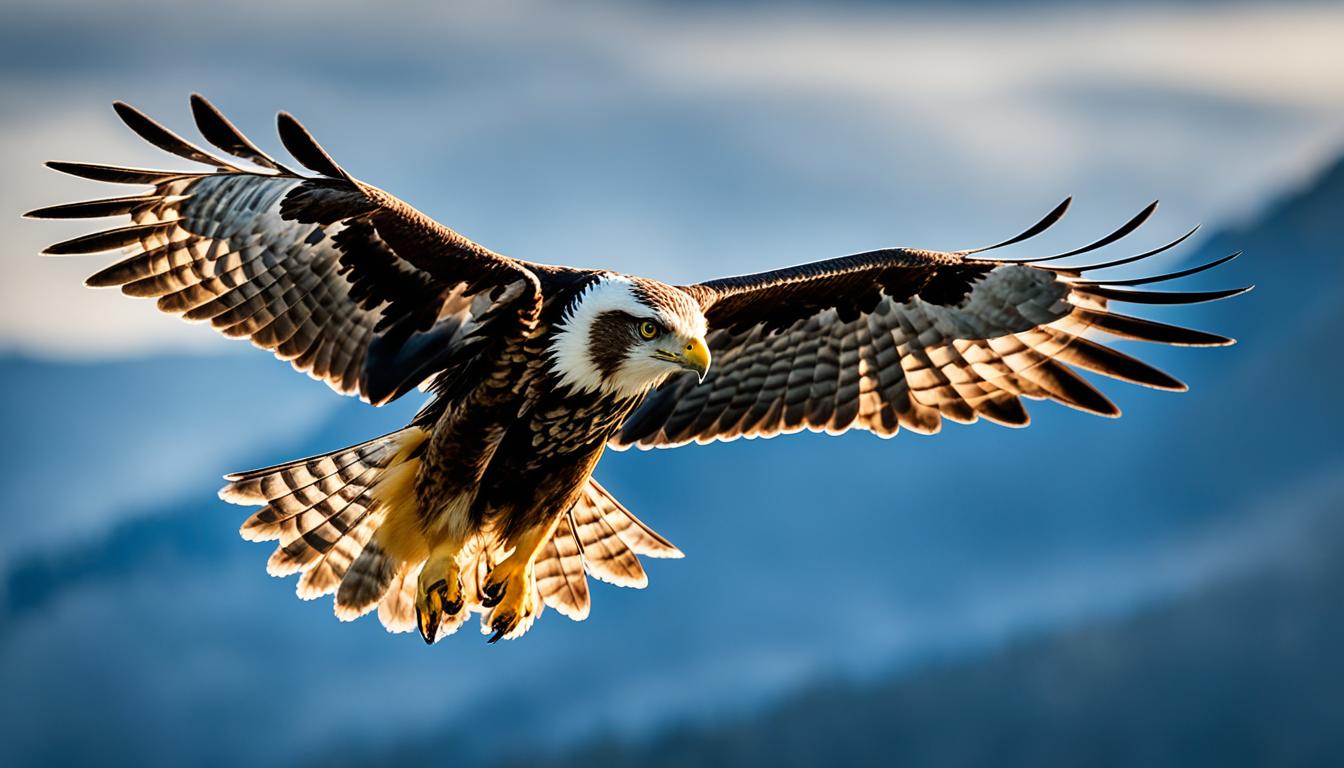
Birds of prey, or raptors, soar high above, catching our eyes with their power and beauty. They include eagles and hawks, amazing hunters with skills and adaptations. This article takes you on a journey to learn about these birds, their hunting, nesting, and their importance to us.
Raptors are fascinating, with birds like the bald eagle and the swift falcon leading the skies. Each has special traits that help them hunt. Their sharp vision, strong talons, and beaks are key to their survival.
Let’s dive into how these birds hunt, from stalking to catching prey in mid-air. We’ll see their grace and skill in the sky. They show off their stealth and speed with amazing precision.
Introducing the Raptors: Fierce Hunters of the Skies
Among the birds that fill our skies, a special group stands out. They are called raptors – the fierce hunters of the air. These birds of prey include eagles, hawks, falcons, and owls. They are known for their amazing hunting skills, sharp senses, and flying abilities.
From Eagles to Hawks: Exploring the Diverse Raptor Species
The raptor species in our skies vary greatly in size and skill. The eagles are big and strong, with sharp talons and beaks. They hunt from high up, diving fast and precisely to catch their prey.
Hawks are quick and flexible, great at hunting in forests and cities. They use their sharp eyes to spot small animals from far away.
Falcons are known for their speed, reaching high speeds as they chase their prey. And owls are silent flyers with great night vision. They catch small mammals and other prey at night with their sharp talons and beaks.
Each raptor species has its own special traits and hunting ways. They are all skilled predators, ruling the skies with beauty and strength. This leaves people amazed by their abilities.
Anatomy of Aerial Predators: Wings, Talons, and Beaks
Raptors, or birds of prey, are known for their amazing hunting skills. Their anatomy plays a big part in their success. They have powerful wings, sharp talons, and hooked beaks that make them stand out.
Their wings are made for flying with precision. They have broad, strong wings and long flight feathers that let them soar, change direction quickly, and dive fast. This design, along with their light and streamlined bodies, makes them agile and fast in the air.
Raptors use their talons to hunt. These claws are sharp and curved for catching, holding, and tearing prey. Their strong leg muscles and toe setup help them grip and crush their prey. These talons also protect them and help them hold onto prey while flying.
Raptors also have hooked beaks that are great for tearing flesh. These beaks help them open the skin and flesh of their prey. With their sharp beaks, great eyesight, and quick reflexes, raptors are top hunters.
The anatomy of raptors shows how evolution has made them the top birds in the sky. Their flying skills, talons, and beaks make them the best at hunting. They are the ultimate example of bird predatory perfection.
Hunting Strategies: Masters of Stealth and Speed
Raptors, the majestic birds of prey, have perfected their hunting over thousands of years. They are experts in stealth and speed. These birds use various techniques to find, track, and catch their prey. Their skills show how well they have adapted and how skilled they are at hunting.
From Soaring to Stooping: Capturing Prey in Mid-Air
Raptors can soar high in the sky, looking for potential prey below. They have great eyesight and senses that let them spot prey from far away. When they see a good target, they dive down fast to catch their prey in mid-air.
The way raptors move during these dives is amazing. Their bodies are built for speed and agility. They have sharp talons and strong beaks that help them grab their prey quickly. Whether it’s a falcon or a hawk, their hunting skills show they are top predators in the sky.

Stealth and speed are key to raptor hunting. These birds use their skills to be the top predators in their habitats. By soaring and diving with precision, they catch their prey with amazing skill. Raptors continue to amaze and inspire us with their hunting abilities.
Nesting Habits: Building Homes for the Next Generation
The raptor nesting process is amazing. These birds work hard to build big, strong nests for their young. They pick the best spots and gather materials carefully. This shows how adaptable and resourceful they are.
Raptors like to nest high up, like in tall trees or on cliffs. This keeps their breeding and offspring safe. It also helps them hunt and watch their surroundings. They use sticks, moss, and even human-made things like fabric or wire to build their nests.
Raptors are very dedicated parents during nesting and breeding. Both mom and dad work hard to keep their eggs warm and feed their babies. This helps the next generation of these amazing birds of prey grow and thrive.
Conservation Efforts: Protecting the Majestic Birds of Prey
Experts in raptor conservation are working hard to save these amazing birds. They face many threats and challenges. Habitat loss, pollution, and human activities are big problems for them.
Threats and Challenges Faced by Raptors
Habitat loss is a big worry for raptors. Humans are cutting down forests and draining wetlands for development. This leaves raptors without homes and disrupts the ecosystem they help keep balanced.
Pollution is also a big problem. Pesticides and other harmful substances can poison raptors. Hunting, poaching, and accidents with power lines and wind turbines also threaten their survival.
Despite these challenges, conservation groups are fighting to save raptors. They’re working on restoring habitats and promoting sustainable land use. Their efforts are key to keeping these amazing birds in the skies for the future.
Nature & Wildlife: The Ecological Importance of Raptors
Raptors, the amazing birds of prey, are key to our natural world’s balance. They act as top predators, controlling the numbers of smaller animals. This helps keep the ecosystem in balance. From eagles flying high to hawks diving fast, they are vital for the environment’s health.
Raptors help control pests by eating small rodents and rabbits. This stops these animals from overpopulating and harming plants and crops. This natural pest control is very important, as it cuts down on the use of harmful chemicals. It keeps our natural areas vibrant.
These birds also clean up the environment by eating dead animals and waste. This stops disease from spreading and helps recycle nutrients in the ecosystem. Raptors are important as both predators and scavengers, showing their big role in nature.

Raptors also help keep the ecosystem balanced. They keep smaller predators from getting too strong. This lets more different species live together, making the environment healthier and more diverse.
In short, raptors are very important to our ecosystems. They are a big part of nature and need our protection. By understanding their role, we can help keep them around. This will protect the balance of nature for the future.
Captivating Courtship Displays: Rituals of the Sky
Birds of prey show off amazing courtship rituals in the sky. These rituals include soaring and building nests. They are truly a sight to see.
Mating Behaviors and Parental Care
Eagles, hawks, and falcons perform stunning aerial displays during mating season. Watching them dance in the sky is breathtaking. They show off their flying skills and how well they work together.
After the displays, they build nests together. These nests are often high up in trees or on cliffs. Both parents take turns caring for their young until they can fly.
Raptors’ courtship and mating show the beauty of birds. They amaze us with their flying skills and care for their young. They play a key role in keeping our ecosystems balanced.
Raptors in Mythology: Cultural Significance Across Civilizations
Raptors have always caught the eye of people around the world. They are deeply woven into the stories and symbols of many cultures. These birds of prey, with their sharp claws and soaring skills, symbolize many things. They stand for power, strength, freedom, and a connection to the divine.
In ancient Egypt, Horus, with a falcon’s head, was a god of kingship. He was linked to the sun, the sky, and the right to rule. The Romans saw the eagle as sacred, linking it to Jupiter and the empire’s power. Native American traditions view the eagle as a messenger between the world and the spiritual realm. They use its feathers in ceremonies to honor the divine.
Raptors are still important today, beyond ancient times. In medieval Europe, the falcon was a sign of nobility and bravery. The Japanese culture sees the hawk as a symbol of courage, wisdom, and the samurai spirit. It often appears in art and stories as a respected figure.
Raptors have a lasting impact on the stories and symbols of many cultures. Their presence in myths and art shows how deeply they touch our hearts. These birds connect us to something greater, linking the human and the divine.
Spectacular Migrations: Following the Paths of Wandering Raptors
Raptors, with their power and grace, amaze us. Their amazing journeys are their best feature. Every year, they travel long distances, following paths they’ve used for generations. They use the weather and food to guide them.
Hawks and eagles fly across continents, using routes passed down through time. Their raptor migrations show how adaptable and strong they are. They use rising air and winds to travel hundreds or thousands of miles. This is because they must reach their destination.
Keeping safe their long-distance travel paths is very important. These paths are key for many raptors to survive. We must protect these seasonal movements to save these amazing birds. By working together and spreading the word, we can keep these paths safe for the future.