



Get ready for an exciting journey into the world of reptiles. We’ll explore everything from ancient crocodilians to fascinating snakes and lizards. This article will dive into their evolution, unique traits, and important roles in ecosystems worldwide. Get ready to be amazed by the reptile kingdom.
Reptiles have been on Earth for millions of years, adapting to many environments. They range from hot deserts to green rainforests. These animals have found ways to survive and thrive, showing their strength and flexibility. Each reptile, from fierce crocodilians to slithering snakes and versatile lizards, has special traits that enrich our world.
Let’s dive deeper into the world of reptiles. We’ll learn about their ancient beginnings, how they’ve adapted to survive, and their interesting behaviors. Join us on this journey of discovery and appreciation for these incredible creatures.
Reptiles: An Evolutionary Marvel
Reptiles have always fascinated humans for centuries. They trace back to ancient times, showing how they’ve adapted to many environments. This shows their amazing strength and flexibility.
Tracing Their Ancient Origins
The story of reptiles goes back millions of years. The first reptiles appeared about 320 million years ago during the Carboniferous period. These early reptiles, like the Hylonomus, were small and lizard-like. They were the first to live on land, leaving their aquatic lives behind.
Since then, reptiles have evolved into many different species. Today, we see everything from big crocodiles to quick lizards and famous turtles.
Adaptations for Survival
Reptiles have many adaptations that help them live in various places, from hot deserts to green rainforests. Being cold-blooded helps them save energy by controlling their body temperature. They do this by sunbathing or hiding in the shade.
They also have scales and shells that protect them from predators and harsh conditions. These features help them survive in tough places.
Scientists and nature lovers are still learning about reptile evolution and adaptations. This shows how these ancient creatures are resilient and clever. Exploring reptiles helps us see the beauty of life on Earth.
Diversity in the Reptilian Kingdom
The reptilian kingdom is full of diversity, with each species having its own special traits. Crocodilians are among the most interesting and powerful reptiles. They have stayed mostly the same for millions of years and are top predators.
Crocodilians: Fierce Apex Predators
Crocodilians include crocodiles, alligators, caimans, and gharials. They are ancient and powerful reptiles. Over millions of years, they have become highly skilled hunters. They have strong jaws, sharp teeth, and great sight and hearing.
They rule their habitats, from wetlands to rivers. This shows how adaptable they are and their important role in nature.

Crocodilians live in many parts of the world, like Africa and the southeastern United States. Each type has its own special traits. But they all can be top predators.
They eat a wide variety of animals, from fish and birds to mammals and other reptiles. This helps control the populations of their prey. It keeps the ecosystems they live in healthy and stable.
The diversity of reptiles, especially crocodilians, shows how resilient and adaptable these ancient creatures are. As we learn more about reptile diversity, we’ll see more about the amazing stories and roles these animals play in our world.
Snakes: Slithering Wonders
Snakes, also known as serpents, are truly captivating reptiles. They come in many shapes, sizes, and colors. Each one has its own special ways of living and behaving. From the venomous coral snake to the big python, snakes show the amazing diversity of reptile life.
Snakes live in many places, from dry deserts to green rainforests. They are important for keeping ecosystems balanced. They move smoothly and use their forked tongues to feel their surroundings. Watching a snake move is always fascinating.
Snakes have caught human attention for a long time. People in ancient Egypt revered the cobra, and in Mesoamerica, snakes were seen as powerful deities. Learning about snakes helps us understand them better and appreciate their role in nature.
We will learn more about snakes and their amazing ways. We’ll see how they hunt and what they do for their homes. Join us as we explore the fascinating world of snakes.
Lizards: Versatile and Captivating
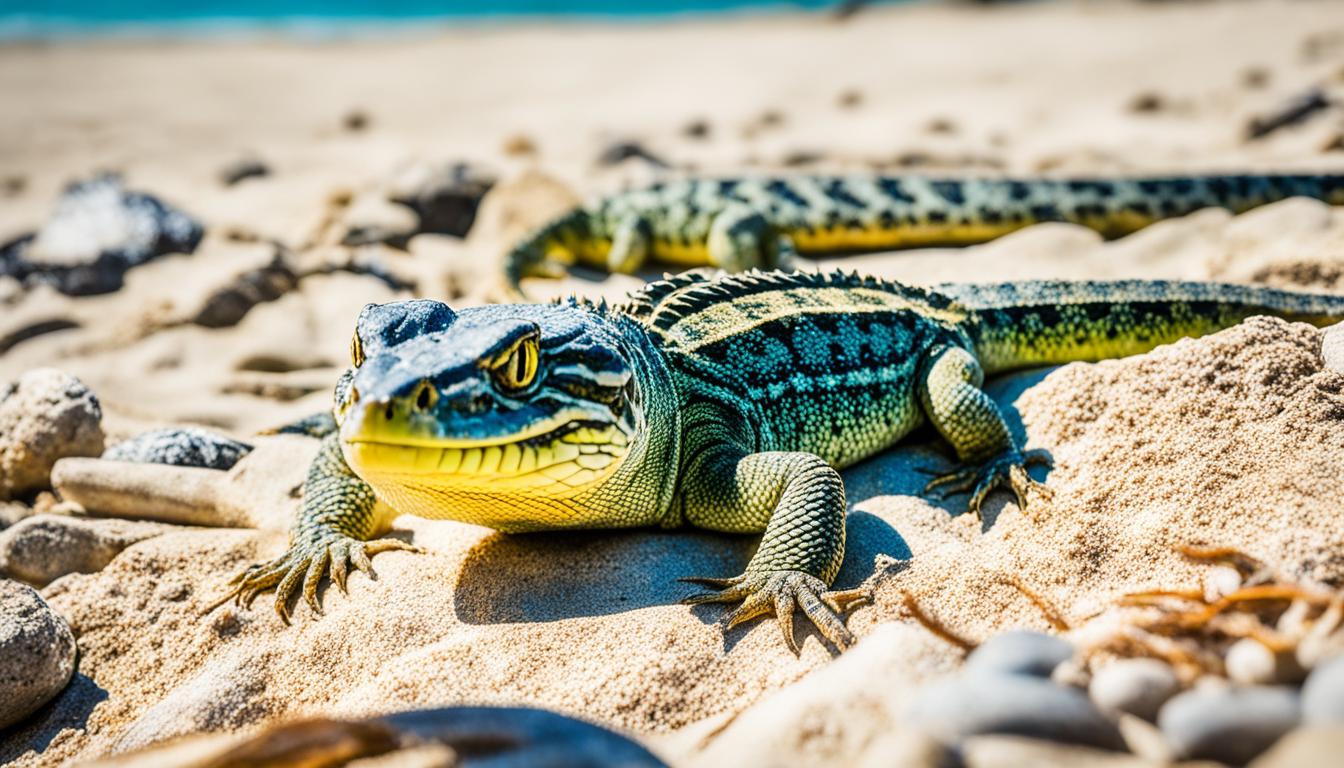
The world of reptiles is full of amazing creatures, and lizards are a standout group. They range from tiny geckos to long iguanas, living in many different places. These reptiles have changed a lot to live well in various environments.
From Geckos to Iguanas
Geckos are amazing with their bright colors and ability to stick to smooth surfaces. They come in many sizes, some as small as a human finger. At the other end, iguanas are big and look like they’re from another time, catching everyone’s eye.
Iguanas live in warm places and can grow up to six feet long. They eat plants and have strong claws and jaws. Their colors, like green and blue, make them stand out.
Between the tiny geckos and the big iguanas, there are many other lizard types. Some can change color quickly, while others live in the desert. This shows how diverse and adaptable lizards are.
Turtles and Tortoises: Armored Ambassadors
Turtles and tortoises, with their shells, are true ambassadors of the reptile world. They have fascinated humans for centuries. Their unique features and adaptations let them live for millions of years. They play important roles in their ecosystems.
Exploring Their Unique Physiology
The shell of a turtle or tortoise is key to their survival. It’s made of bone and keratin, offering protection and helping them move. This shell evolved over millions of years, with the top and bottom parts protecting them from predators and harsh conditions.
But there’s more to these reptiles than just their shells. Turtles and tortoises have special features that make them stand out. Their necks can stretch and pull back for reaching food or avoiding danger. Their legs are designed for swimming, walking, or digging, based on the species.
How they breathe is also quite interesting. They don’t have a diaphragm like mammals do. Instead, they use their limbs and body muscles to breathe. This lets them hold their breath for a long time, perfect for living in water or near it.
There’s a wide variety of turtles and tortoises worldwide, showing their ability to adapt. From the big galapagos tortoise to the fast sea turtle, these reptiles amaze and inspire us. They have unique features and play key roles in their environments.
Reptile Habitats: Deserts, Rainforests, and Beyond
Reptiles live in many different places around the world. They thrive in both dry deserts and green rainforests. These animals have changed to live in a variety of ecosystems. Let’s look at the amazing places reptiles call home.
The desert is tough, but reptiles like it. Animals such as the Gila monster and the horned lizard have special features to stay moist and keep warm. Snakes like the rattlesnake and the sidewinder know how to move through the sand and avoid danger.

On the other side, the rainforest is full of life for reptiles. Geckos and chameleons hide in the trees, while crocodilians and turtles live in the water. This place offers reptiles many chances to live, hunt, and have babies. It shows how well reptiles can adapt.
Reptiles live in many places, not just deserts and rainforests. They can be found in grasslands and mountains too. Each place has its own challenges, but reptiles have found ways to overcome them. This shows how strong and varied this group of animals is.
Nature & Wildlife: Reptiles in Their Natural Environments
Reptiles are key to nature’s balance, playing important roles in their ecosystems. They are a big part of the natural world, helping keep environments healthy and diverse.
Reptiles live in many places, from dry deserts to green rainforests. They have special features like scales and ways to control their body temperature. This lets them live with other animals. They are both hunters and prey, which keeps the food web balanced.
Species like crocodilians and lizards each have their own role in nature. They help keep the ecosystem balanced by controlling other animal populations. This adds to the variety of life on Earth.
Learning about reptiles helps us see how all life is connected. It’s important to protect these amazing animals. This way, we can keep the natural world healthy for the future. It lets us enjoy the beauty and diversity of reptiles.
Conservation Efforts: Protecting Reptilian Species
Exploring the world of reptiles shows us the challenges they face and the efforts to protect them. Many reptile species are in danger due to habitat loss, poaching, and climate change. It’s important to understand these threats and the work being done to save these amazing animals.
Threats and Challenges
Habit destruction is a big threat to reptiles. As humans take over more land, places like forests and wetlands disappear. This leaves animals like crocodiles, snakes, and turtles without homes. Poaching is another big problem, as some reptiles are hunted for their meat or believed to have healing powers.
Climate change also harms reptiles. Rising temperatures and changes in weather patterns stress them out. Many reptiles can’t adapt fast enough, putting their survival at risk. Conservationists are fighting hard to tackle these issues and help reptiles thrive.