






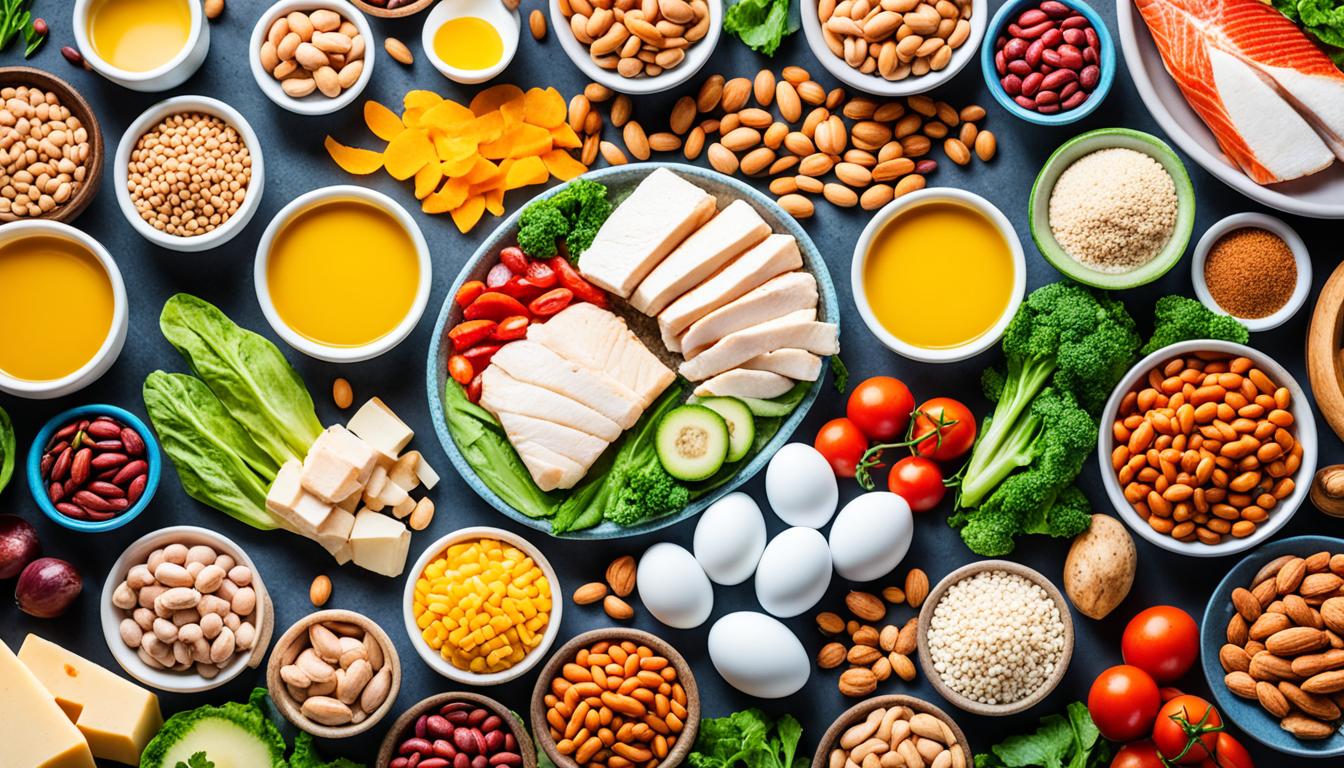
Protein is key to a balanced diet. It’s the building block of our bodies. It helps with muscle growth, repair, and keeps our immune system strong. It also helps regulate hormones.
This article will show you why eating protein-rich foods is good for you. We’ll talk about the different types of proteins, where to find them, and how much you need. By the end, you’ll know how to add protein-rich foods to your meals for better health and fitness.
Introduction to Protein and Its Vital Functions
Protein is a key nutrient that keeps our bodies healthy and strong. It helps build and fix tissues, supports the immune system, and helps with many metabolic processes. Knowing how important protein is and what it does is crucial for a good diet and health.
Understanding Protein’s Role in Body Processes
Protein is the main part of cells, muscles, tissues, and organs. It keeps our skin, hair, and nails healthy. It’s also vital for kids and teens to grow and develop.
Protein helps the immune system make antibodies to fight off sickness. This is why it’s so important for our health.
Different Types of Proteins and Their Sources
There are two main kinds of proteins: complete and incomplete. Complete proteins have all the amino acids the body needs. Incomplete proteins don’t have all the amino acids.
Meat, eggs, and dairy are great for getting complete proteins. Legumes, nuts, and grains are good for incomplete proteins. You can mix these to get all the amino acids you need.
It’s important to get enough protein from different foods to stay healthy. Knowing about the types of proteins and where to find them helps you eat well. This way, you can make sure you’re getting the right amount of protein for your body.
Recommended Daily Protein Intake
Knowing how much protein you need every day is key for good health. It’s also important for reaching goals like building muscle or managing weight. Health groups offer guidelines based on your age, how active you are, and your personal needs.
The Dietary Guidelines for Americans suggest adults need 46 to 56 grams of protein daily, depending on if you’re a man or a woman. The Recommended Dietary Allowance (RDA) is 0.8 grams of protein per kilogram of body weight for adults. So, for someone who weighs 150 pounds, that’s about 56 grams of protein a day.
But remember, these are just basic guidelines. Your protein needs can change based on your activity level, muscle size, and health. For example, athletes, bodybuilders, and people with hard jobs might need more protein to help with muscle growth and repair.
To find out how much protein you should have each day, talk to a healthcare expert or a dietitian. They can give you advice that fits your unique situation. This way, you can get the right amount of protein from food or supplements.
Health Benefits of Adequate Protein Consumption
Eating the right amount of protein is key for good health. It helps with muscle growth, repair, and weight control. Let’s look at how protein is good for us.
Protein for Muscle Building and Repair
Protein is vital for muscle growth and repair. When you exercise, your muscles get tiny tears. Protein helps fix and grow these muscles, making them stronger and more defined.
This is especially true for people who are active. They need enough protein to recover and grow their muscles.
Protein’s Role in Weight Management
Protein can help with weight management by making you feel full and boosting metabolism. Foods high in protein keep you satisfied longer, which can lead to eating less and losing weight. Protein also makes your body burn more calories, which can increase your metabolism.
Adding enough protein to your diet, along with a balanced diet and exercise, brings many health benefits. These include muscle growth, weight loss, and better protein and health.
Health & Wellness Tips: Incorporating Protein into Your Diet
Keeping a diet rich in protein is key for good health and wellness. Adding more protein-rich foods to your meals and snacks helps with muscle building and weight control. Here are some easy tips to boost your protein intake.
Begin your day with a breakfast full of protein. Choose foods like eggs, Greek yogurt, or a smoothie with protein powder, nut butter, and fruit. These foods will keep you full and energized all morning.
When planning meals, add lean protein like grilled chicken, fish, or tofu to each main dish. Combine it with fiber-rich veggies and whole grains for a balanced meal. Meal prep can help you have protein-rich meals ready all week.
Snacking on protein-rich foods is another way to increase your protein intake. Keep hard-boiled eggs, Greek yogurt, nuts, or protein bars handy for quick snacks. These snacks help control hunger and keep your energy up between meals.
By making a few changes to your daily routine and meal planning, you can easily add more protein to your diet. This approach supports your health goals and ensures you get enough protein.
Risks of Excessive Protein Intake
Protein is key for good health, but too much can be bad. It’s important to know the risks of eating too much protein. This helps keep your diet balanced and healthy.
Potential Side Effects and Precautions
High protein intake can be hard on the kidneys. When the body breaks down protein, it makes waste that the kidneys have to filter out. Too much protein can harm the kidneys, causing stones or damage over time.
Too much protein can also make you dehydrated. The body needs more water to process and get rid of protein waste. This can cause thirst, dryness, and feeling tired. It’s important to drink enough water when eating a lot of protein.
Too much protein can lead to digestive problems like bloating, constipation, or diarrhea. The body may have trouble breaking down and absorbing a lot of protein. This can make you feel uncomfortable and upset your stomach.
To avoid these problems, talk to a healthcare professional or a dietitian. They can help you figure out how much protein you need based on your lifestyle and health. Always listen to your body and adjust your protein intake as needed.
Protein Needs for Different Life Stages
Getting enough protein is key at every life stage. But, the amount you need changes with age and development. Let’s look at what children, teens, and older adults need.
Protein Requirements for Children and Adolescents
Kids and teens need more protein than adults. They use it for growth, fixing tissues, and building muscles. Kids aged 4-13 should get 19-34 grams of protein a day. Teens aged 14-18 need 52-85 grams.
Include protein-rich foods like lean meats, poultry, fish, eggs, dairy, legumes, and nuts in their meals and snacks.
Protein Needs for Older Adults
Our protein needs change as we get older. Older people lose muscle mass and strength, a condition called sarcopenia. To fight this, older adults should aim for 1.0-1.2 grams of protein per kilogram of body weight daily.
This helps keep muscles strong, supports the immune system, and aids in healthy aging. Good protein sources for seniors include lean meats, poultry, fish, eggs, dairy, and plant-based foods like beans, lentils, and nuts.

Vegetarian and Vegan Protein Sources
For those on a vegetarian or vegan diet, finding enough plant-based protein is key. Luckily, plants offer many protein-rich foods. Legumes, nuts, whole grains, and soy products are great for getting enough protein.
Legumes like beans, lentils, and chickpeas are packed with protein. They fit into many dishes, from stews to salads. Nuts and seeds, such as almonds and chia seeds, also offer protein, healthy fats, and more.
Whole grains, including quinoa and brown rice, are great for protein too. Mixing these with legumes gives you all the amino acids you need. Soy products like tofu and tempeh are also good for plant-based protein.
It’s important to mix up your protein sources to get enough. Try different foods to make meals that are tasty and healthy. This helps support your health and happiness.
Balancing Protein with Other Macronutrients
Getting the right mix of protein, carbs, and healthy fats is key for good health and fitness. This balance helps with energy, muscle recovery, and feeling full. It’s important to get these nutrients in the right amounts.
Combining Protein with Carbs and Healthy Fats
Pairing protein with carbs and healthy fats has many benefits. Carbs give you energy. Protein helps muscles grow and heal. Healthy fats, like those in avocados, nuts, and olive oil, help with hormone production and nutrient absorption.
Adding protein, carbs, and healthy fats to your meals boosts energy, muscle recovery, and fullness. This is great for people who exercise a lot. It fuels workouts, helps build muscle, and aids in recovery after exercise.
The best mix of nutrients varies by your goals, activity level, and health. Talking to a healthcare professional or dietitian can help find the right balance for you.
Meal Planning and Protein-Rich Recipes
Adding protein-rich foods to your daily meals and snacks can change your diet for the better. With some planning and creative recipes, you can easily add more protein to your meals. This makes it easier to stay healthy and balanced.
Meal prepping is a big help. By planning and preparing protein-rich meals ahead, you always have healthy options ready. This makes it easier to choose better foods throughout the week. You can make everything from grilled chicken and roasted veggies to protein-packed salads and hearty stews.

Trying different protein-rich recipes also keeps your meals exciting and your body nourished. You can enjoy classic dishes like grilled salmon and lentil stew or try new ones like quinoa-stuffed bell peppers and chickpea curry. There are many tasty and healthy options to explore.
Adding more protein-rich meals and meal prep to your routine can be a big win. It helps with muscle building, weight management, or just eating more nutrient-dense foods. So, why not plan your next protein-packed menu today?
The Role of Protein Supplements
In today’s health-focused world, protein supplements are getting more popular. They help increase protein intake and support fitness and wellness goals. A balanced diet is key, but supplements can fill nutritional gaps or meet specific needs.
Protein supplements come in many forms, like protein powder, protein shakes, and supplementation formulas. It’s important to know the benefits and limits of these products. This knowledge helps use them safely and effectively in your life.
Unlocking the Benefits of Protein Supplements
For athletes, bodybuilders, or those wanting to build muscle, protein supplements are helpful. They offer a convenient, high-quality protein source. This supports muscle recovery, growth, and body composition.
Some people find it hard to get enough protein from food because of dietary limits, busy life, or personal choices. Protein supplements help ensure they get enough of this important nutrient.
Recognizing the Limitations of Protein Supplements
Protein supplements are useful but not a replacement for a balanced diet. Using only protein supplements can lead to nutritional imbalances and health problems.
The effectiveness and safety of protein supplements depend on the product and the person using them. Always talk to a healthcare professional or dietitian before starting any new protein supplements.
Knowing the good and bad about protein supplements helps people make smart choices. It’s key to balance your diet and seek advice when needed.
Consulting with Healthcare Professionals for Personalized Protein Recommendations
General guidelines are a good start, but your protein needs can change a lot. This depends on your age, how active you are, your health, and your goals. To make sure you’re getting the right amount of protein, talk to experts like registered dietitians or nutritionists.
These professionals can look at what you need and give you advice that fits you. They can help you whether you want to build muscle, lose weight, or just stay healthy. Getting advice from a pro can help you make smart choices about how much protein to eat.
Working with a healthcare expert in nutrition can give you a plan that fits you. This plan will tell you how much and what kind of protein to eat. Getting advice like this can really help you meet your health goals and live a balanced life.