






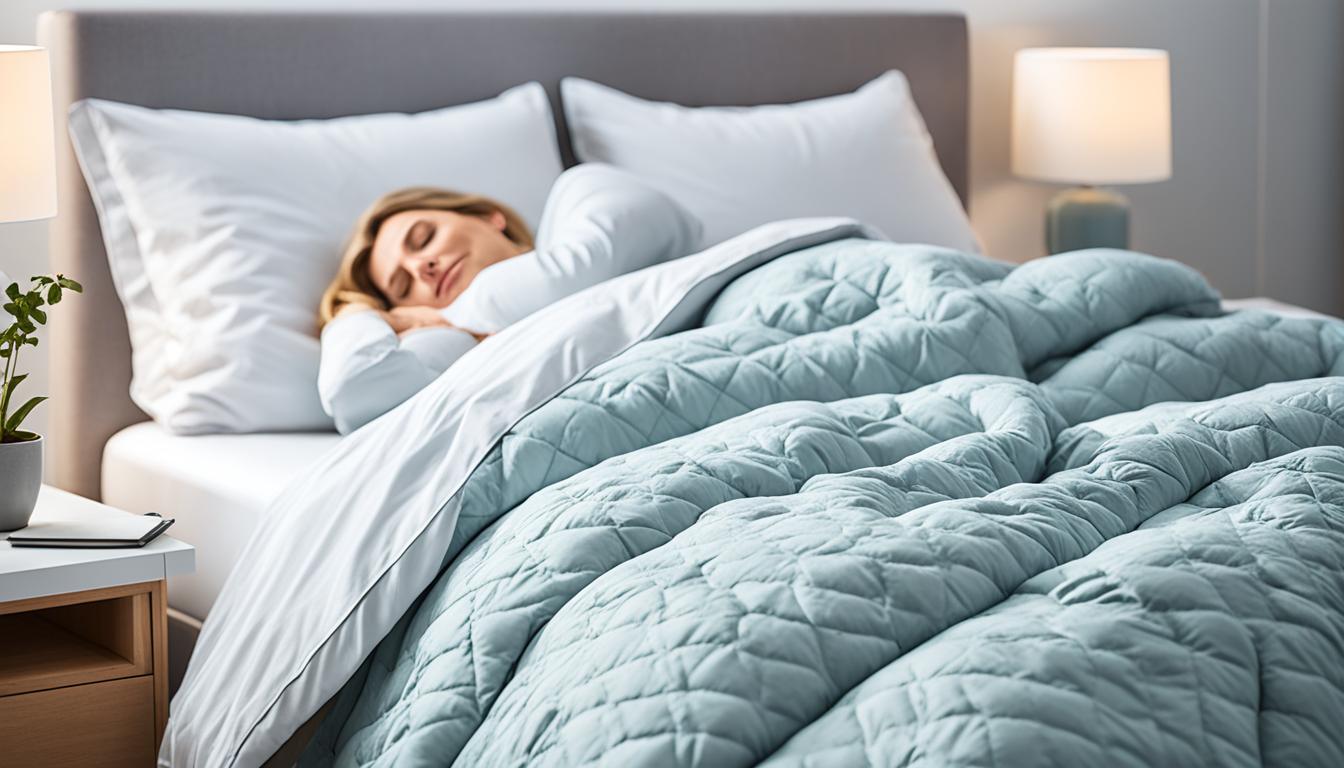
Sleep is key to our health and happiness, but many find it hard to get enough good sleep. This guide will share tips to help you sleep better. We’ll cover the importance of sleep, how to make your bedroom sleep-friendly, and relaxing bedtime routines. These strategies are backed by science and will help you feel refreshed every morning.
Good sleep is vital for our bodies and minds. Healthy sleep habits can boost your brain power, mood, and immune system. If you’re having trouble sleeping, this guide has what you need. It offers tools and advice to help you sleep well every night.
The Importance of Quality Sleep
Quality sleep is key for our health and happiness. It’s vital for keeping our bodies and minds healthy. Let’s explore why quality sleep matters, including the sleep cycle stages and the bad effects of not sleeping enough.
Understanding the Sleep Cycle
The sleep cycle is a complex process our bodies go through every night. It has several stages, each with its own benefits. From light, REM sleep to deep, slow-wave sleep, each stage helps our bodies and minds recover.
The circadian rhythm, our internal clock, controls our sleep-wake cycle. It makes sure we get the most out of sleep. If this rhythm gets messed up, we might feel tired, think less clearly, and even get chronic health problems.
Effects of Sleep Deprivation
Not sleeping well can really hurt our health. Sleep deprivation is linked to many health issues, like chronic diseases, a weak immune system, and poor brain function.
Not getting enough sleep importance makes our body and mind work poorly. It can make us moody, hard to concentrate, and less productive. It can also lead to serious health issues, such as heart disease, diabetes, and obesity.
Knowing the sleep health benefits helps us value sleep more. By understanding the sleep stages and the bad effects of not sleeping, we can make sure we get enough rest. This helps our bodies and minds stay healthy.
Creating a Sleep-Friendly Environment
Creating a comfy sleep area is key to better sleep. The setup of your bedroom, lighting, temperature, and noise levels affect how easily you fall asleep and stay asleep. By making these factors better, you can get more restful sleep.
Start with a good mattress and pillows for your body’s support. Make sure your bedding is clean, soft, and lets air flow to avoid discomfort. Keeping your sleeping area tidy also helps create a peaceful space.
Lighting is crucial for a sleep-friendly room. Soft lighting or darkness tells your brain it’s time to sleep. Stay away from bright screens like TVs, phones, or laptops before bed. These devices emit blue light that can mess with your sleep cycle.
The right temperature is also important for sleep. Aim for a bedroom temperature between 65°F and 70°F (18°C to 21°C). Too hot or cold can make it hard to sleep. Use fans, air conditioning, or a thermostat to keep the room comfy.
Lastly, quiet is key for good sleep. Look for ways to block out noise, like earplugs, a white noise machine, or soundproofing. A quiet space helps you fall asleep faster and sleep better.
Improving your sleep area can greatly improve your sleep and health. Try different changes to find what works best for you.
Establishing a Relaxing Bedtime Routine
Creating a calming bedtime routine can greatly improve your sleep. By adding soothing activities before bed, you make it easier to move from being awake to sleeping. Let’s look at some relaxation techniques and sleep hygiene tips for your bedtime routine.
Winding Down Activities
Getting your body and mind ready for sleep is key to a good night’s rest. Doing relaxing activities before bed tells your brain it’s time to sleep. Try gentle stretching, light yoga, or meditation to help calm down.
Reading a book, listening to soft music, or deep breathing exercises are great for unwinding. Stay away from TV or screens before bed because the blue light can mess with your sleep cycle. Make your bedtime area cozy and free from technology to help you relax.

Having a regular bedtime routine, even on weekends, helps your body clock and sleep health. Try different activities to see what suits you best. Stick to a schedule to get the most out of your bedtime routine.
The Role of Exercise and Physical Activity
Regular exercise and physical activity can greatly improve your sleep quality. Studies show that those who exercise often sleep better, fall asleep faster, and sleep more efficiently.
Best Times for Exercise
Timing your workouts is key to better sleep. Experts suggest exercising 4-6 hours before bedtime. This helps your body temperature rise and then cool down, aiding your sleep cycle.
Morning or afternoon workouts are great for sleep. They help set your body’s natural sleep cycle and release sleep-supporting hormones. But, exercising late or too hard before bed can keep you awake.
Include different exercises like cardio, strength training, and stretching in your routine. This mix boosts fitness, lowers stress, and helps you sleep better.
It’s important to find what works for you. Try different times and types of exercise to find the best for your sleep and health.
Dietary Habits for Better Sleep Quality
The foods you eat can greatly affect how well you sleep. By adding certain nutrients to your diet, you can improve your sleep. This makes it easier to get good rest.
Sleep-Promoting Foods
Some foods are great for sleep because they have melatonin. This hormone helps control when you’re awake and when you’re asleep. Tart cherries are a good example. They have melatonin and can make your sleep better.
Fatty fish like salmon and tuna are also good for sleep. They have omega-3 fatty acids and vitamin D. These nutrients help with sleep.
Other foods that help with sleep have tryptophan. This amino acid makes serotonin and melatonin in your body. You can find tryptophan in turkey, eggs, nuts, and seeds. Carbs like whole grains, fruits, and veggies also help by making serotonin and relaxing you.
Eating a mix of these sleep-friendly foods can make your sleep better. Paying attention to what you eat is a smart way to improve your sleep. It’s a key part of good sleep habits.
Managing Stress and Anxiety
Getting good sleep can be hard when you’re stressed and anxious. These feelings can make it tough to sleep well, which can make you more stressed and anxious. But, using relaxation techniques every day can help you break this cycle. This can make your sleep better and improve your overall well-being.
Relaxation Techniques
Practicing mindfulness and relaxation techniques is a strong way to handle stress and anxiety. These methods calm your mind, lessen stress symptoms, and help you relax deeply. This is great for better sleep.
Deep breathing exercises can really help with anxiety and sleep. By breathing slowly and focusing on your breath, you start the body’s relaxation response. This lowers your heart rate and blood pressure. Also, progressive muscle relaxation, where you tense and release muscles, is great for easing tension and anxiety.
Meditation is another key technique for better sleep. It trains your mind to stay present and focused. This quiets the constant thoughts and worries that keep you awake. Even a few minutes of meditation a day can greatly improve your sleep and stress management.

Finding the right relaxation techniques might take some trying out. Be patient and open-minded as you explore different methods. With regular practice, you can use relaxation to enhance your sleep, lessen anxiety, and manage stress better.
Sleep Hygiene: Best Practices
Good sleep hygiene is key to better sleep quality. By following simple best practices, you can make your sleep environment supportive. This helps you feel rested and refreshed. Let’s look at the main parts of effective sleep hygiene.
It’s important to have consistent sleep and wake times. Try to go to bed and wake up at the same time every day, even on weekends. This helps your body clock stay in sync and makes sure you get 7-9 hours of sleep each night.
Limiting screen time before bed is also crucial. Electronic devices emit blue light that can stop your body from making melatonin. Avoid using smartphones, tablets, or computers for at least an hour before bedtime.
Having a comfortable sleep area is vital for better sleep. Make sure your bedroom is dark, cool, and quiet. Use blackout curtains, earplugs, or a white noise machine to block out distractions. Also, get a supportive mattress and pillows that keep your spine aligned and reduce pressure points.
Adding these sleep hygiene tips to your daily routine helps you sleep better and feel better overall. Remember, good sleep is crucial for your health, both physical and mental. So, make sleep hygiene a priority and enjoy the benefits of being well-rested.
Addressing Common Sleep Challenges
If you’re having trouble sleeping, like insomnia or other sleep issues, there are ways to help. Understanding what’s causing your sleep problems and finding solutions can make you feel rested and refreshed.
Insomnia and Sleep Disorders
Insomnia is when you can’t sleep or stay asleep. It can come from stress, anxiety, or bad habits. Other sleep issues include sleep apnea, where you stop breathing while asleep, and restless leg syndrome, where you feel like moving your legs a lot.
Finding out why you’re having trouble sleeping is key. It might mean managing stress, changing your sleep area, or getting help for a sleep disorder. There are many ways to improve your sleep.
Strategies for Better Sleep
Here are some tips to help you sleep better:
- Stick to a regular sleep schedule, even on weekends, to keep your body clock in check.
- Have a calming bedtime routine, like taking a warm bath, reading, or doing some gentle stretches or meditation.
- Avoid blue light from devices before bed, as it can mess with your sleep cycle.
- Be active during the day, but don’t exercise too close to bedtime.
- Don’t have caffeine, nicotine, or heavy or spicy foods before bed, as they can affect your sleep.
- Make sure your bedroom is cool, dark, and quiet for better sleep.
- If you’re not sleeping after 20 minutes, get up and do something relaxing until you feel sleepy again.
Using these tips daily can help you tackle your sleep problems and improve your sleep quality.
The Impact of Age and Lifestyle Factors
As we move through life, our sleep changes a lot. It’s important to understand how age and lifestyle affect our sleep. This section will look at how sleep changes at different life stages and how to adjust our sleep habits.
Sleep Needs Across the Lifespan
Sleep needs change with age. Newborns need up to 17 hours of sleep a day. As we get older, we need less sleep. School-age kids need 9-12 hours, and teens need 8-10 hours.
Adults should get 7-9 hours of sleep a night. Knowing these changes helps us make better sleep choices.
Adapting Habits to Different Life Stages
Our lifestyle also affects our sleep. Stress from new jobs or big life changes can disrupt sleep. Parenting or retirement changes our sleep habits too.
By adjusting to these changes, we can keep our sleep quality good at all life stages.
Whether you’re working, a new parent, or retired, understanding how age, lifestyle, and sleep interact is key to better sleep. Tailoring your sleep habits to your life can improve your health and well-being.
When to Seek Professional Help
If you’re having trouble sleeping that affects your daily life, it’s time to see a sleep specialist or a healthcare professional. They can check your sleep patterns, find any sleep disorders, and suggest ways to get better sleep.
The specialist will ask about your sleep habits and watch your sleep patterns. They might also order sleep studies for more info. This helps figure out why you’re having trouble sleeping, like insomnia or sleep apnea.
After checking, the specialist will offer different treatments. This could be changing your lifestyle, therapy, or even medication. Working with a professional can help you take back control of your sleep and boost your health and happiness.